
A Long Way from Home: Australia & the South Pacific
Steven Alcala | August 2026
The Long Way to Australia
My partner and I had the opportunity to sail on an eight-night South Pacific cruise departing from Brisbane, Australia. We decided to turn the voyage into a two-week trip, giving us some time to explore the Land Down Under — a destination neither of us had visited before. Better yet, we had enough American Express points to cover our business class flights over.
The catch? We would be flying from Miami to Doha and then on to Brisbane — nearly 30 hours of travel.
At first, that didn't concern me. In fact, I was excited to fly Qatar Airways and experience their brand-new A350. I'd heard great things about their business class, and it did not disappoint — although that's a story for another day.
What I hadn't anticipated was how much a 14-hour flight would take out of me, especially knowing that after just a two-hour layover in Doha, we'd be boarding another flight of almost the same length to Brisbane.
Which brings me to my first “learn from me” moment.
Qatar offers a stopover option in Doha, allowing travelers to spend some time in the city before continuing their journey. If I were doing this trip again, I would absolutely take advantage of it. Even though the flight to Doha was comfortable and I managed to get some rest, having the chance to get off the airplane, decompress, stretch my legs and recharge would have made that second flight much easier to tackle.
Does that mean I regret the way we did it? Absolutely not.
At the time, the goal was Australia. Looking back, the journey there deserved to be part of the trip too.
Brisbane — The City That Surprised Me
For this trip, I allocated three nights in Brisbane. I knew the journey over would take a toll, and I wanted to give us a few days to recover from the jet lag and adjust to the time zone before embarking on our cruise.
Being our first visit to Brisbane — and Australia — I really didn't know what to expect. Of course, I had spent countless hours researching our destinations, but no amount of research can completely prepare you for experiencing a place in person.
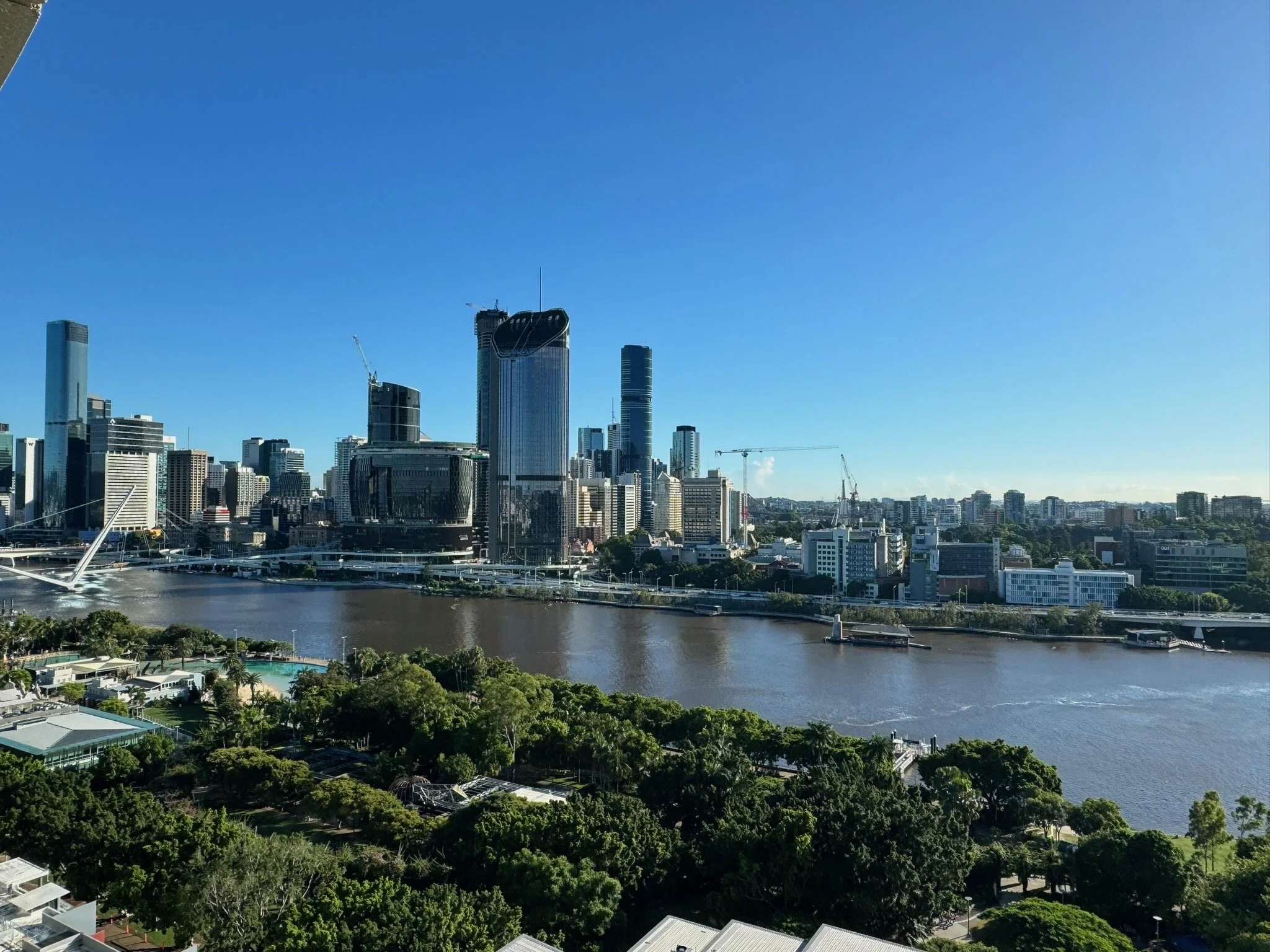
What I found was a vibrant, modern and cosmopolitan city spread along the Brisbane River, with parks and greenery woven into the architecture and fabric of everyday life. Walking trails followed the river, cafés spilled into outdoor spaces, and the city had an energy that felt lively without being overwhelming. Add in the friendly people, great coffee and seemingly endless brunch spots, and Brisbane quickly made a very good first impression.
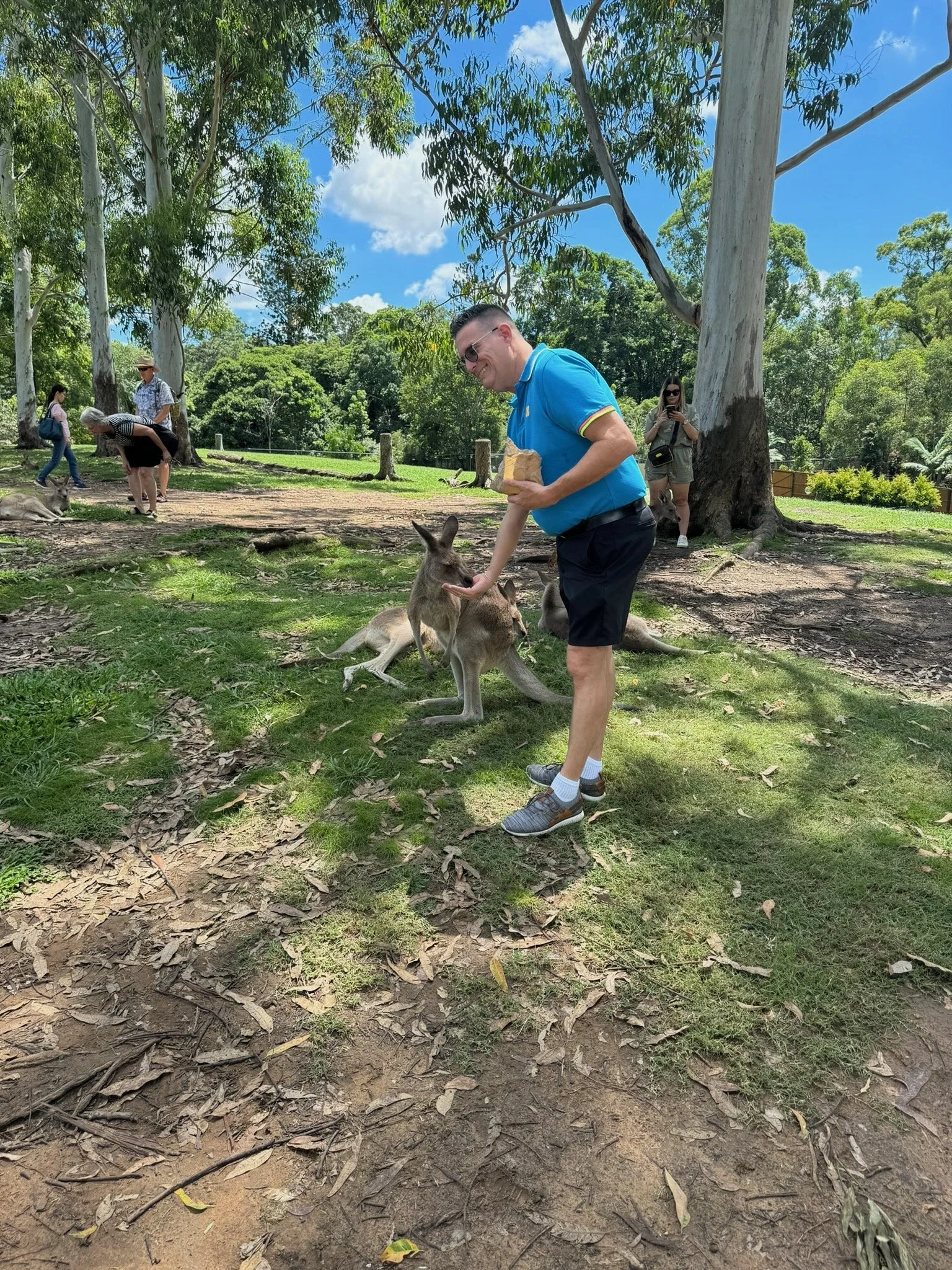
Admittedly, our first night was pretty much a washout. After an evening check-in at our hotel and a light dinner, we were out for the count. Surprisingly, though, we woke the next morning feeling well rested and eased into our first day by simply exploring the city on foot. Coffee, brunch and leisurely walks through the parks and along the river helped us get our bearings, while plenty of sunshine certainly helped with our recovery. My favorite stop of the day was a local wildlife sanctuary, where we had our first chance to see two of Australia's most recognizable residents — kangaroos and koalas.
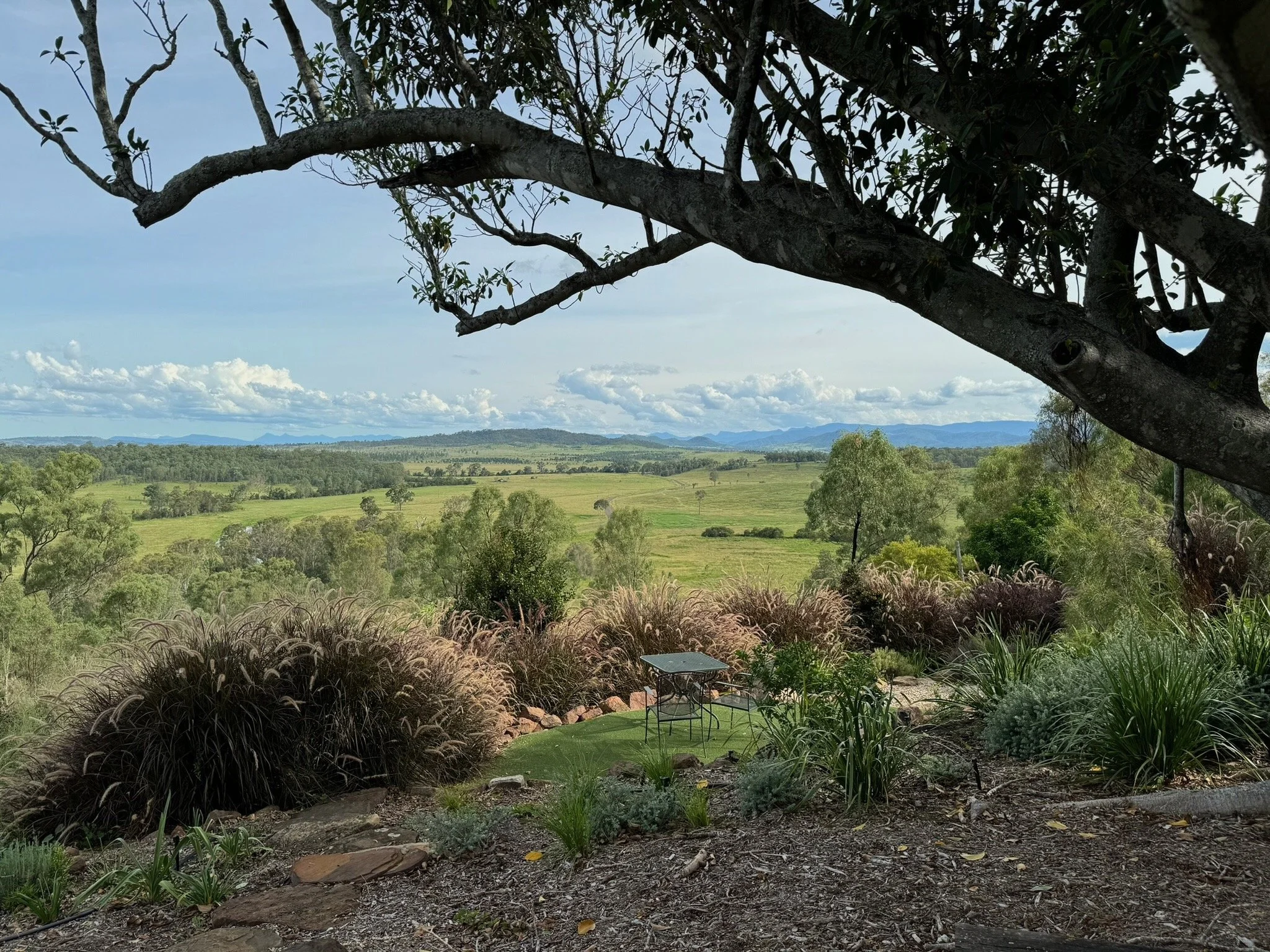
The following day, I wanted to venture beyond the city and see a different side of the Australian landscape, so we took a private tour into Queensland's Scenic Rim. This wasn't the vast Australian Outback you might picture when thinking of the country, but the transition from Brisbane's urban landscape to open countryside dotted with farms, ranches, wineries and small towns gave us a glimpse of an entirely different side of Queensland.
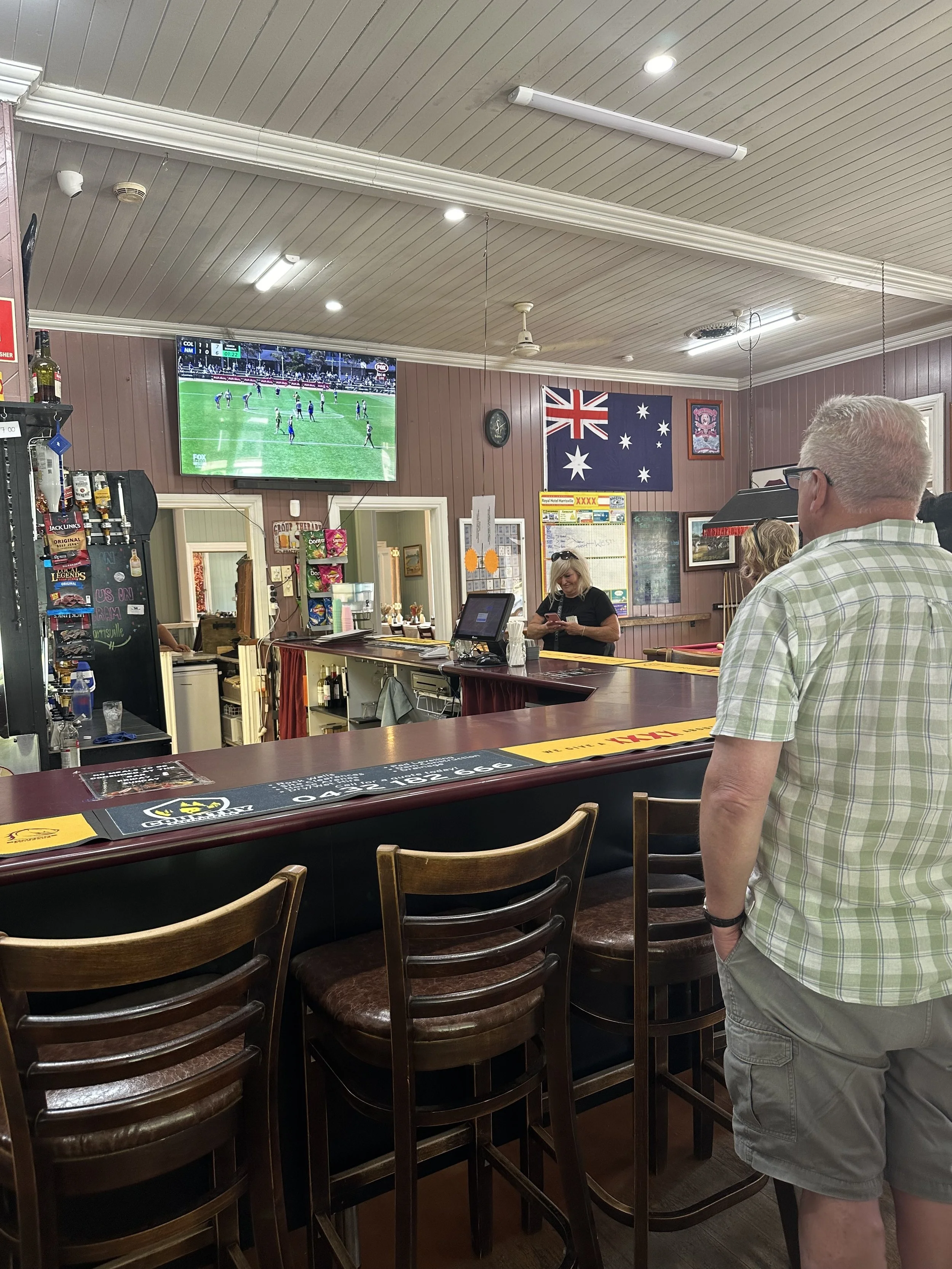
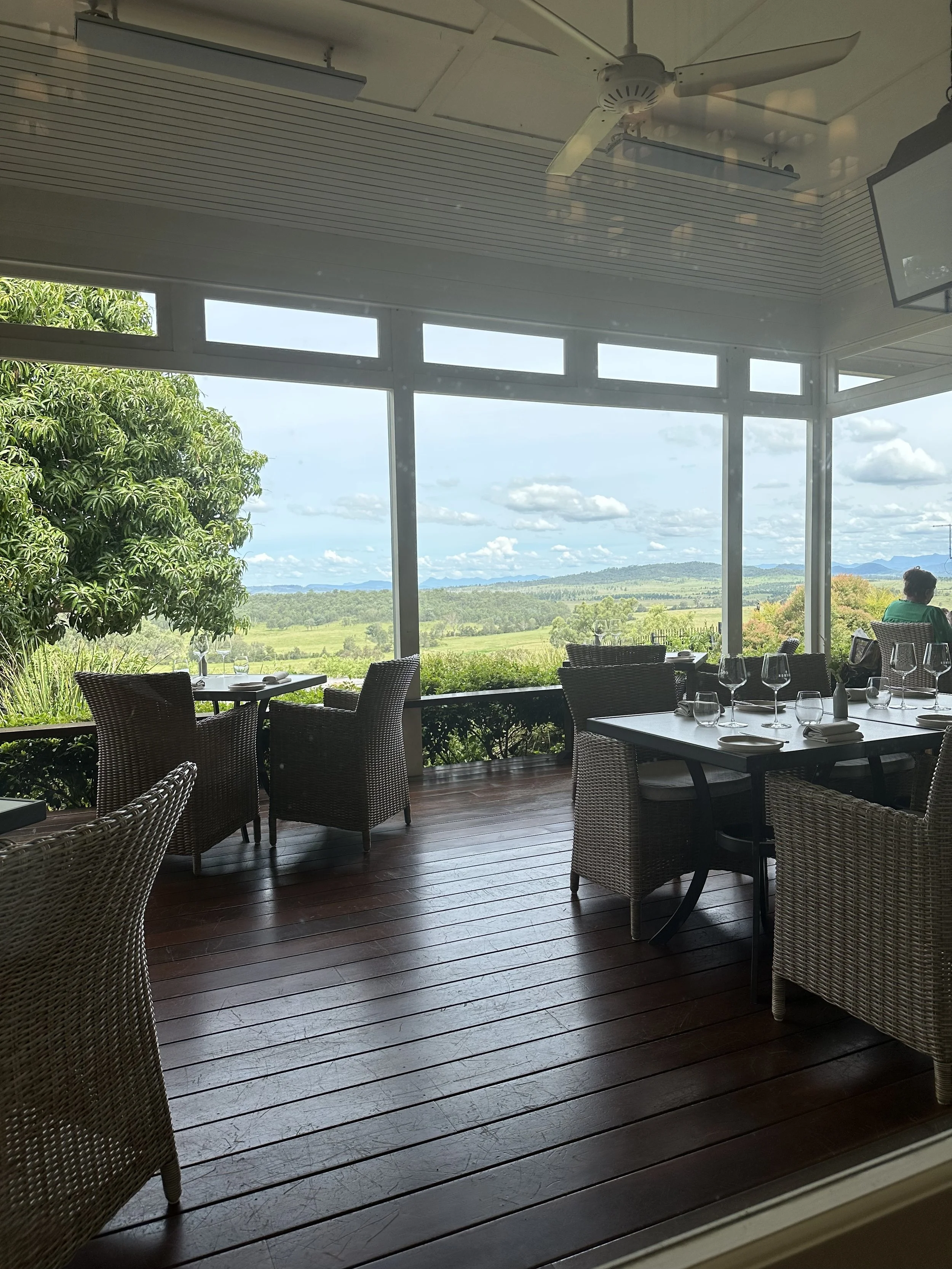
Some of my favorite moments were also the simplest. We stopped at a local pub for a few pints, where the joyful banter among the locals gave us a chance to experience that genuine friendliness we'd already begun to notice in Brisbane. Later, we visited a beautiful local winery, surrounded by the rolling landscape of the Scenic Rim. It was a relaxing change of pace from the city and exactly the kind of day I had hoped for when planning this part of the trip.
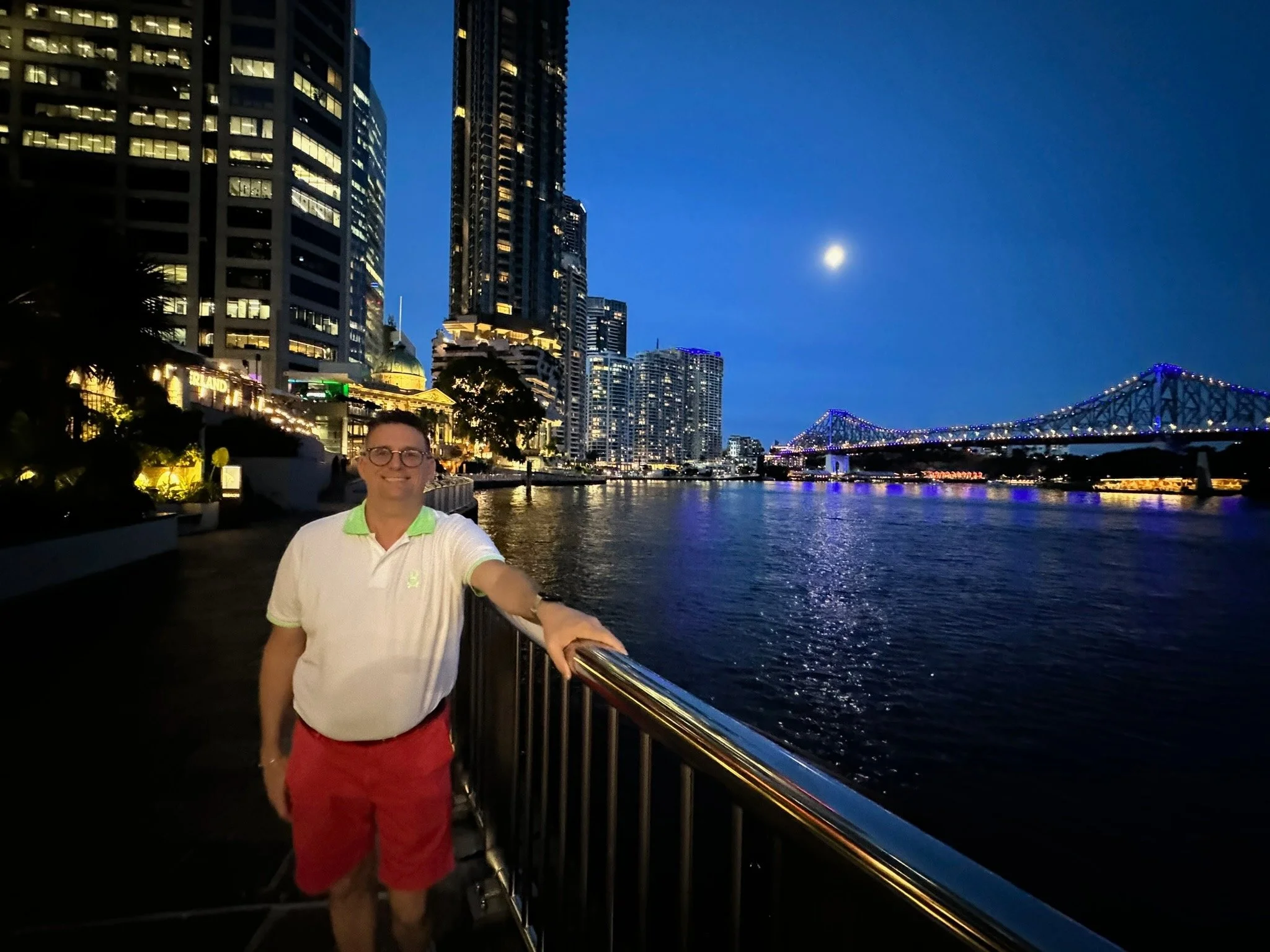
Back in Brisbane that evening, we finished our stay with dinner along the river — a fitting end to a few days that had been intentionally unhurried. What began as time I'd built into the itinerary largely to recover from jet lag turned out to be a destination experience in its own right.
Setting Sail for the South Pacific
Following our stay in Brisbane, we embarked Royal Caribbean International's Quantum of the Seas for an eight-night sailing through the South Pacific. After two days at sea, our itinerary would take us to Nouméa, New Caledonia, followed by Mystery Island and Port Vila in Vanuatu. From there, two more days at sea would bring us back to Brisbane.
After a few days exploring the city and countryside, I was ready to trade Australia's urban energy for something completely different.
A Little French Flair in the South Pacific
Nouméa, New Caledonia has an interesting personality — distinctly South Pacific, but with an unmistakable French influence thanks to New Caledonia's ties to France. Think a little French Riviera mixed with the relaxed pace of island life.
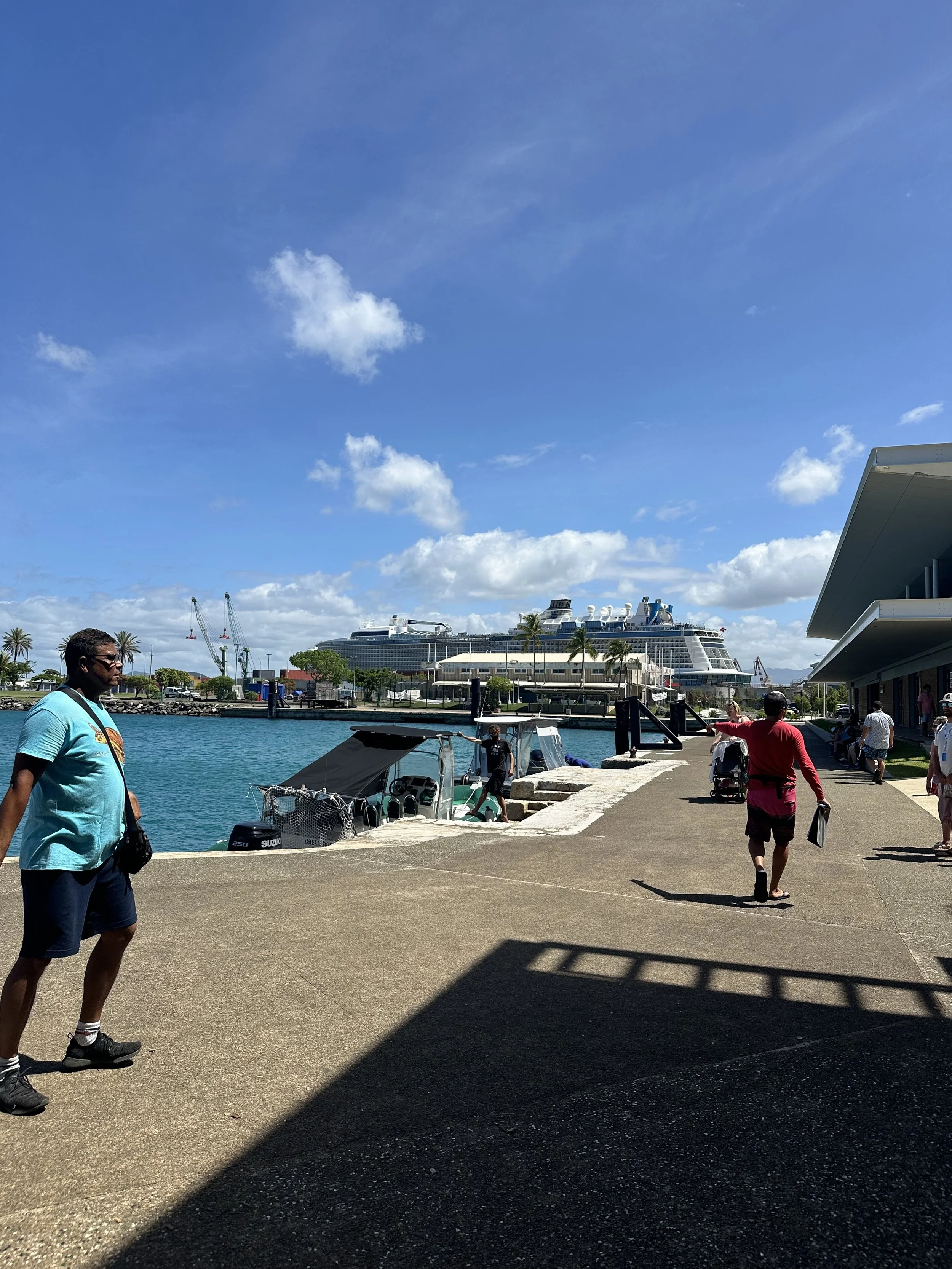
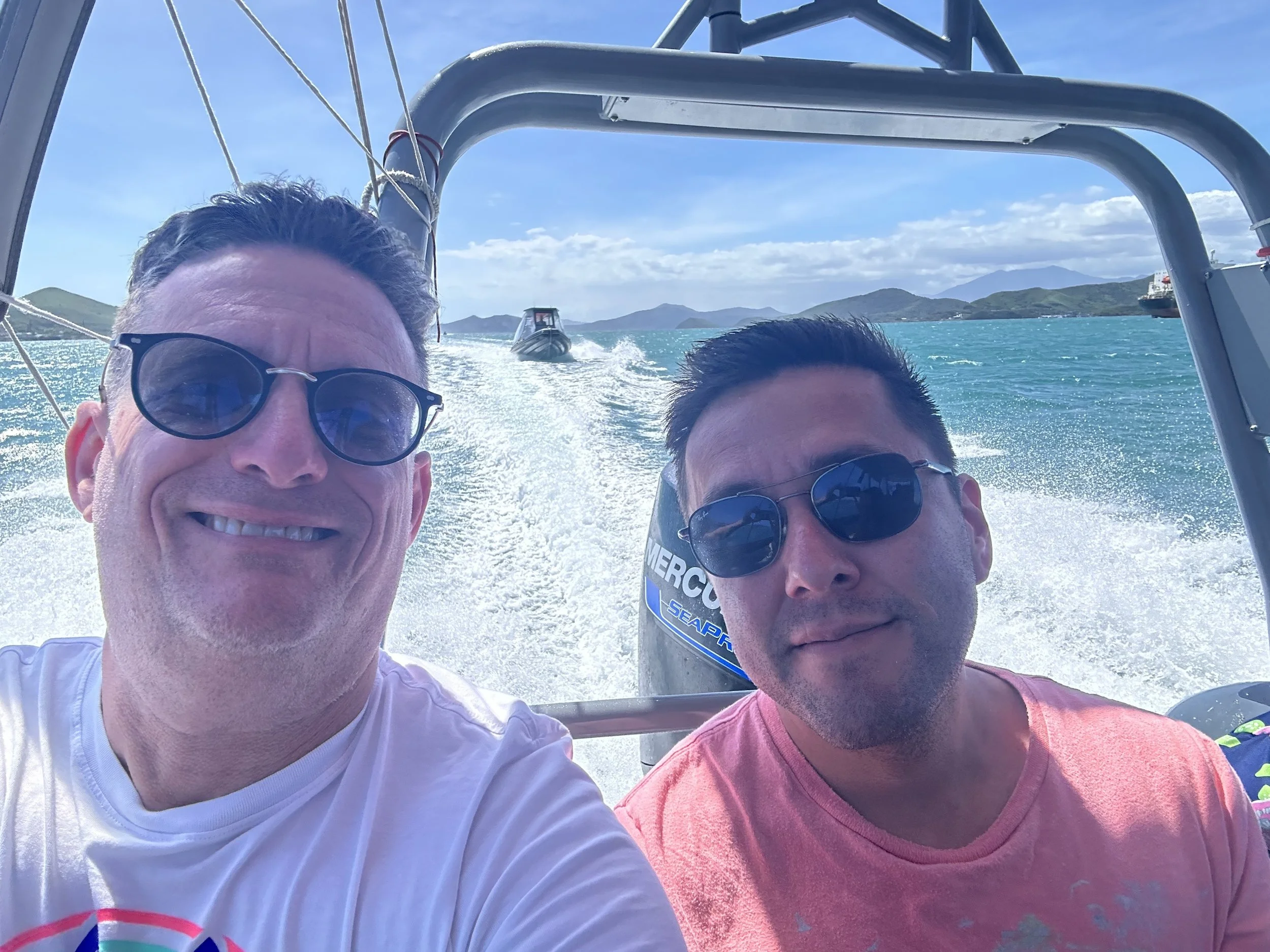
We arrived on a Sunday, which meant downtown Nouméa was much quieter than usual, with many shops and businesses closed for the day. Fortunately, we'd done a little research beforehand and knew this would be the case. Rather than letting the timing work against us, we took advantage of the nearby ferry and headed for Signal Island.
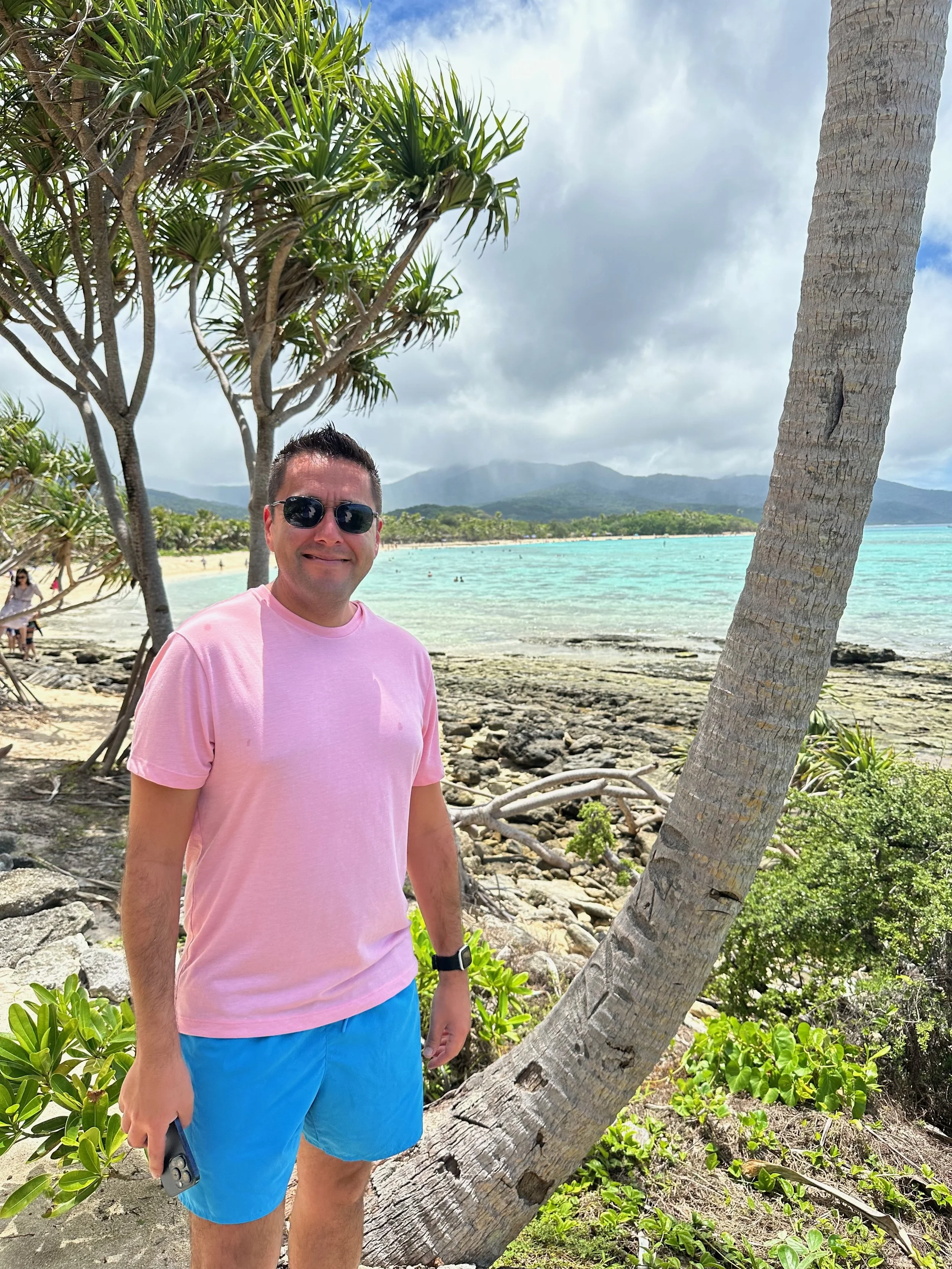
Signal Island is a small nature reserve surrounded by clear blue water and home to sea turtles, tropical fish and seabirds. You can walk around the island fairly easily, following trails through tropical vegetation that occasionally open onto another stretch of beautiful beach.
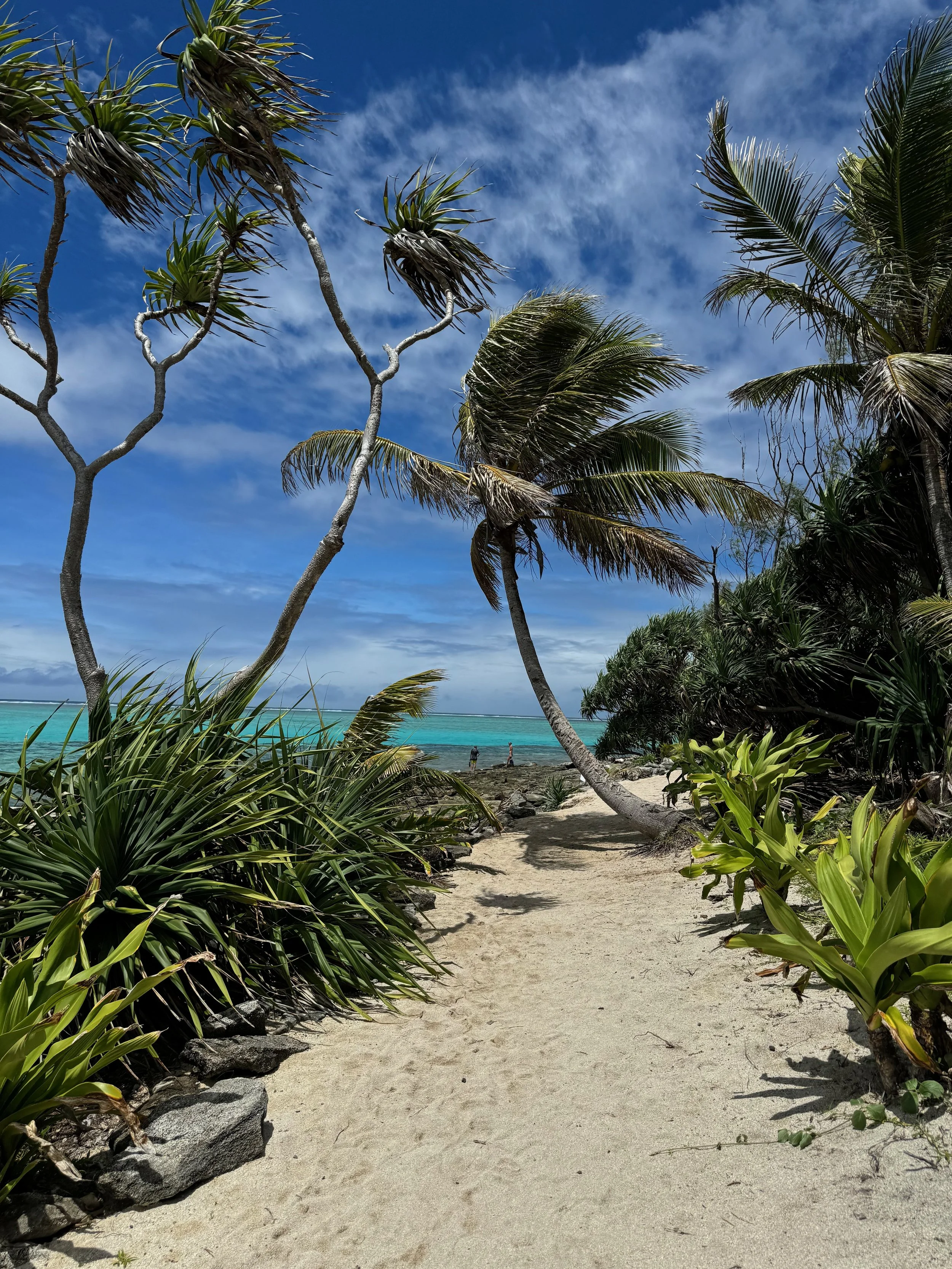
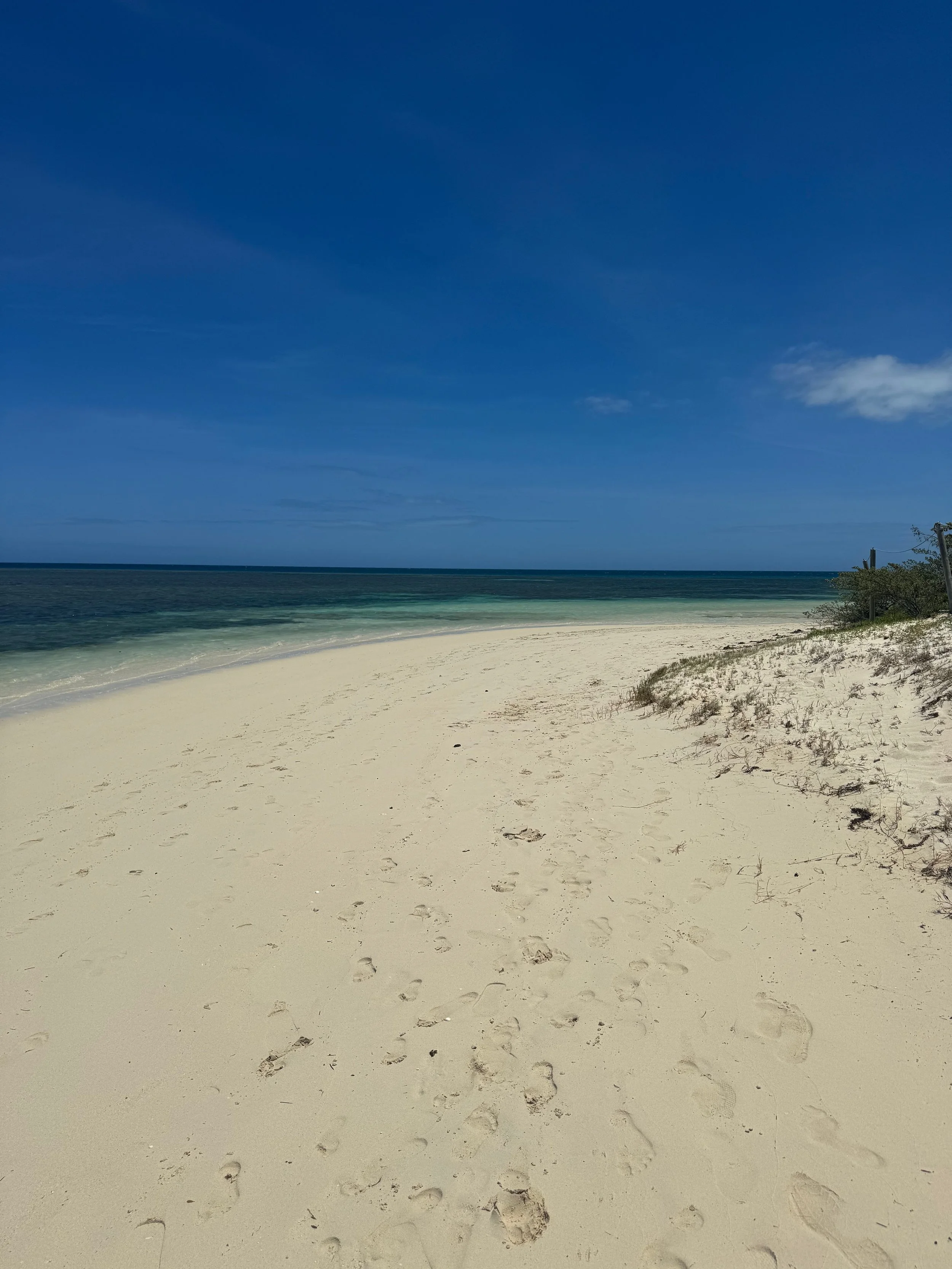
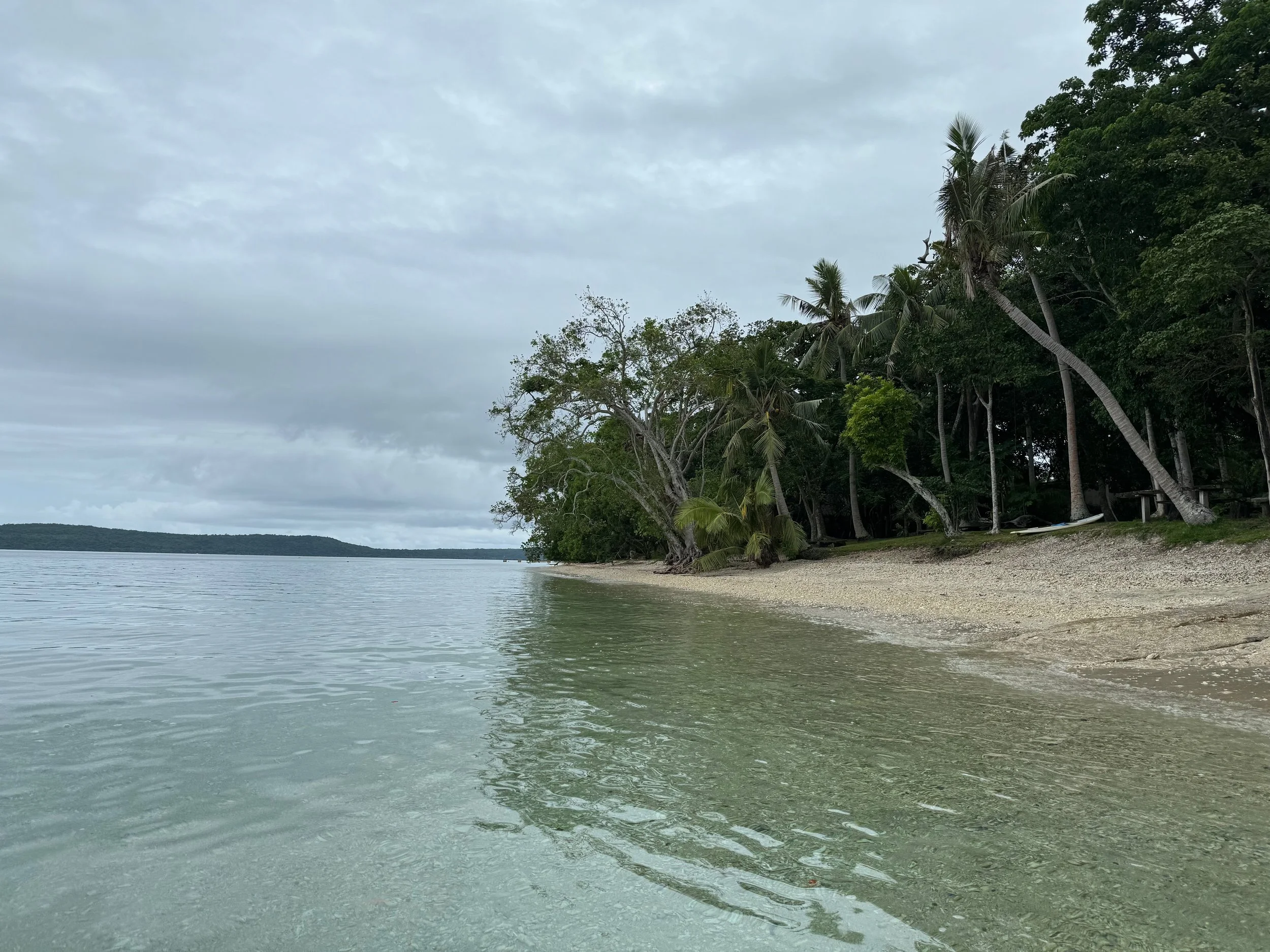
That was probably my favorite part. We wandered until we found a quiet stretch of sand that felt almost entirely our own. Clear water, a beautiful beach and very little else around us — it was the simple South Pacific setting I had pictured before the trip.
Finding Paradise on Mystery Island
If you made me choose a favorite stop from the cruise, Mystery Island would probably be it.
The tiny, uninhabited island sits just off the coast of Vanuatu, and when a cruise ship arrives, residents from neighboring islands come over to welcome visitors and share local crafts, food and elements of their culture. It gave the island an interesting combination of activity near the tender landing while leaving plenty of room to wander away and experience its natural surroundings.
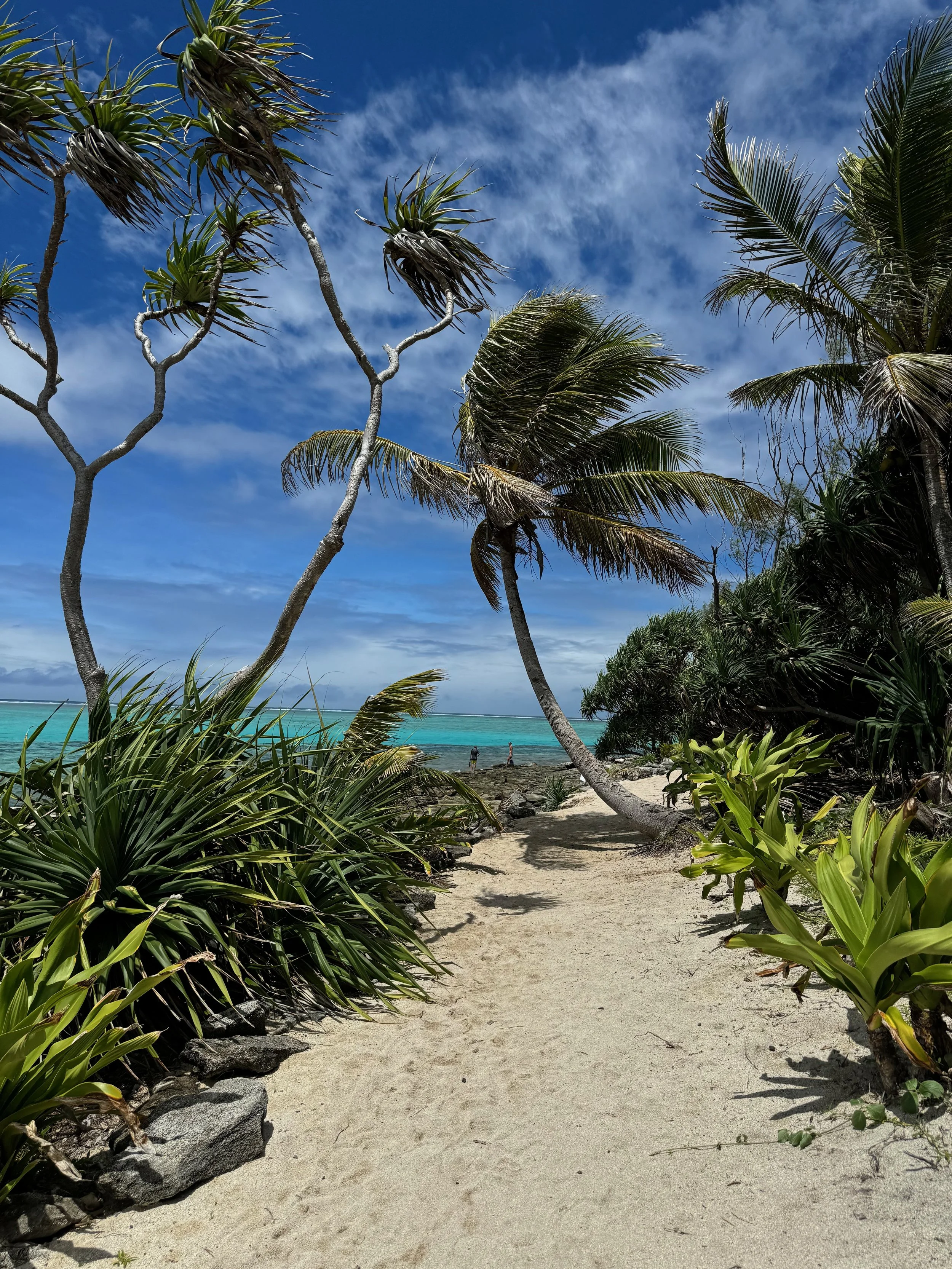
In some ways, Mystery Island reminded me of Signal Island — only on a larger scale. We explored paths through the tropical vegetation, walked along seemingly endless stretches of pristine beach and, once again, found that the farther we wandered from the crowds, the quieter everything became.
Eventually, we found our own little stretch of paradise.
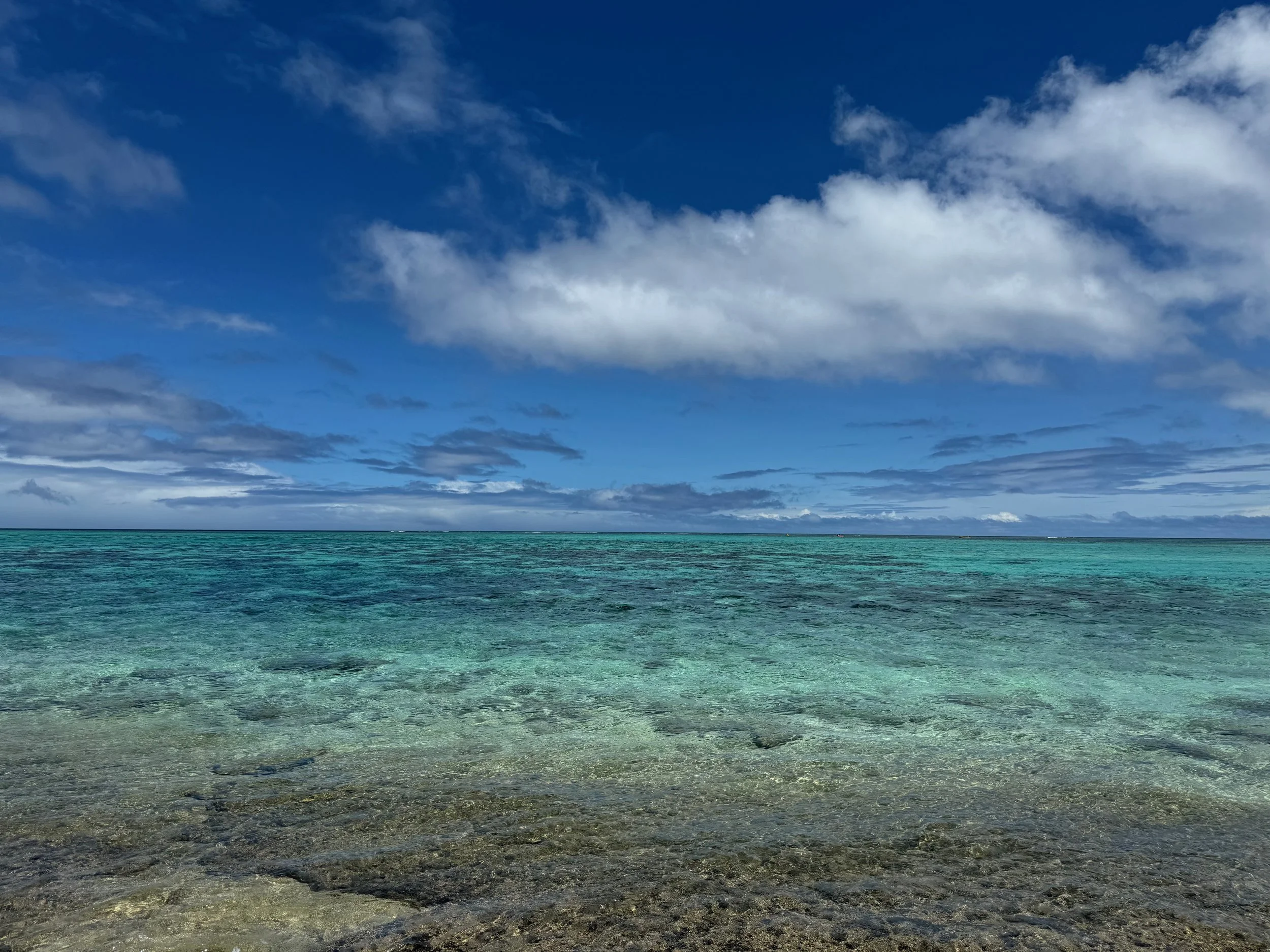
Standing there with clear water in front of us, tropical vegetation behind us and hardly anyone else around, it felt almost like we'd wandered onto the set of a South Pacific movie.
There wasn't a landmark we needed to see or an attraction we needed to check off a list. The island itself was the experience.
And perhaps that's why Mystery Island remains one of my favorite memories from the entire trip.
Beyond the Beaches of Port Vila
Our final stop took us to Port Vila, Vanuatu, which immediately felt quite different from Nouméa. The pace was relaxed and the infrastructure much more basic, with the area near our arrival point feeling more industrial than tropical paradise. We were told that cafés and shops could be found a short walk away in town, but by this point in the trip, my sense of adventure was beginning to lose a little steam. Instead of setting off on our own, we had booked a small excursion to a local turtle sanctuary.
As much as I'm an advocate for exploring destinations independently, there is something to be said for a well-organized excursion — especially when the guide becomes as much a part of the experience as the destination itself.
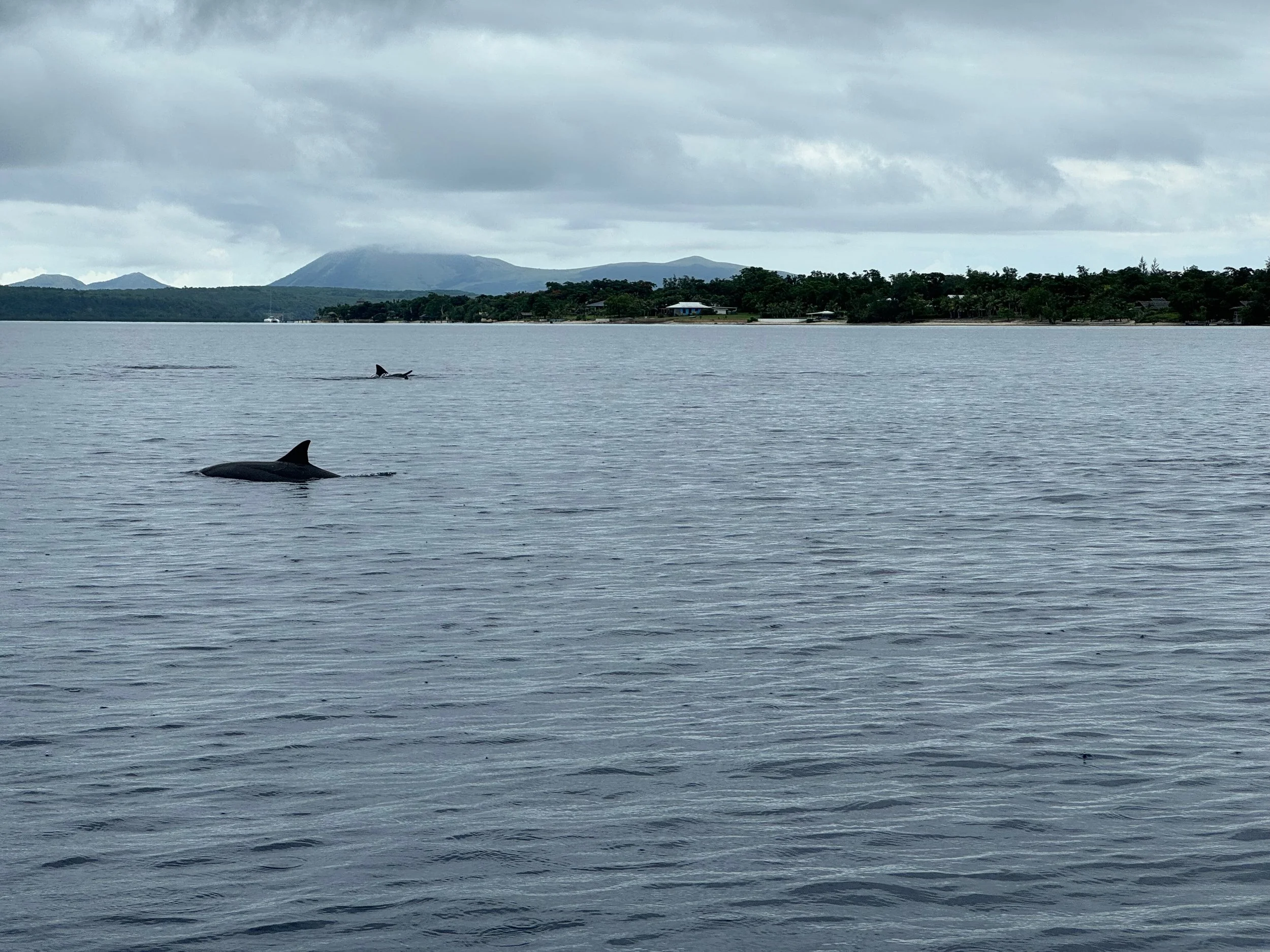
Ours was a small group led by a friendly local guide who seemed genuinely excited to share his home with us. As we drove across the island and eventually boarded a small boat to reach another area, he told us about Vanuatu's history, its culture and what everyday life was like for the people who lived there. His pride and affection for his island were unmistakable, and listening to him gave me a much greater appreciation for the place we were visiting.
Along the way, we passed through communities and saw glimpses of daily life that we simply wouldn't have experienced had we stayed near the port. Everywhere we went, we were greeted by smiling, welcoming faces. For a few hours, we weren't just looking at Vanuatu's beautiful scenery; we were beginning to understand a little more about the people who call it home.
The turtle sanctuary was enjoyable, and yes, there was plenty of crystal-clear water and beautiful tropical scenery along the way. But strangely enough, those aren't the things I remember most.
I remember the drive. I remember the boat ride. I remember listening to our guide talk about his home.
Sometimes the most memorable part of an excursion isn't necessarily the place you set out to see.
Sydney — When One Night Isn't Enough
Surely no trip to Australia would be complete without a stop in Sydney, so following our cruise, I had allocated one night there before flying home. I knew we wouldn't be able to see much, but I figured one night was better than nothing. I was also approaching the end of my two weeks of allotted vacation time and wanted to return home on a Saturday, leaving Sunday to recover before getting back to everyday life.
It all made perfect sense on paper.
Of course, even the best-planned trips are bound to have the occasional hiccup, and ours fortunately — or unfortunately — waited until the very end.
We woke in Brisbane on the morning we disembarked Quantum of the Seas to the dreaded message no traveler wants to receive: our flight to Sydney had been cancelled.
Suddenly, an already short stay became even shorter.
The morning we'd expected to spend making our way to Sydney instead became a scramble to find another flight. The soonest option I could secure wasn't until later that afternoon on another airline. Thankfully, we had travel insurance to help with the unexpected expense, but by the time everything was sorted out, much of the day was already gone.
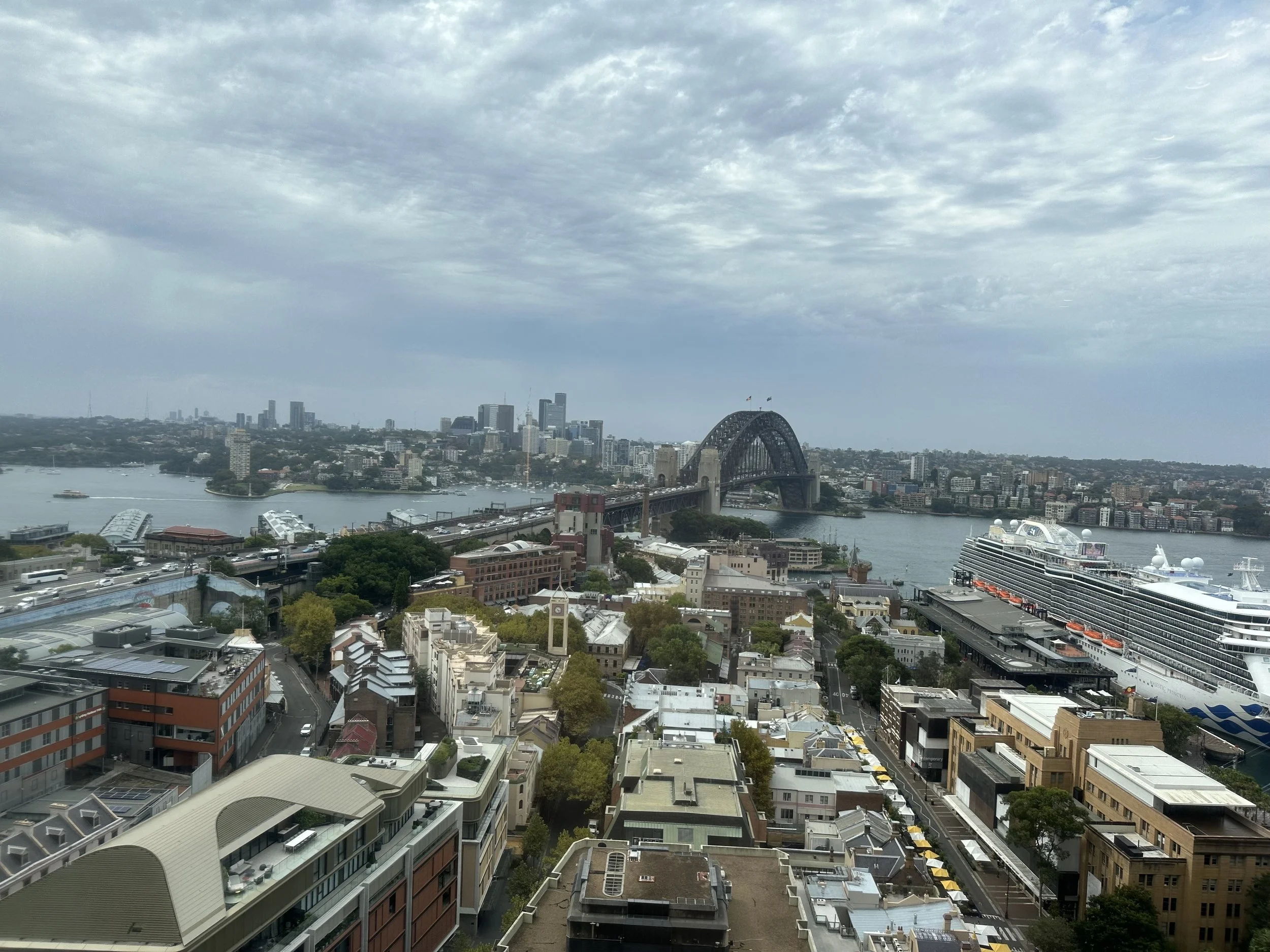
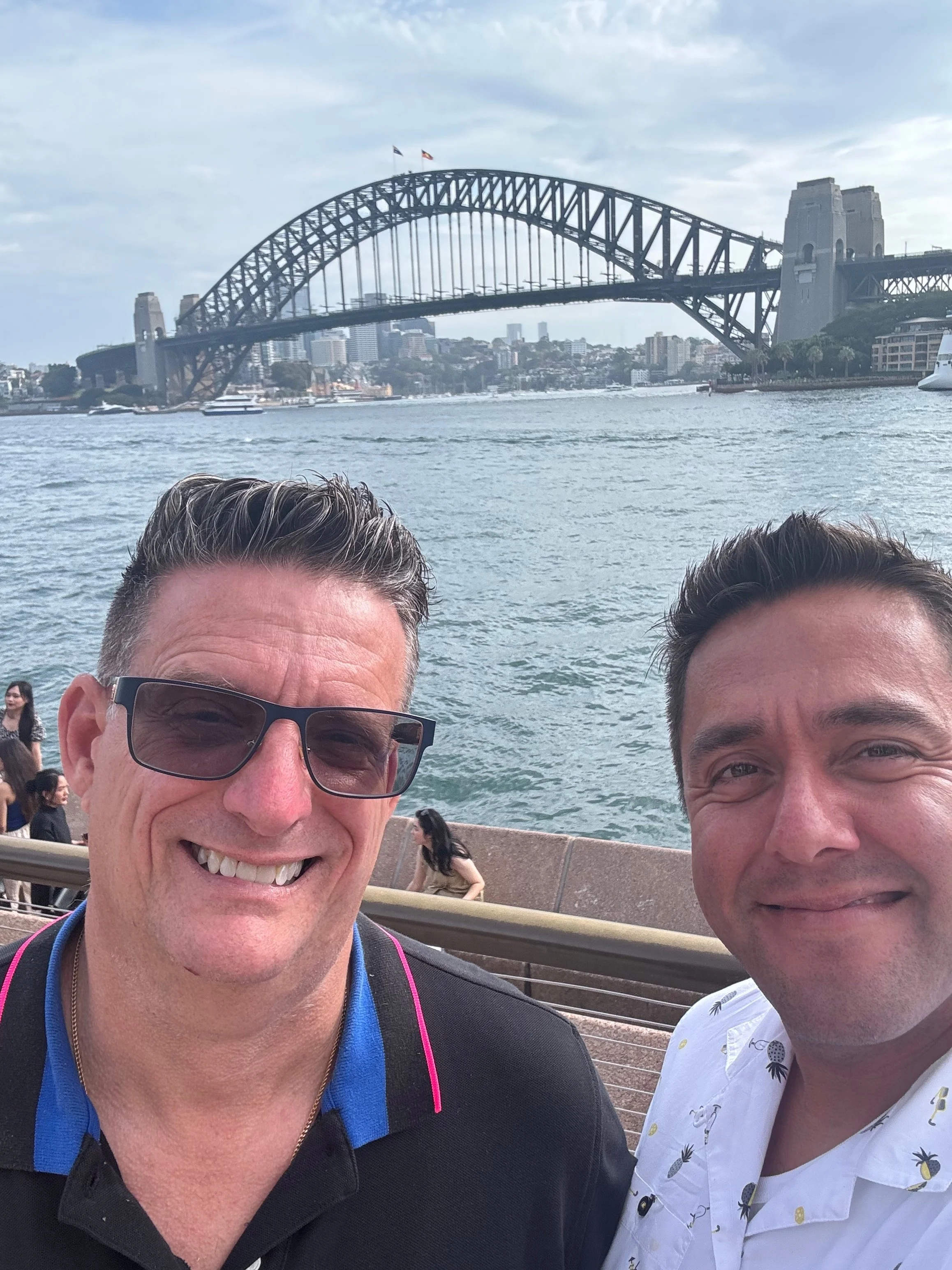
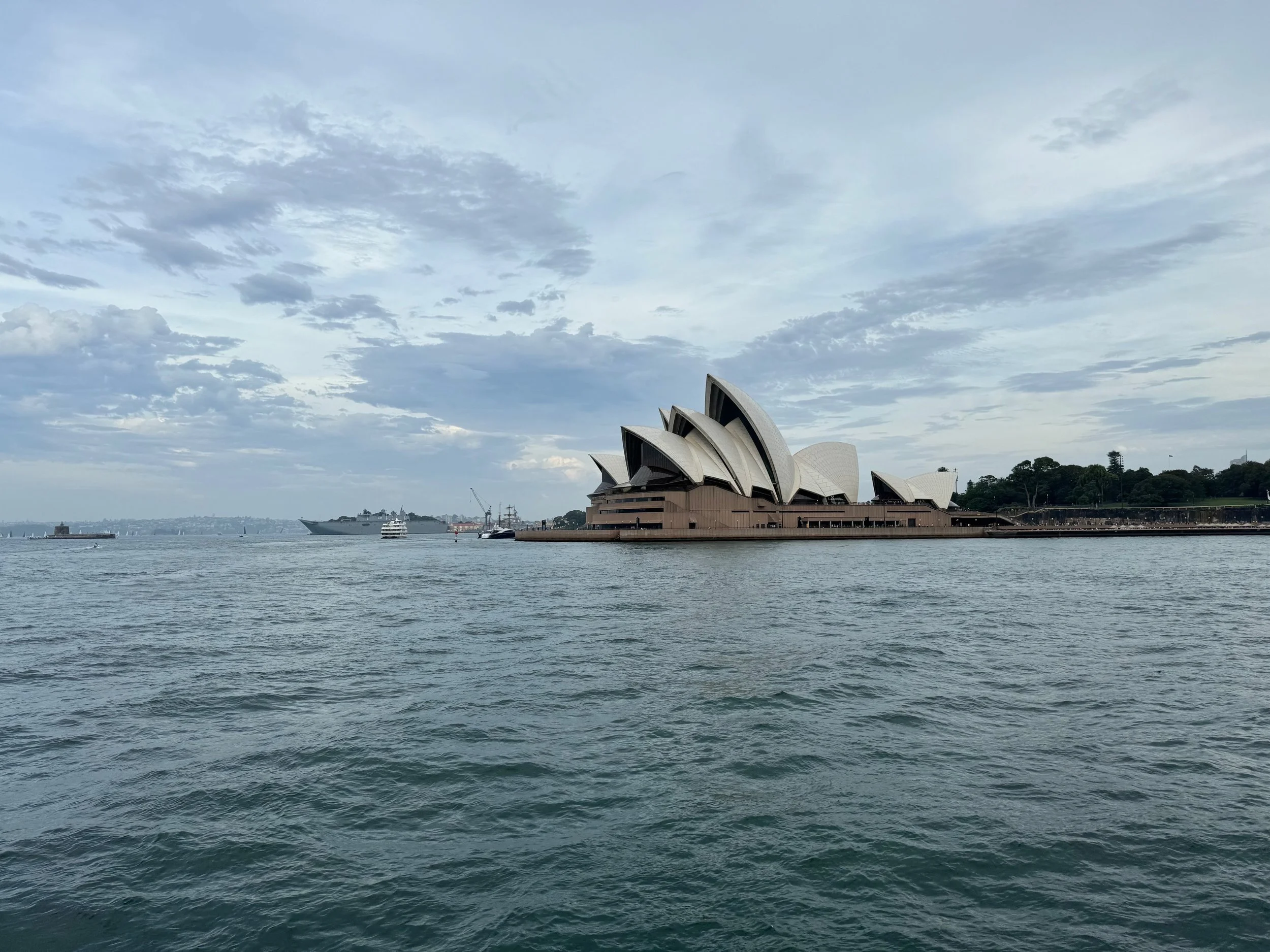
We eventually arrived in Sydney later that afternoon, tired and a little worn down from the stress of the morning. There was still just enough time for a walk around the iconic Sydney Opera House, a quick ferry ride through the harbor and a casual dinner before calling it a night.
It wasn't a complete loss by any means. We had made it to Sydney, stood beside one of the world's most recognizable landmarks and caught at least a glimpse of that famous harbor.
But a glimpse was exactly what it was.
Looking back, allocating only one night to Sydney left us with no margin for the unexpected. One cancelled flight had taken what was already a very short visit and reduced it to just a few hours.
If Brisbane showed me what can happen when you give a destination enough time, Sydney taught me the opposite lesson.
What I Would Do Differently
Looking back, there is very little about this trip that I regret. We discovered a city in Brisbane that surprised us, escaped into the Queensland countryside, sailed to islands in the South Pacific I had only imagined visiting, and met people who helped us see their homes through a different lens. Even our few short hours in Sydney gave us memories I wouldn't trade.
But if I were planning the same trip today, I would give it more time.
I'd break up the journey with a stopover in Doha rather than treating the flights simply as a means of getting to Australia. I'd keep those three nights in Brisbane, which proved to be far more than just time to recover from jet lag. And at the other end, I'd give Sydney several days rather than trying to squeeze one of the world's great cities into a single night.
What I've come to appreciate is that traveling farther doesn't necessarily mean you should try to see more. Sometimes it means you should slow down.
An extra night can mean recovering from jet lag before setting off to explore. It can mean lingering over coffee instead of rushing to the next attraction. And sometimes it simply gives you enough breathing room that a cancelled flight doesn't take an entire destination with it.
Australia and the South Pacific gave us an incredible two weeks. But they also left me wanting more — not necessarily more places, but more time in the places we'd already chosen.
Perhaps that's the biggest lesson I brought home with me: when you've traveled halfway around the world, give yourself enough time to actually be there.
Across the Atlantic: Three Crossings, Three Perspectives
Reflections on the Art of Ocean Travel
Steven Alcala | July 2026
Introduction
What happens when you trade a seven-hour flight for nearly two weeks at sea?
I first discovered the lost art of transatlantic travel in 2023, when I embarked on a voyage from Bayonne, New Jersey, to Southampton, England. Like many travelers, I had grown accustomed to modern air travel: navigating crowded terminals, removing shoes at security checkpoints, squeezing into narrow seats, and enduring overnight flights fueled by little more than caffeine and determination.
Crossing the Atlantic by ship offered something entirely different.
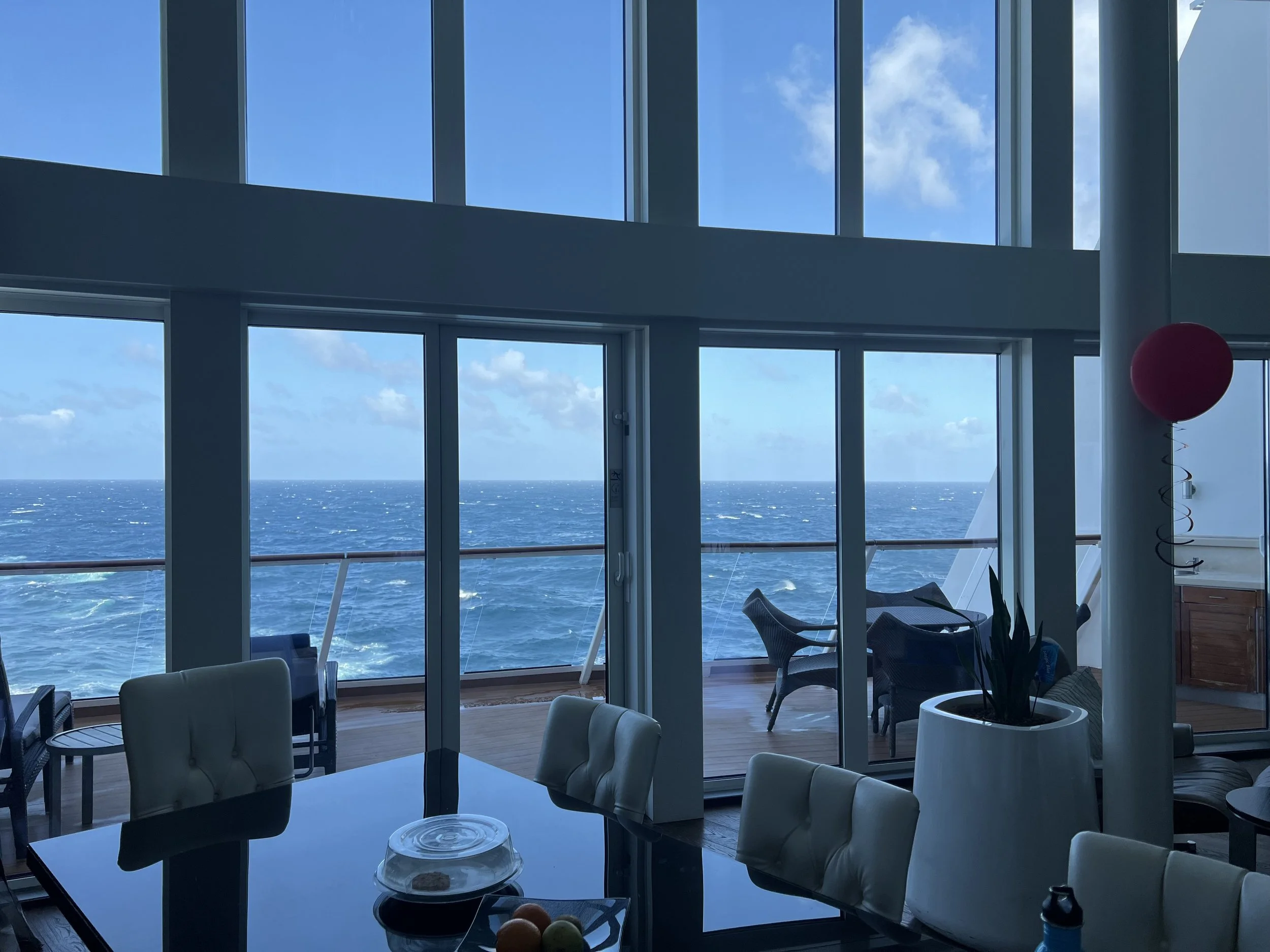
There were no hurried connections or cramped cabins. Instead, there were comfortable accommodations, leisurely meals, live entertainment, and endless ocean views stretching beyond the horizon. Days unfolded at a gentler pace. The pressures of daily life gradually faded with each nautical mile, replaced by a rhythm dictated not by schedules and notifications, but by the sea itself.
Since that first crossing, I have returned to the Atlantic twice more. Each voyage took place aboard a different cruise line and with a different travel companion—or, in one case, no companion at all. One journey was shared with my partner, another with family and friends, and the third undertaken entirely on my own.
What I discovered was that while the ocean remained the same, the experience of crossing it changed dramatically depending on who was beside me. Each voyage offered a unique perspective not only on travel, but on connection, reflection, and the value of slowing down.
These are the stories of three Atlantic crossings and the lessons they taught me along the way.
Part I: A Couple's First Adventure Across the Atlantic by Sea
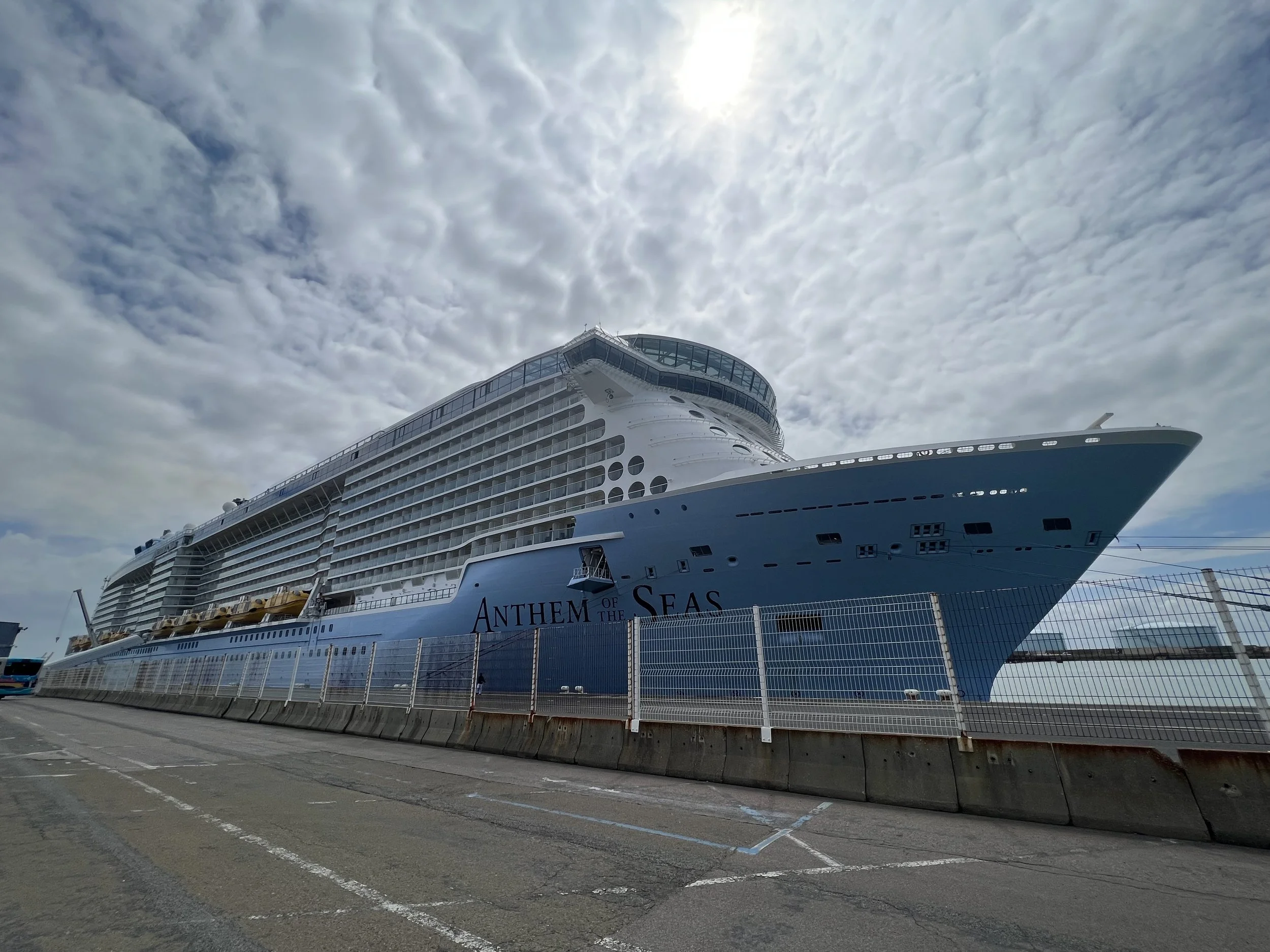
Royal Caribbean's Anthem of the Seas
Ever since I was a child, I had been fascinated by the idea of crossing the Atlantic by ship. I romanticized the golden age of ocean liners and imagined what it must have felt like to watch one continent slowly disappear behind you while another gradually emerged on the horizon days later.
In 2023, as I approached my fortieth birthday, my partner and I decided it was finally time to make that dream a reality.
Our original plan had been to sail aboard Cunard's Queen Mary 2, perhaps the last true ocean liner still operating today. At the time, however, reliable internet connectivity was an important consideration. My partner owns a small business and needed the ability to remain connected while away. With Starlink not yet installed aboard Queen Mary 2, we ultimately chose a more familiar option: Royal Caribbean's Anthem of the Seas.
The itinerary seemed perfect. Over eleven nights, we would sail from New Jersey to England, stopping in the Azores and France along the way. It promised a balance of sea days and exploration ashore—ideal for two travelers with slightly different expectations of what a transatlantic voyage should be.
I knew I would love the days at sea.
I wasn't quite as certain about my partner.
Five consecutive sea days sounded idyllic to me, but I worried they might feel confining to someone less enamored with the ocean. Would cabin fever set in? Would boredom creep in somewhere between North America and Europe?
As it turned out, I had nothing to worry about.
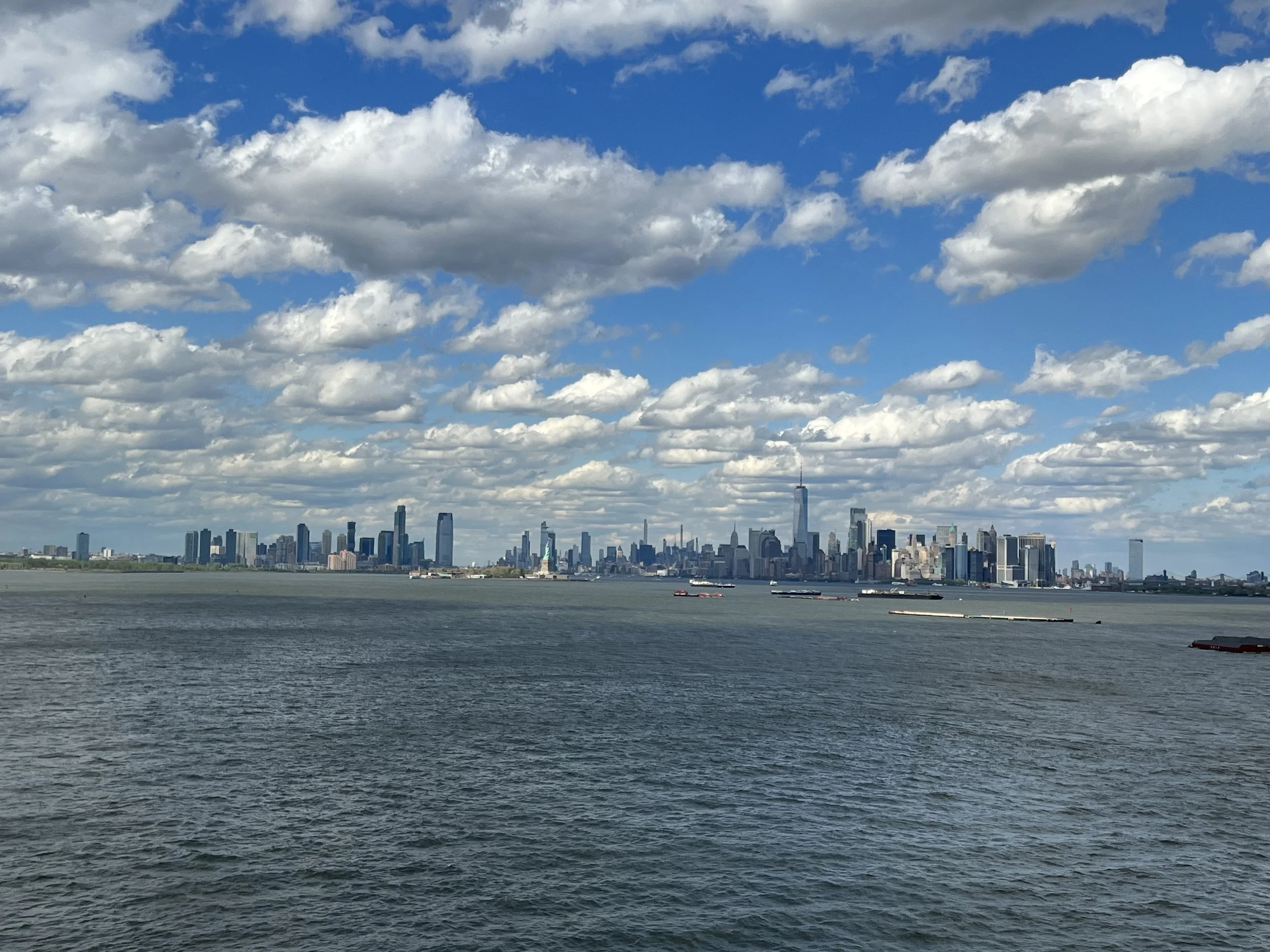
Our journey began with one of the most memorable sailaways I have ever experienced. Before turning east toward Europe, Anthem of the Seas glided past the Statue of Liberty, with the New York City skyline serving as a dramatic backdrop. It felt less like the departure of a cruise and more like the beginning of an expedition.
Soon enough, the skyline faded into the distance, and life at sea began.
We quickly settled into a routine that felt remarkably natural. Mornings often started with a light breakfast followed by a walk around the ship's outdoor decks, taking in the fresh Atlantic air. Afterward, we would pursue our own interests—or, more accurately, compromise.
I would drag my partner to trivia competitions, while I patiently accompanied him to art lectures and enrichment programs. It was a fair trade.
Anthem also offered plenty of opportunities for adventure. On any given day, we could try the surf simulator, challenge each other in the bumper cars, or experience the ship's skydiving simulator. There was always something happening, yet never any pressure to participate.
Lunches were casual, afternoons relaxed. If motivation struck, I might visit the gym. More often than not, however, I found myself indulging in an afternoon nap while my partner checked in on work back home—a reminder that even in the middle of the Atlantic, reality occasionally follows us onboard.
Evenings quickly became our favorite time of day.
We would dress for dinner, enjoy a pre-dinner cocktail, and listen to live music as the sun dipped below the horizon. Having purchased a dining package, we rotated between Anthem's specialty restaurants and main dining venues throughout the voyage. It proved to be an excellent decision, offering variety and ensuring that dinner remained something we genuinely looked forward to each evening.
Afterward came the entertainment.
This is where Royal Caribbean truly excels. Whether it was a full-scale production show, live music, or simply dancing late into the evening, there was always something happening. The performances consistently rivaled those found in major theaters ashore and became a highlight of the voyage.
What surprised me most was how quickly the sea days passed.
The rhythm of life onboard became so comfortable that we barely noticed the passage of time. Before long, land appeared on the horizon and we arrived in Ponta Delgada, the capital of the Azores.
We spent the day doing little more than wandering.
There was no checklist of attractions to conquer and no race against the clock. We explored historic streets, admired local architecture, browsed galleries, and sampled regional food and beer. It was precisely the kind of unhurried experience that seemed to complement the voyage itself.
Two more sea days carried us closer to mainland Europe before we reached Cherbourg, France.
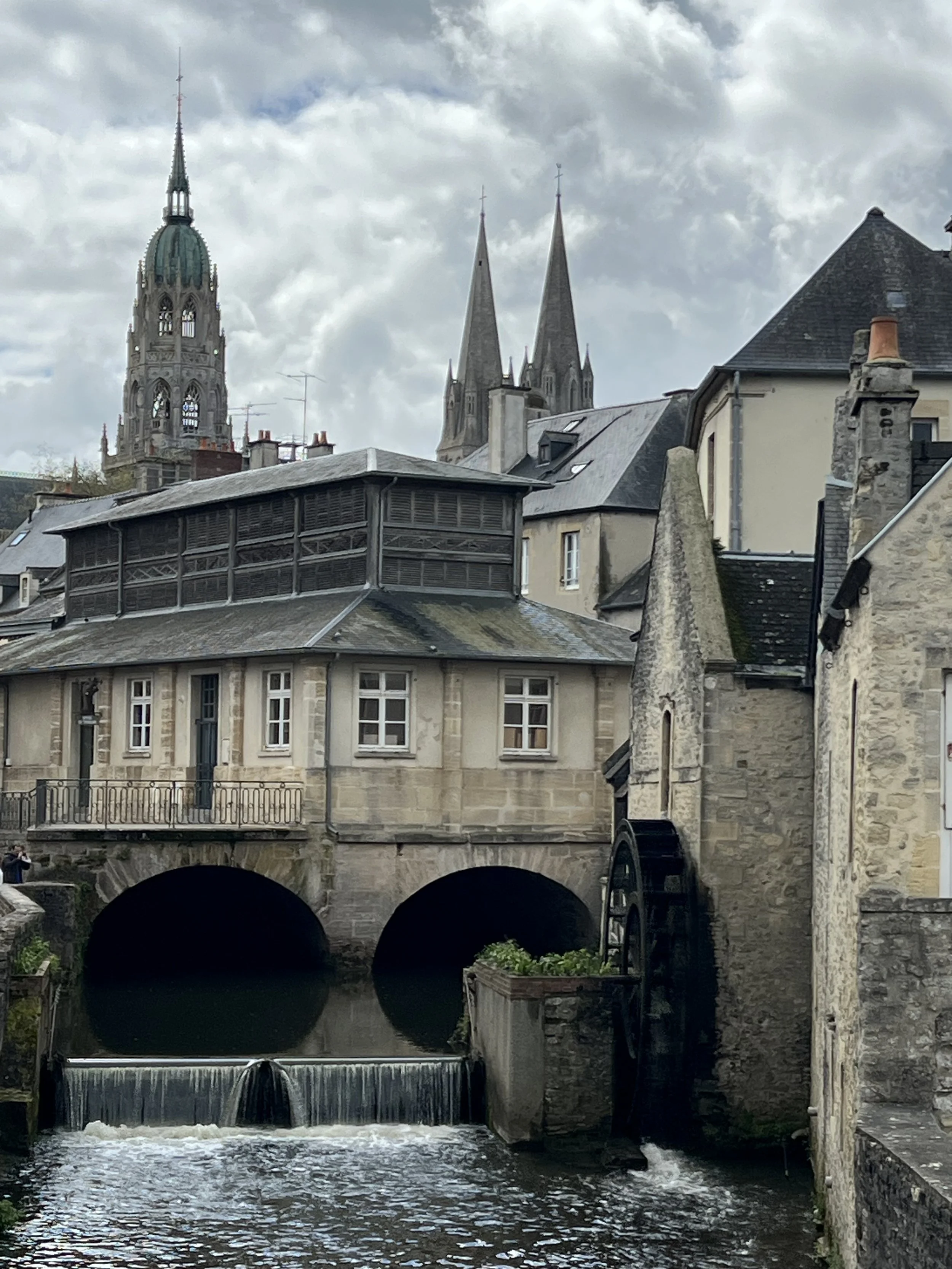
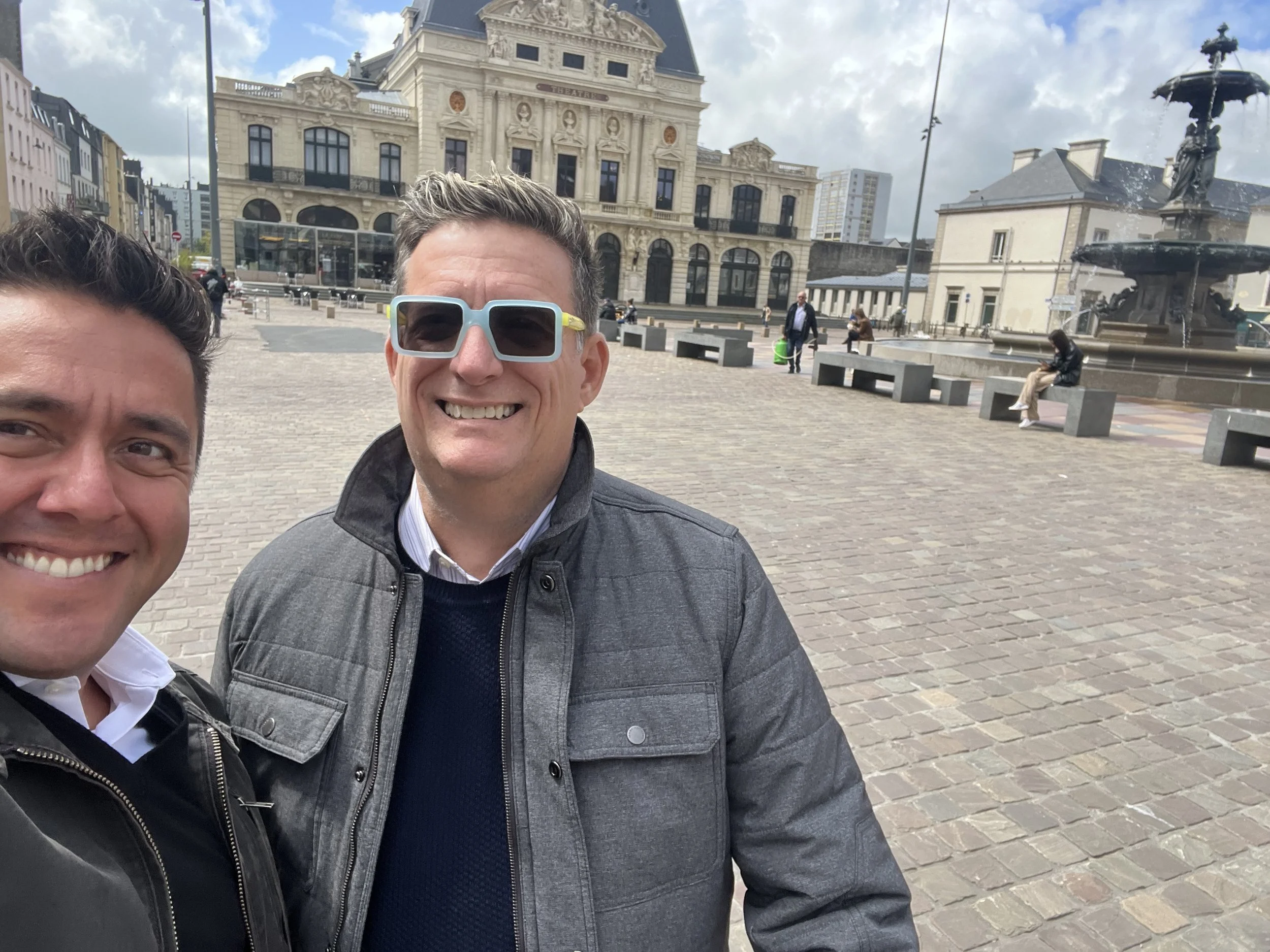
Feeling adventurous, we boarded a local train and traveled independently to Bayeux, a charming Norman town rich in history and character. Wandering its streets, enjoying local wine, and admiring centuries-old architecture felt worlds away from the bustle of modern tourism. Returning to Cherbourg later that afternoon still left enough time to explore the port city before rejoining the ship.
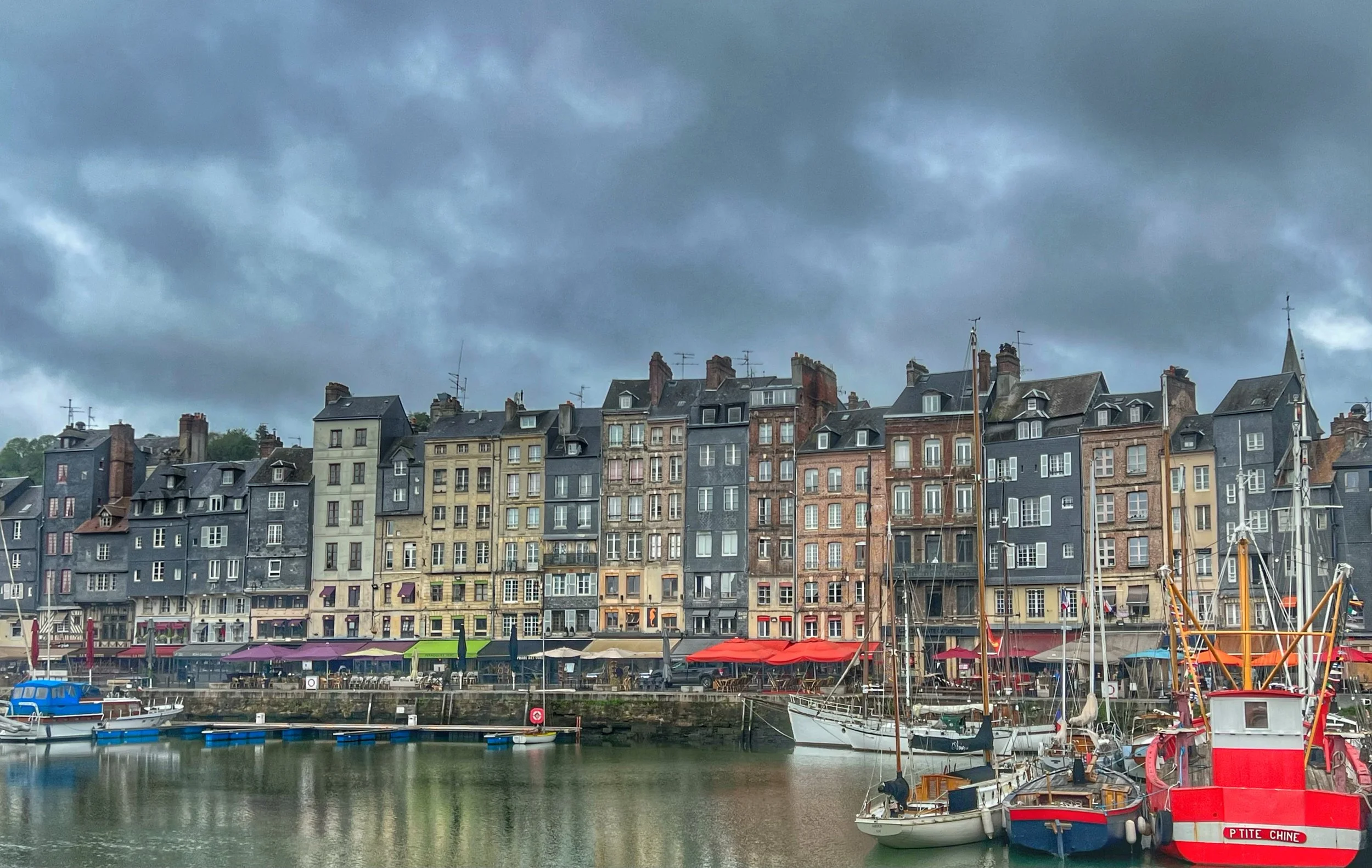
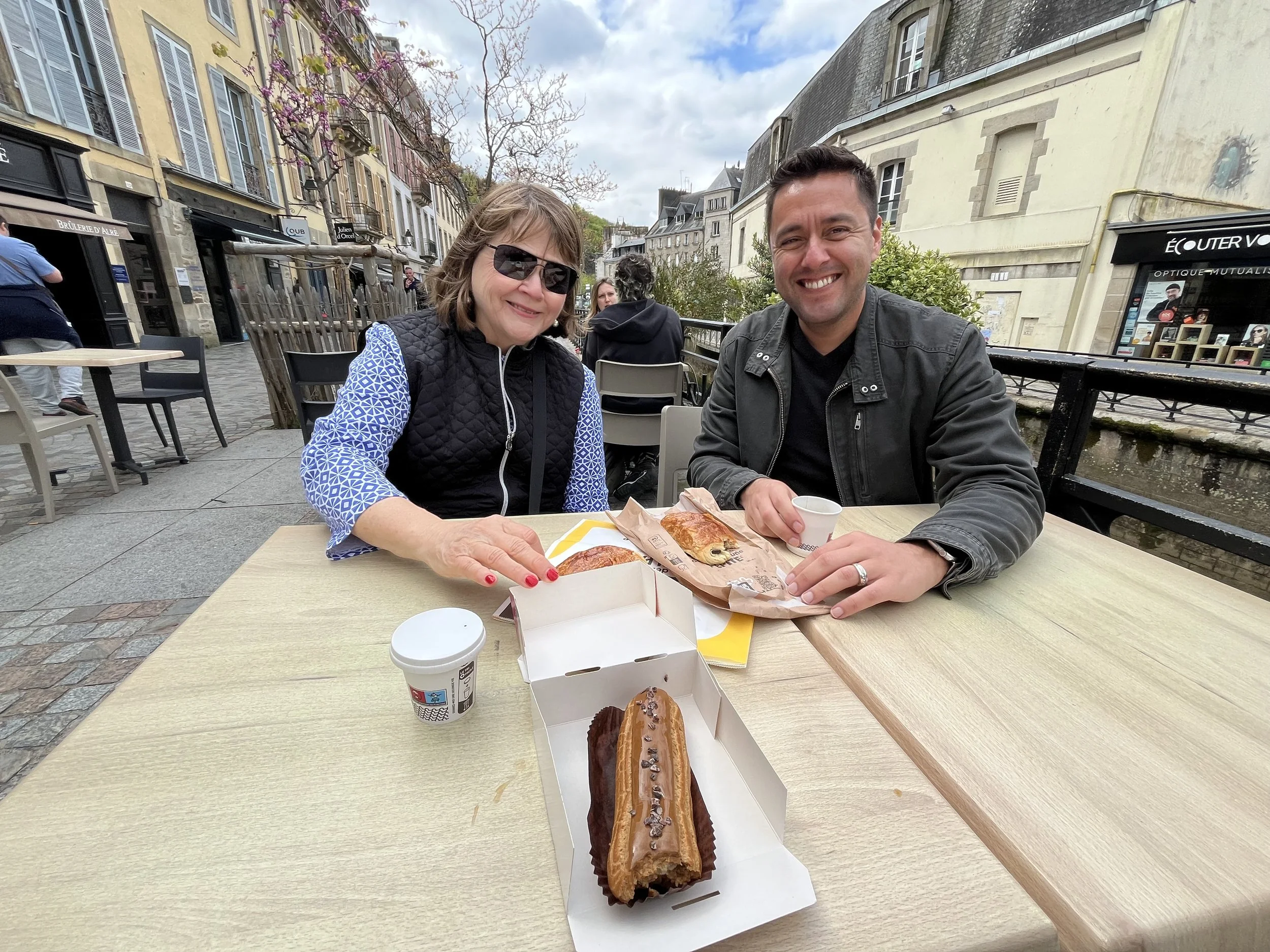
Our final stop before England was Le Havre. While many passengers chose excursions into Paris, we opted for a slower-paced day exploring Honfleur and Deauville. Both towns offered postcard-worthy scenery, but one memory stands above the rest: sitting at a local bakery with fresh croissants and coffee, watching everyday French life unfold around us.
It was simple, unhurried, and perfect.
Before we knew it, Southampton had appeared on the horizon.
Eleven nights had somehow slipped away.
Looking back, what made this crossing special wasn't simply the destinations we visited or the ship we sailed aboard. It was the opportunity to step away from our daily routines and reconnect with one another. Between sea days, shared adventures, and countless conversations, the Atlantic gave us something increasingly difficult to find in modern life: uninterrupted time together.
Royal Caribbean provided the perfect balance of activity and relaxation, but the greatest gift of the voyage wasn't the entertainment, the dining, or the ports of call.
It was the chance to share the journey.
Part II: Holland America – Sharing the Journey with Family and Newfound Friends
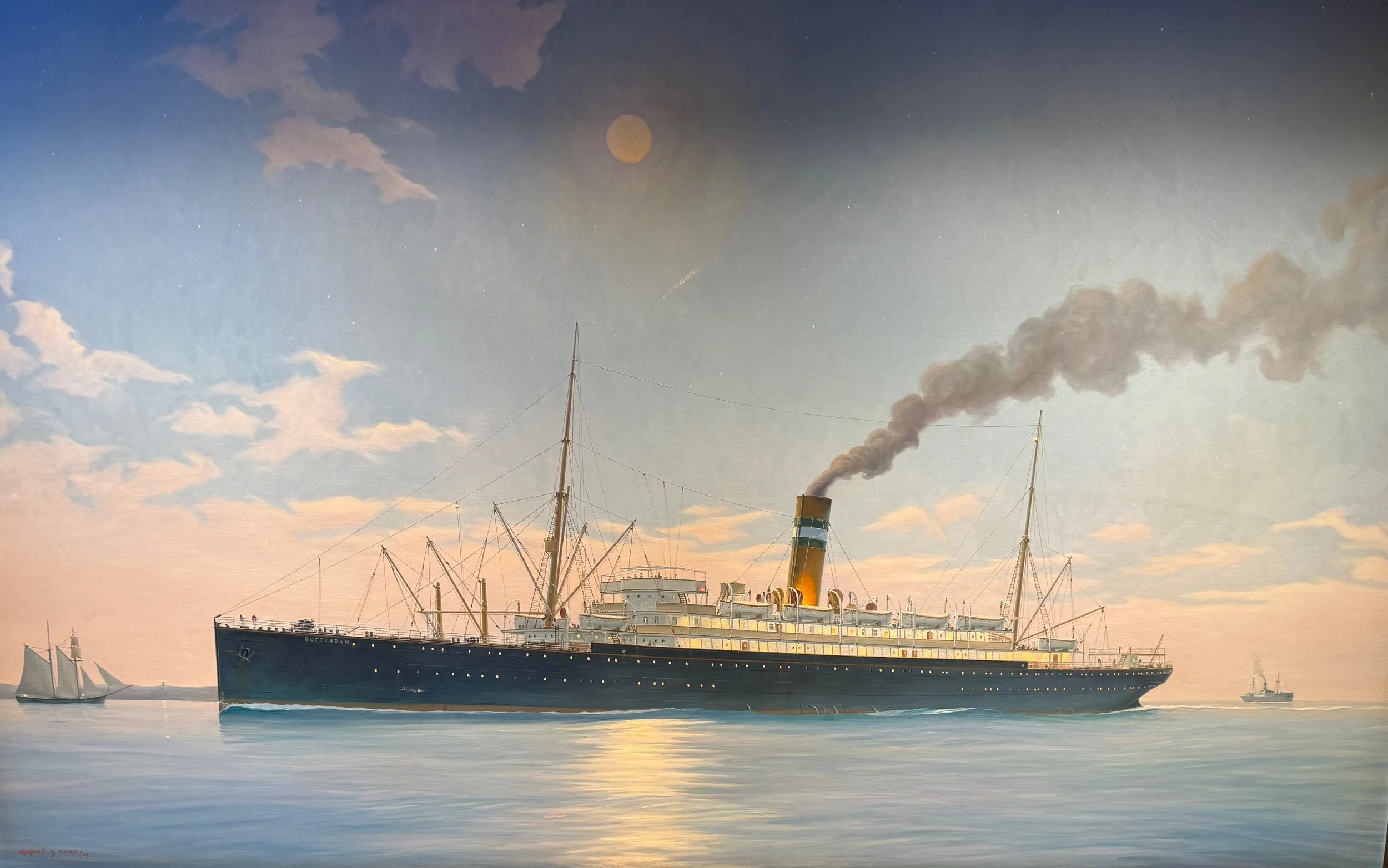
MS Rotterdam
One year after my first Atlantic crossing, the ocean called once again.
This time, however, the voyage would be very different.
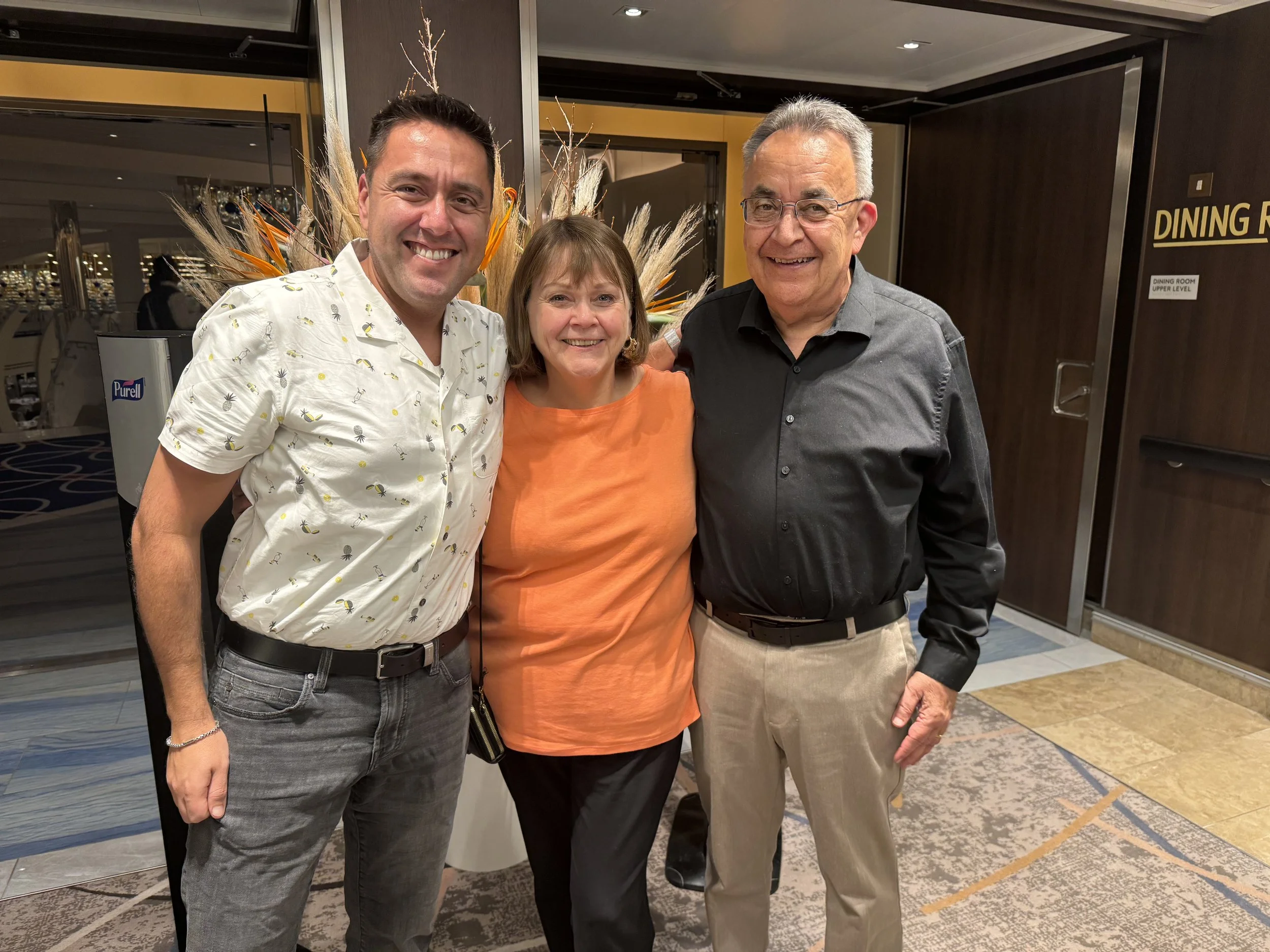
My parents had planned a fourteen-night sailing aboard Holland America Line's Rotterdam, traveling from Fort Lauderdale to Rotterdam in the Netherlands alongside some of their closest friends. Initially, I had no plans to join them. Then my partner suggested something that immediately appealed to me: surprise them.
After coordinating quietly with their travel companions, I booked a cabin and kept the secret right up until embarkation day.
Looking back, that decision would become one of my favorite travel memories.
Before boarding, I carried a certain degree of skepticism. Not about the crossing itself—that part excited me—but about Holland America Line.
At the time, I considered myself firmly "Loyal to Royal." My previous experiences aboard Holland America dated back to my teenage years, and my memory of the brand was one of traditional cruising, perhaps even a little too traditional for my tastes. I expected a quieter experience, fewer activities, and an older demographic.
I would soon discover how wrong I was.
The moment that defined the voyage happened on the very first evening.
Dinner had already begun. My parents were seated with their friends, completely unaware that I was anywhere nearby. As I approached the table, the reactions were priceless.
My father's expression shifted from confusion to disbelief before settling into pure joy. My mother's eyes immediately filled with tears as a smile spread across her face. Around the table, their friends beamed with satisfaction, proud co-conspirators who had successfully kept the secret.
Years later, I suspect I will remember that moment long after I've forgotten many of the ports we visited.
It was the perfect beginning to a voyage that would ultimately be defined not by destinations, but by the people sharing the journey.
Where Royal Caribbean's Anthem of the Seas had emphasized activity and entertainment, Rotterdam encouraged something entirely different.
The ship itself felt more connected to the traditions of classic ocean travel. Its wraparound teak promenade deck, expansive ocean views, and elegant public spaces seemed designed to slow passengers down. Rather than rushing from one activity to the next, guests naturally settled into a more relaxed rhythm.
Holland America's slogan encourages guests to "savor the journey," and nowhere did that philosophy feel more appropriate than in the middle of the Atlantic Ocean.
Days aboard Rotterdam unfolded at an unhurried pace.
Our group often began mornings with breakfast in the main dining room rather than the buffet. It was one of the first things I noticed about the Holland America experience. Meals weren't simply fuel between activities. They were events in themselves.
Service felt deliberate rather than rushed. Presentation mattered. Conversation lingered long after the last cup of coffee had been poured.
After breakfast, many mornings continued at the Dutch Café, a favorite gathering spot onboard. Over coffee and pastries, conversations stretched comfortably into late morning. There was nowhere we needed to be and nothing demanding our attention.
That simple luxury—uninterrupted time—became one of the voyage's greatest gifts.
As the days passed, we settled into a comfortable routine. Some members of our group gravitated toward the fitness center, while others preferred leisurely walks around the promenade deck. I often found myself at the aft pool, enjoying surprisingly warm weather and watching Rotterdam's wake stretch endlessly toward the horizon.
Afternoons frequently brought our group back together for games of Rummikub.
Those gatherings remain among my favorite memories of the voyage. Between my parents, their friends, and the stories that inevitably emerged, the laughter seemed endless. Hours passed in what felt like minutes.
The Atlantic has a unique way of creating space for conversations that everyday life rarely allows.
Evenings revolved around dinner.
As someone who enjoys food, I found Holland America's culinary program particularly impressive. Over fourteen nights, menus remained creative and varied while maintaining a level of quality and presentation that consistently exceeded expectations.
More importantly, dinner became an extension of the day's experiences. It was another opportunity to gather, share stories, and enjoy each other's company.
Afterward, I often gravitated toward Rotterdam's music venues—another pleasant surprise.
BB King's Blues Club quickly became a favorite, featuring talented musicians and vocalists who energized the room night after night. Nearby, dueling pianos entertained enthusiastic crowds before giving way to the Rolling Stone Lounge's rock performances. Together, the venues created an atmosphere far livelier than I ever expected.
It challenged nearly every assumption I had brought onboard.
Eventually, our sea days gave way to ports of call.
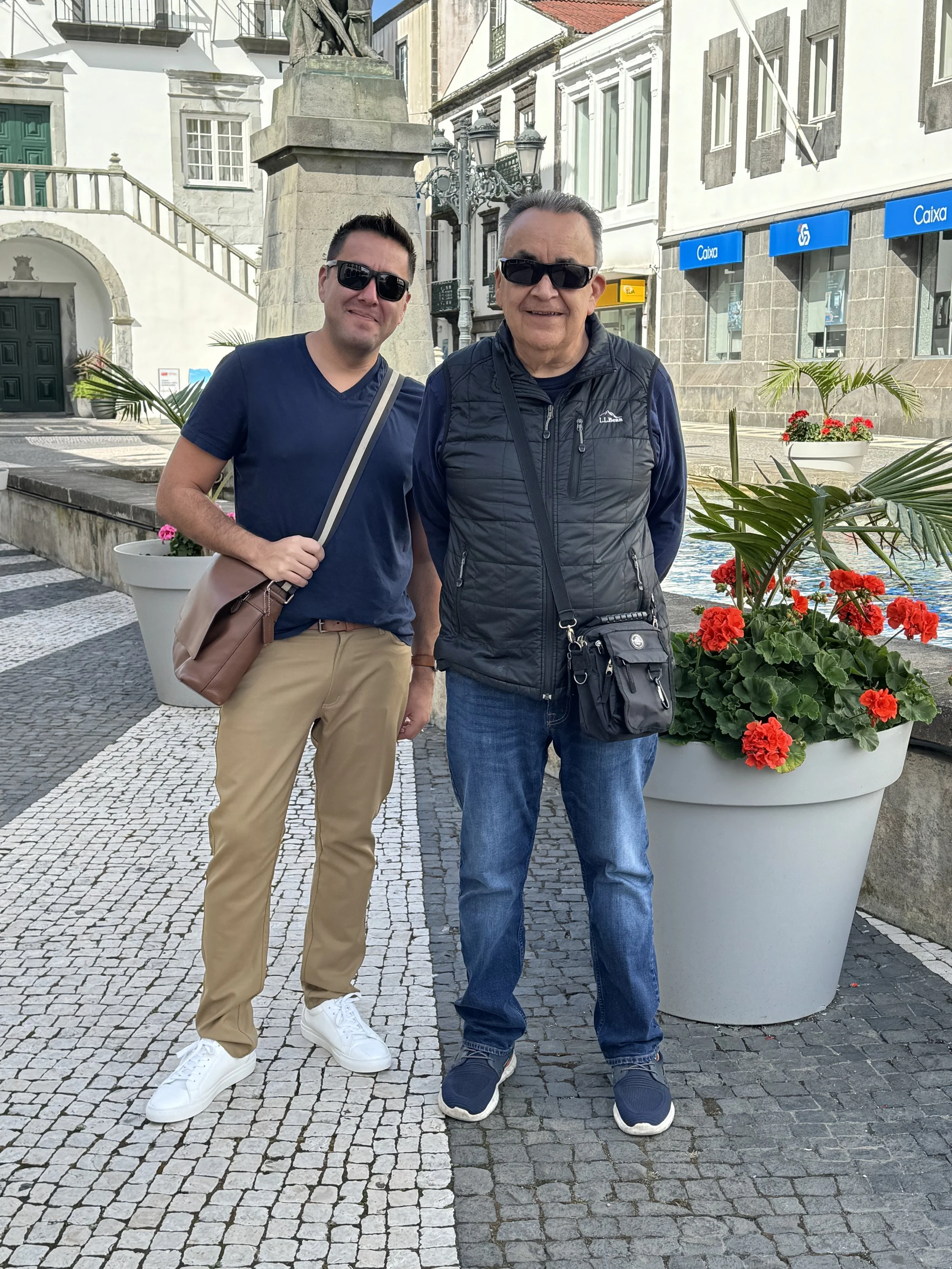
There was Ponta Delgada in the Azores, where we once again enjoyed the city's relaxed charm. Brest provided an opportunity to rent a car and explore the French countryside, including the picturesque towns of Quimper and Locronan. Weymouth offered a quieter day of exploration along England's southern coast, while Honfleur proved just as enchanting during a return visit with my parents as it had during my previous crossing.
Our final stop before Rotterdam was Dover.
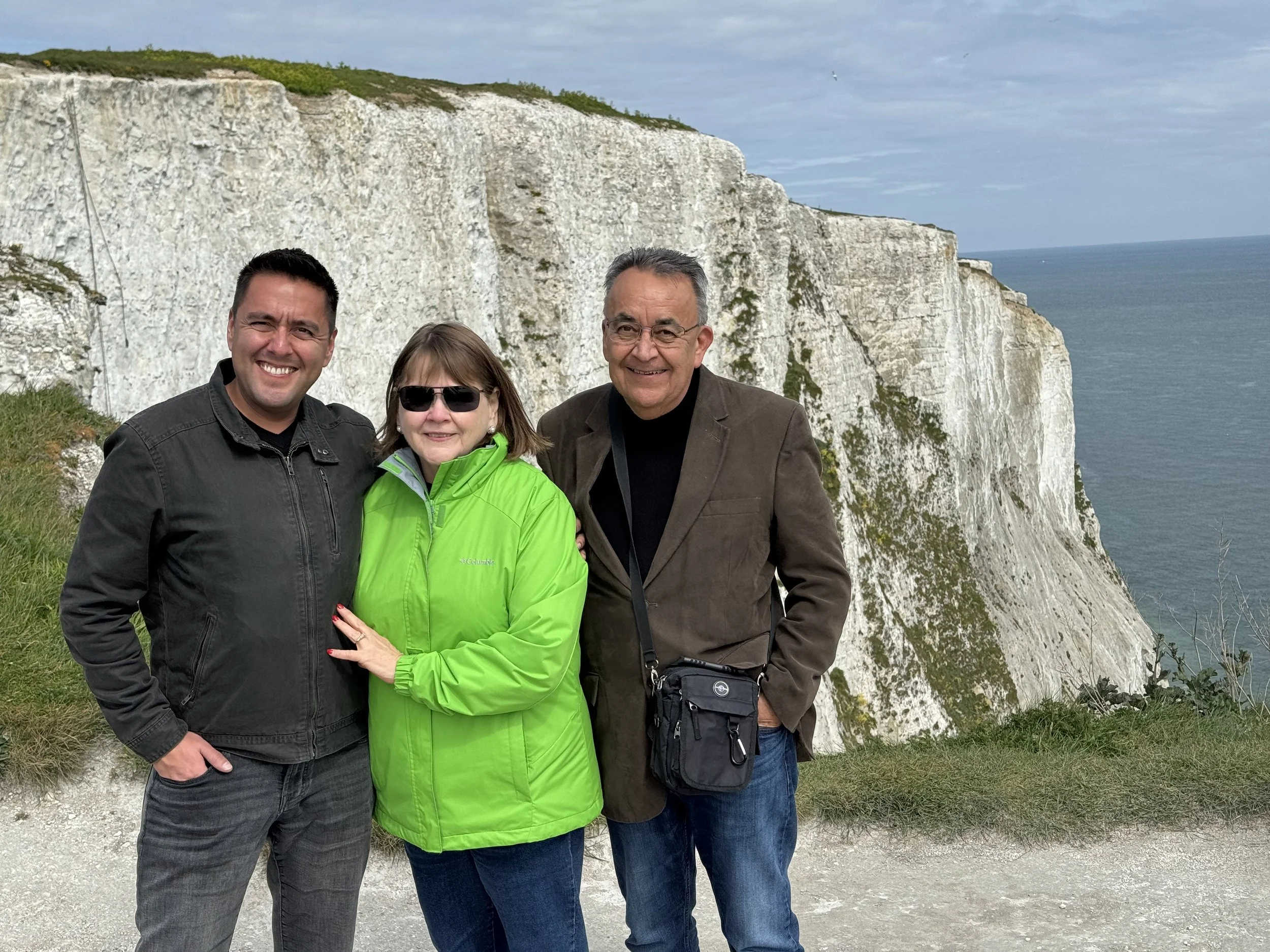
A small-group excursion took us to Canterbury, its magnificent cathedral, a traditional English pub, and ultimately the iconic White Cliffs of Dover. Standing atop those cliffs, looking out over the English Channel, felt like a fitting conclusion to a voyage that had already delivered so many memorable moments.
Soon enough, Rotterdam appeared on the horizon.
As I enjoyed one final breakfast onboard before disembarkation, I realized how quickly two weeks had passed.
I boarded this voyage expecting a crossing of the Atlantic.
What I found instead was something far more meaningful.
Holland America taught me that travel is not always about adventure or discovery. Sometimes it is about connection. It is about creating space for family, strengthening friendships, sharing meals, telling stories, and appreciating the people around you.
More than any destination we visited, that is what I carried home with me.
The Atlantic crossing simply provided the setting.
Part III: Celebrity Cruises – Discovering the Joy of Solo Travel
Celebrity Apex
By the spring of 2026, I unexpectedly found myself with two weeks off and no travel plans.
As luck would have it, a last-minute fare aboard Celebrity Apex appeared at exactly the right moment. The itinerary was irresistible: a thirteen-night transatlantic crossing from Port Canaveral, Florida, to Southampton, England.
There was just one catch.
I would be traveling alone.
My partner has always been incredibly supportive of my love for travel and exploration, but unlike me, he does not enjoy the same amount of vacation time. While he couldn't join me on this particular adventure, he encouraged me to go anyway.
At first, the idea didn't concern me.
I travel solo for work regularly. Airports, hotels, rental cars, and business dinners are all familiar territory. But leisure travel felt different. This wasn't a two-night work trip. This was nearly two weeks at sea.
Alone.
The reality of that didn't truly sink in until embarkation day.
As I arrived at the cruise terminal in Port Canaveral, I was surrounded by couples excitedly beginning vacations together, families gathering for photos, and groups of friends eager to start their journey.
Then there was me.
For a brief moment, I wondered if I had made a mistake.
Would I be bored?
Would I feel isolated?
Would thirteen nights be too long?
There was only one way to find out.
After boarding, I dropped off my bags, grabbed my Kindle, and headed to lunch.
Almost immediately, my concerns began to fade.
The crew's warmth and enthusiasm were evident from the start. Several members of the waitstaff took the time to engage in conversation, asking about my plans and sharing their own excitement about returning to Europe. Their kindness struck a perfect balance—friendly without being intrusive—and helped ease any lingering apprehension.
By the time lunch ended, I felt surprisingly comfortable.
In many ways, solo travel forces you to become comfortable with your own company.
Meals are quieter. Decisions are simpler. There are no compromises about where to eat, when to wake up, or what activities to pursue. Every choice becomes entirely your own.
That freedom was both unfamiliar and refreshing.
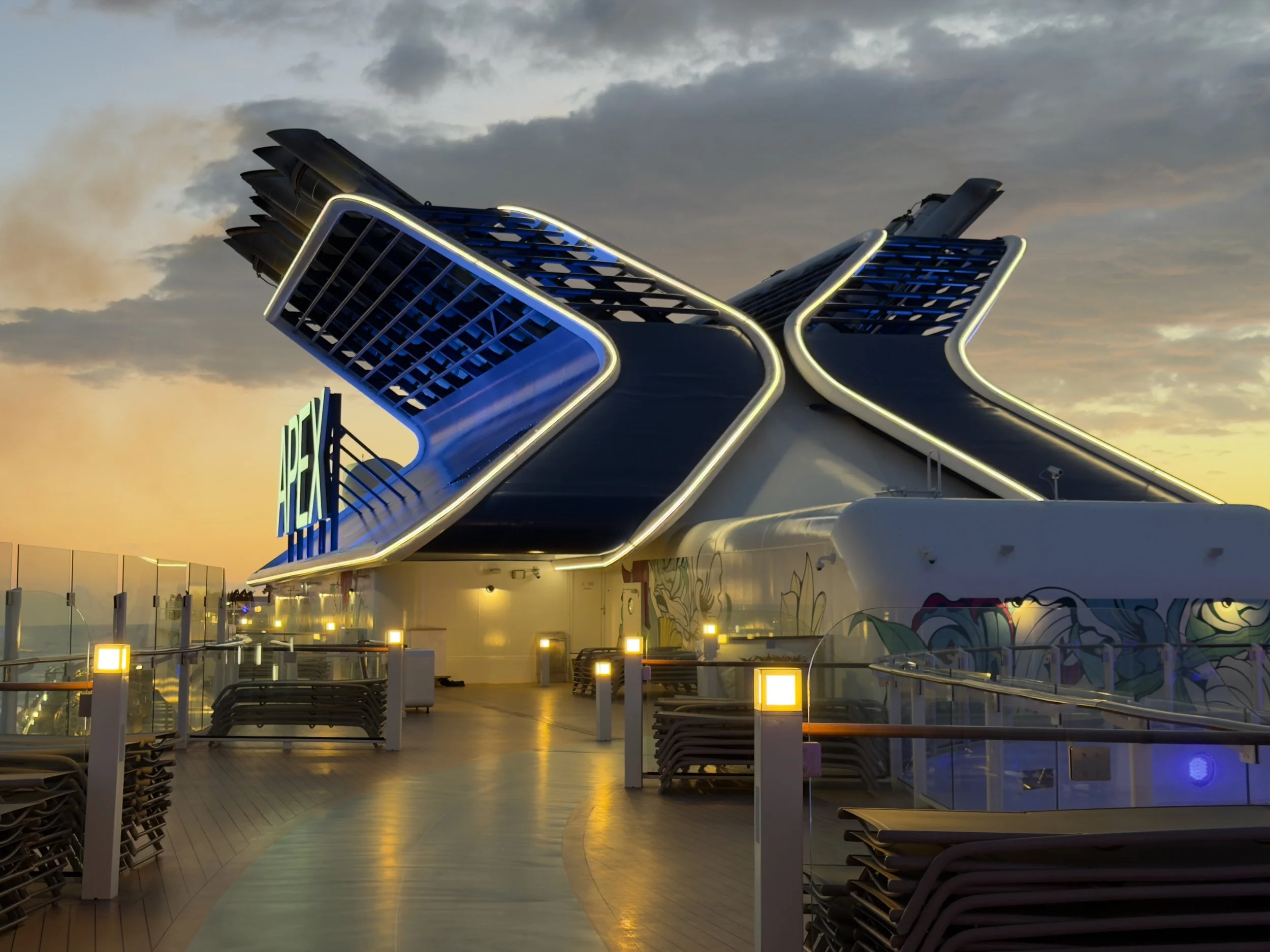
After lunch, I began exploring Celebrity Apex, and one thing became immediately clear: Celebrity understands design.
The ship is stunning.
From the public spaces to the smallest architectural details, every corner feels intentionally crafted. Modern without being cold. Sophisticated without being intimidating. Walking through the ship felt less like exploring a cruise vessel and more like discovering a floating boutique hotel.
As I wandered through the various venues, I began to appreciate one of solo travel's greatest advantages.
I could move entirely at my own pace.
When traveling with a partner, family, or friends, there is always a natural desire to ensure everyone is enjoying themselves. That often means compromise. Solo travel removes that equation entirely. Every moment can be spent exactly as you choose.
For me, that meant focusing on wellness.
I missed the solo traveler meetup on embarkation day because I chose to visit the gym instead. Looking back, that decision perfectly set the tone for the rest of the voyage.
This crossing would become a form of self-care.
Afternoons often began with a workout, followed by time in the thermal spa before getting ready for dinner. It was a routine that quickly became one of my favorite parts of the day.
Dining aboard Apex was equally enjoyable.
Instead of one traditional main dining room, Celebrity offers four distinct restaurants, each featuring a rotating menu alongside specialty dishes unique to that venue. The concept created a sense of variety throughout the voyage and helped make each evening feel slightly different from the last.
Dinner was typically followed by one of Celebrity's production shows.
These performances exceeded every expectation I had. The quality of the music, choreography, staging, and technology rivaled many productions I have seen ashore. On evenings when there wasn't a show, I often found myself in Eden or one of the ship's lounges enjoying live music and watching fellow passengers dance late into the evening.
Over time, familiar faces began to emerge.
The same people appeared at trivia competitions, coffee bars, evening performances, and poolside loungers. While I rarely initiated long conversations, there was comfort in the quiet recognition that developed. A smile. A nod. A brief exchange in passing.
As an introvert, it was exactly the level of social interaction I needed.
Days at sea settled into an easy rhythm.
Mornings typically involved a leisurely breakfast, a cup of coffee, and a quick check-in with family back home. Unlike my previous crossings, I appreciated having internet access throughout the voyage. While I generally enjoy disconnecting, staying connected offered reassurance and helped eliminate any sense of isolation.
Between trivia, walks around the ship, reading, and people-watching, the sea days seemed to pass effortlessly.
Soon enough, Bermuda appeared on the horizon.
At King's Wharf, I chose a different kind of exploration. Rather than heading to the beaches, I took a ferry to Hamilton and spent the morning visiting the Bermuda Underwater Exploration Institute before wandering through the city at my own pace. It was the sort of day that perfectly suited solo travel—unstructured, spontaneous, and entirely my own.
Four more sea days brought us to a familiar destination: Ponta Delgada in the Azores.
Having explored the city during my previous crossings, I decided it was time to venture farther afield. Not wanting the rigidity of a large cruise excursion yet hesitant to explore too remotely on my own, I joined a small-group cycling tour around Sete Cidades.
It proved to be one of the highlights of the voyage.
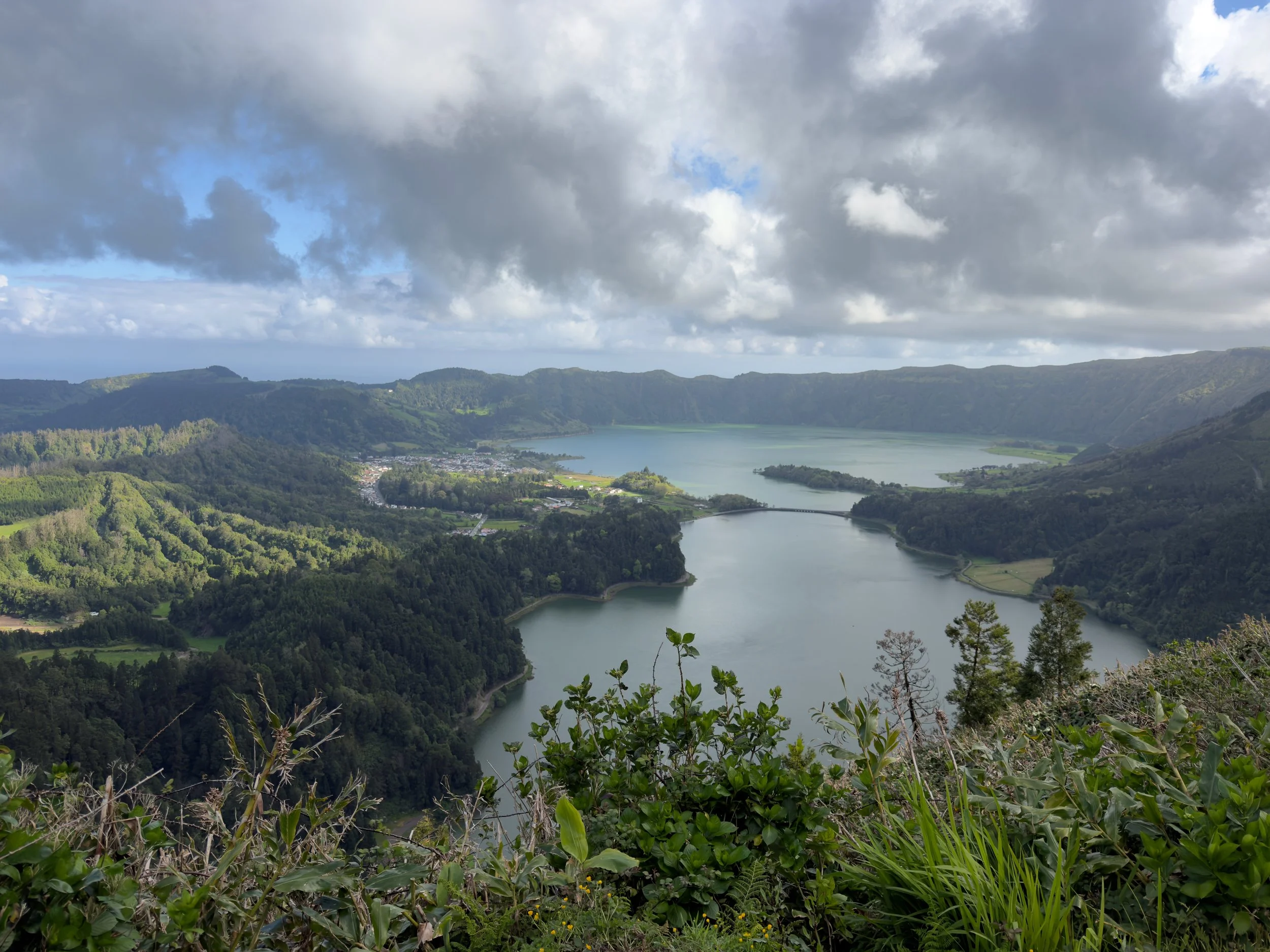
Cycling through volcanic landscapes and overlooking the region's famous crater lakes offered a completely different perspective of the Azores. The experience felt active, immersive, and deeply connected to nature. Better still, there was still time afterward to enjoy the city itself before returning to the ship.
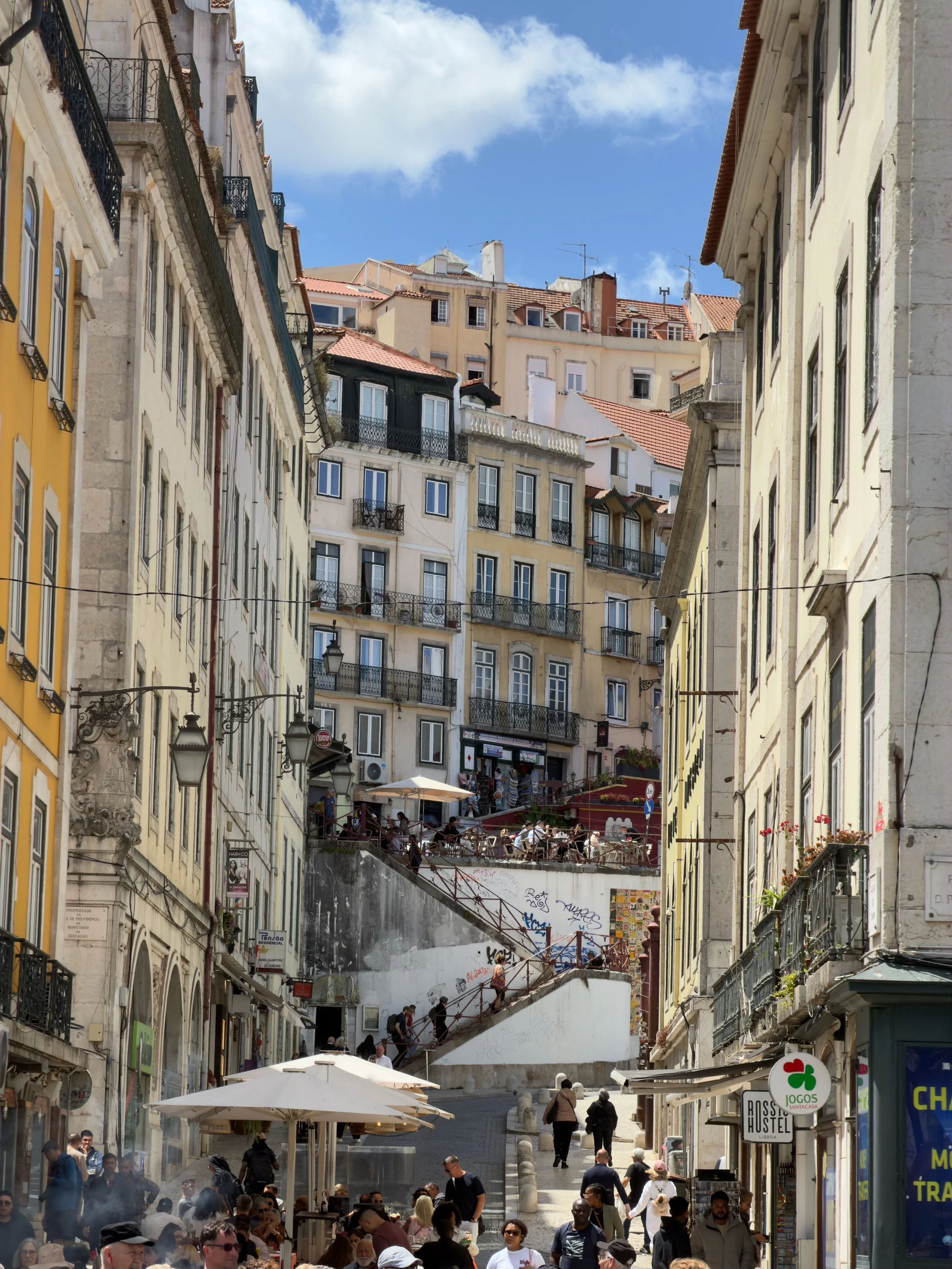
The next major stop was Lisbon.
Of all the ports on this crossing, Lisbon may have left the strongest impression.
Its steep hills, colorful neighborhoods, and vibrant atmosphere immediately captivated me. In some ways, the city reminded me of San Francisco, yet with a distinctly European character all its own.
As I wandered through winding streets lined with cafés, galleries, and historic architecture, I found myself wishing my partner were there to experience it alongside me.
Travel has a way of revealing both what you enjoy and who you miss.
Lisbon did both.
Eventually, two final sea days carried us toward Southampton.
Unlike many itineraries that become increasingly port-intensive near the end, this crossing allowed time to unwind and reflect before arrival. The additional sea days also eased the gradual transition across time zones. Each evening, clocks moved forward another hour—a gentle adjustment compared to the abrupt shock of transatlantic air travel.
Then, just as it had on my previous crossings, the journey seemed to end almost as quickly as it had begun.
Southampton appeared on the horizon.
The Atlantic was behind me once again.
Looking back, some of my favorite memories from this voyage were not found in ports or onboard activities.
They were found in the quiet moments.
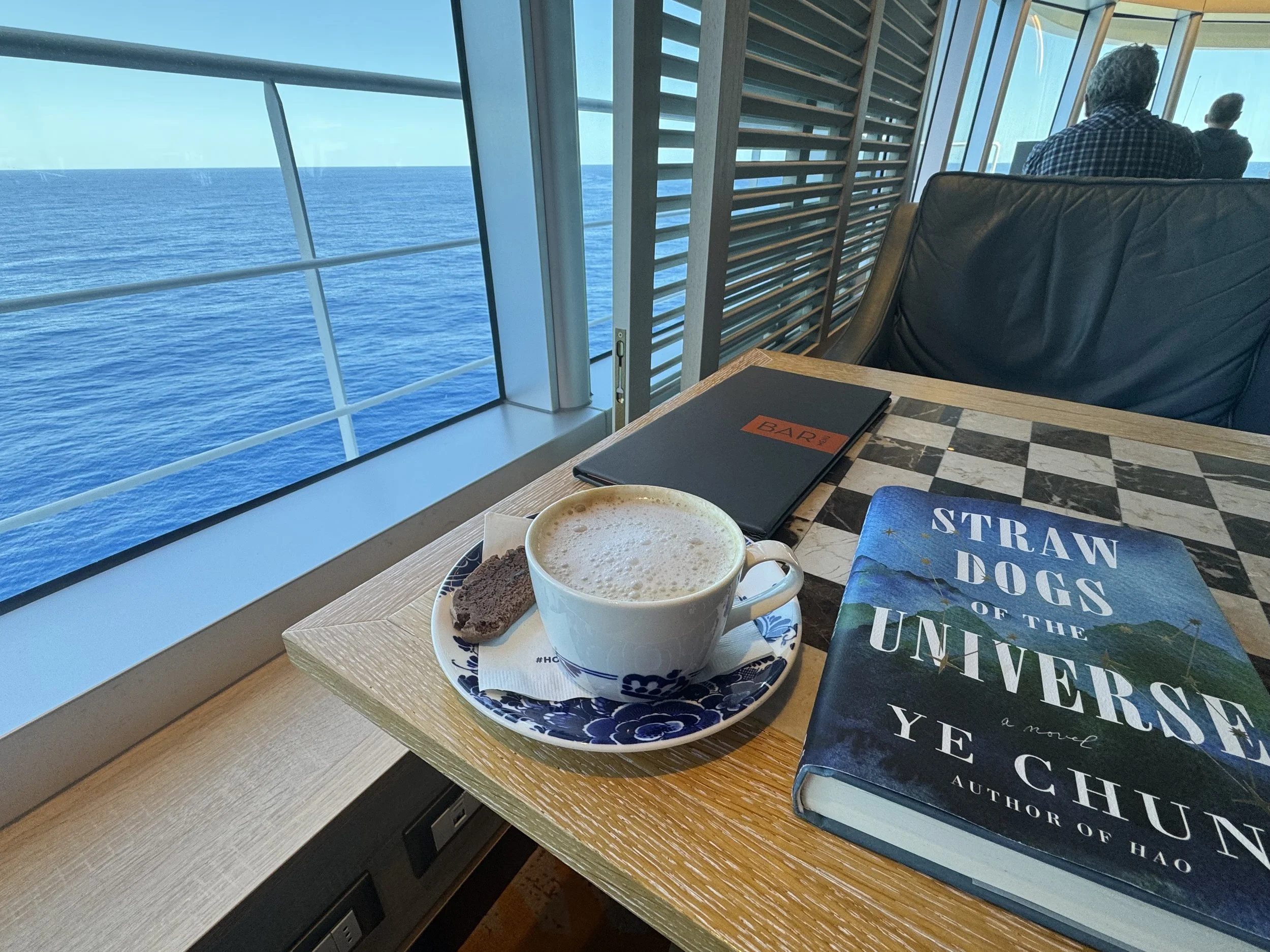
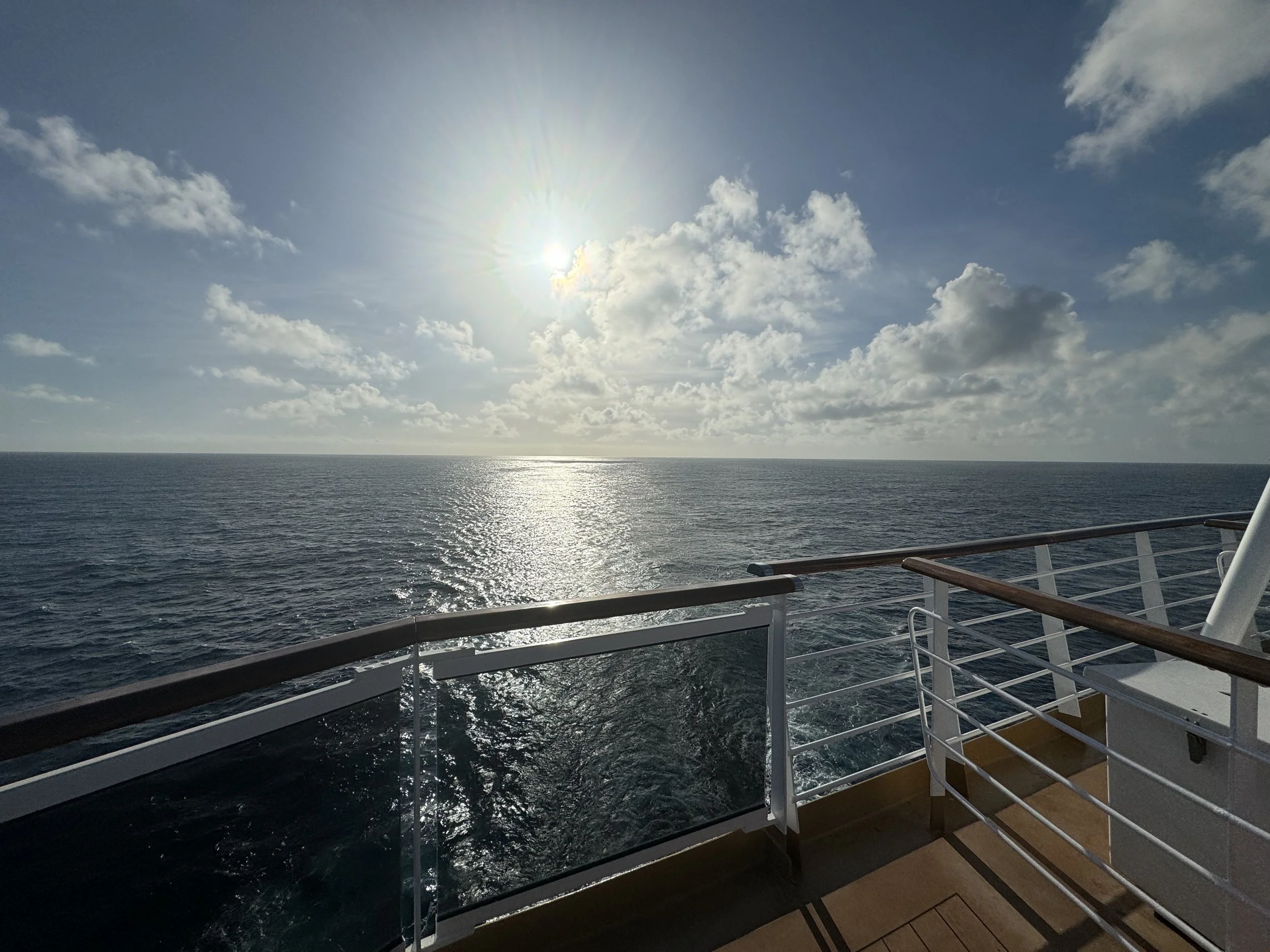
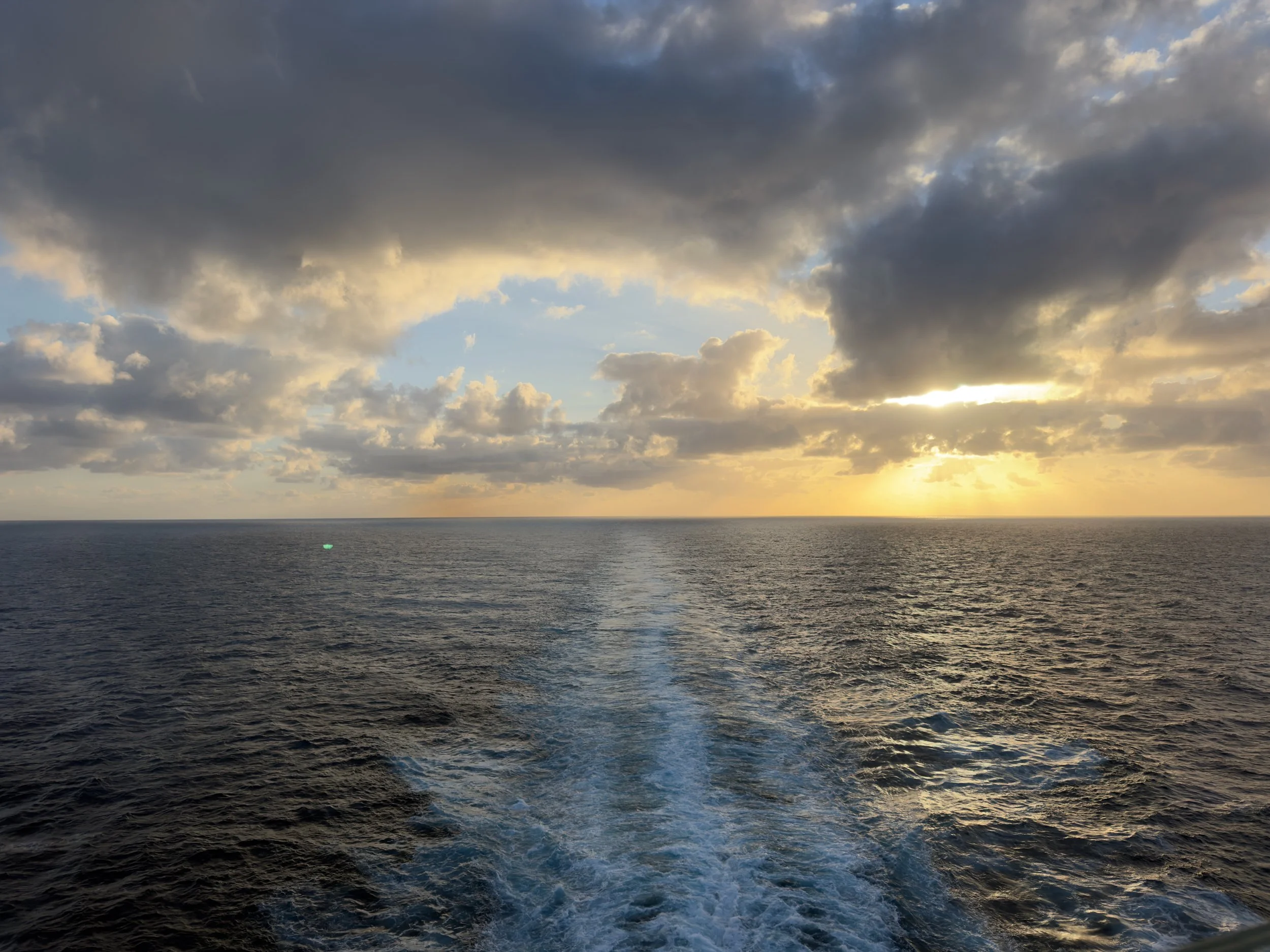
Watching the ocean pass endlessly beyond the ship's railings.
Reading for hours without distraction.
Enjoying a sunrise while most passengers were still asleep.
Walking the jogging track early in the morning with nothing but sea and sky surrounding me.
Those moments taught me something unexpected.
Solitude and loneliness are not the same thing.
In fact, given the right environment, solitude can be restorative.
Would I travel solo again?
Absolutely.
That said, I will always prefer sharing these experiences with my partner. No solo journey can replace that.
But if circumstances present an opportunity to travel on your own, don't let fear hold you back.
You may discover new destinations.
More importantly, you may discover something about yourself.
I know I did.

What Three Crossings Taught Me
If there is one lesson I have taken away from three Atlantic crossings, it is that the journey itself matters just as much as the destination.
Modern travel often emphasizes efficiency. We rush through airports, count down the hours until arrival, and view transportation as little more than a means to an end. Crossing an ocean by ship turns that philosophy upside down. The voyage becomes the destination, and somewhere between one continent and another, time begins to move differently.
My first crossing aboard Royal Caribbean taught me the joy of sharing an adventure with someone I love. Between sea days, evening shows, and quiet moments watching the horizon disappear into the distance, I was reminded that travel is often less about where you go and more about who is standing beside you when you get there.
A year later, aboard Holland America's Rotterdam, the focus shifted from adventure to connection. Long breakfasts, afternoon games of Rummikub, leisurely dinners, and conversations that stretched far beyond what everyday life normally allows reminded me how valuable uninterrupted time with family and friends can be. In a world that constantly competes for our attention, the Atlantic provided a rare opportunity to simply be present with the people around me.
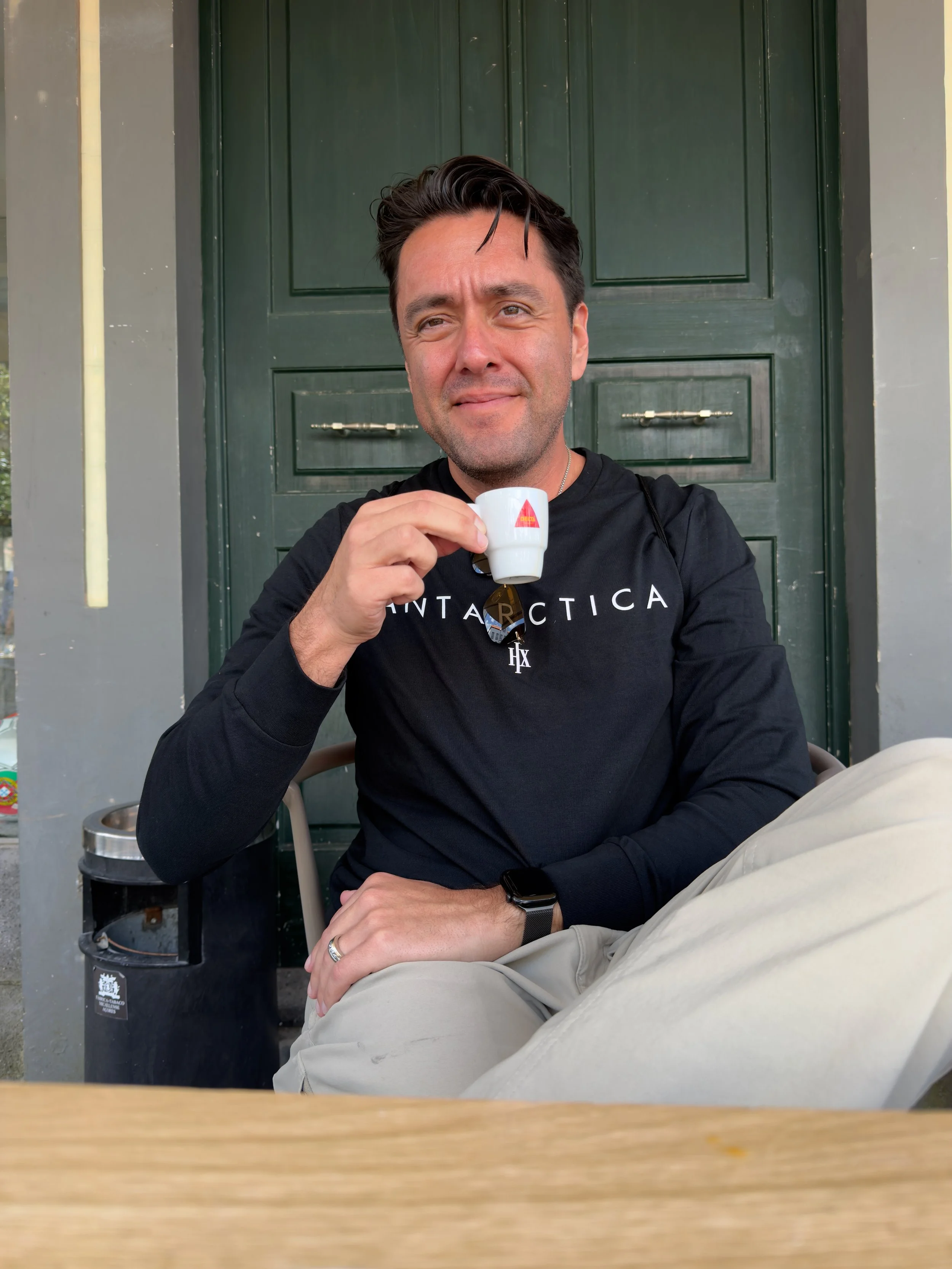
My most recent crossing aboard Celebrity Apex revealed something entirely different. Traveling solo challenged me to become comfortable with stillness and solitude. Without familiar companions nearby, I discovered a renewed appreciation for quiet moments: a sunrise over an empty ocean, a morning coffee enjoyed without an agenda, an evening walk around the ship while the rest of the world seemed far away. Those moments taught me that solitude and loneliness are not the same thing. Given the space to slow down, solitude can be restorative.
Each voyage offered a different perspective, yet they all shared a common thread. Whether traveling with a partner, surrounded by family and friends, or entirely on my own, the Atlantic created something that modern life rarely provides: space to think, connect, reflect, and appreciate the present moment.
Perhaps that is the true art of ocean travel. It is not simply about crossing from one shore to another. It is about allowing yourself the time to experience the journey in between.
Conclusion
As I stepped ashore at the end of my third Atlantic crossing, I found myself reflecting on what had drawn me back to the ocean again and again.
At first glance, these voyages appeared very different. One was a celebration shared with my partner. Another was filled with family, old friends, and new friendships formed at sea. The third was a solo journey that pushed me beyond my comfort zone and taught me to embrace my own company. Different ships, different cruise lines, and different travel companions—all connected by the same vast ocean.
Yet each crossing offered something increasingly rare in our modern world: time.
Time to disconnect from the constant demands of daily life. Time to have conversations that weren't rushed. Time to watch a sunrise without immediately reaching for a phone. Time to reflect, recharge, and reconnect—with others and with myself.
The Atlantic has a way of putting life into perspective. Surrounded by nothing but sea and sky, the urgency of everyday routines begins to fade. In its place comes a renewed appreciation for simple pleasures: a leisurely breakfast, a good book, a meaningful conversation, or the quiet beauty of watching the horizon stretch endlessly in every direction.
Looking back, I realize that the destinations were never the sole reason for these journeys. The ports were wonderful, and the experiences ashore were memorable, but the true magic happened during the days in between. It happened during the sea days, when life slowed to the rhythm of the ocean and the journey itself became the destination.
Perhaps that is why transatlantic crossings continue to captivate me. They are more than a way to travel from one continent to another. They are an invitation to step away from the noise of the world, embrace a slower pace, and rediscover the joy of simply being present.
Three crossings. Three perspectives. One enduring lesson: sometimes the most meaningful journeys are not measured by how quickly we arrive, but by how fully we experience the voyage itself.
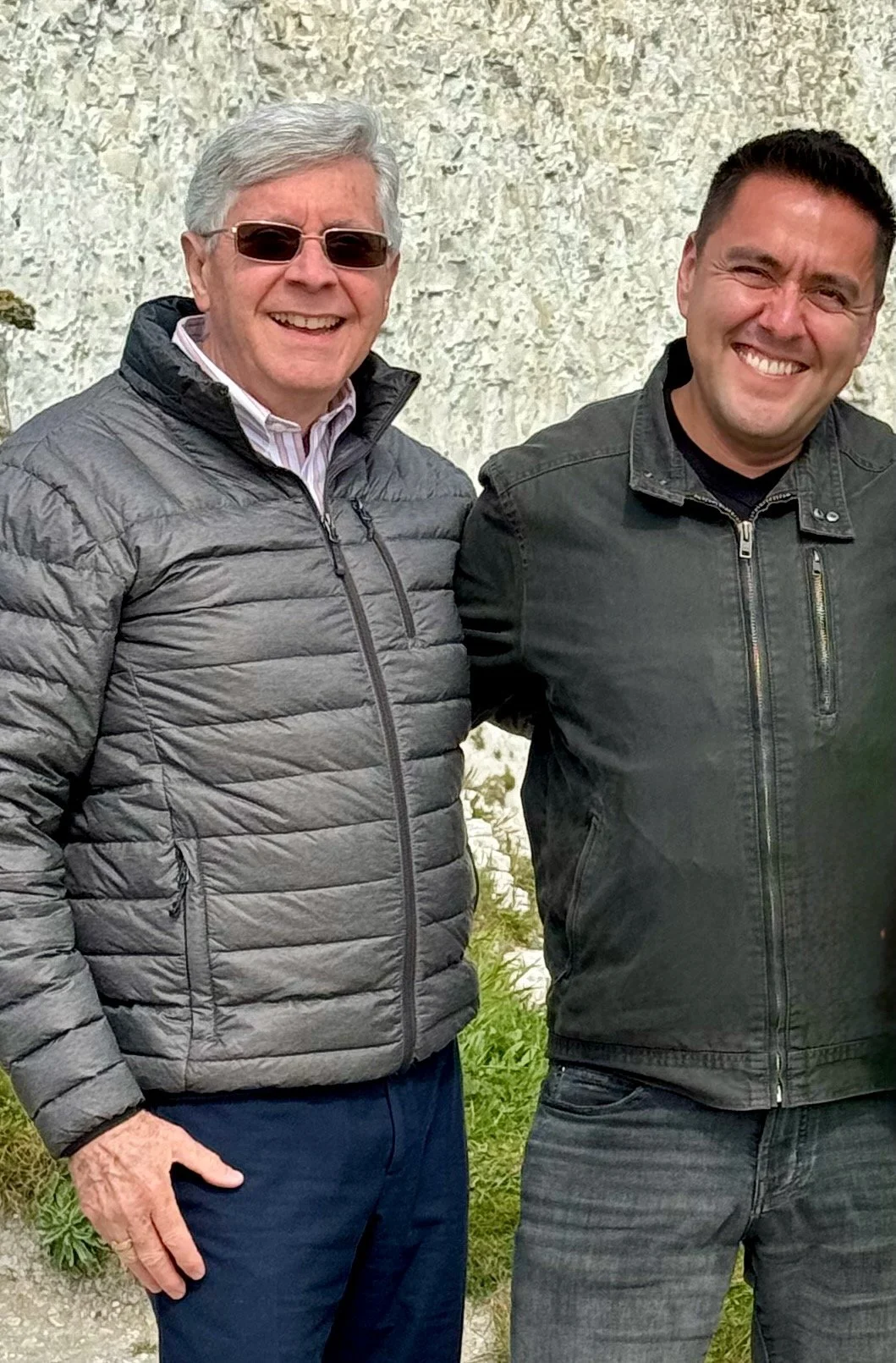
For Carlos Chao
This article is dedicated to Carlos Chao, whom I had the privilege of meeting aboard Holland America Line's Rotterdam during my second Atlantic crossing.
Carlos possessed a genuine love of travel, an endless curiosity about the world, and a remarkable ability to connect with those around him. Though our time together was brief, his kindness, warmth, and adventurous spirit left a lasting impression on me.
As I reflect on the journeys described in these pages, I am reminded that some of the most meaningful parts of travel are the people we meet along the way. Carlos was one of those people.
This article is dedicated to his memory. Fair winds and following seas, my friend.
Have you ever considered crossing the Atlantic by sea? Whether you're looking for a classic ocean crossing, a repositioning cruise, or a longer voyage that embraces the art of slow travel, I'd be happy to help you find the right journey. Click below to submit an inquiry.
Antarctica: Journey to the Great White Continent
There are few places left on Earth that still feel truly untamed. Antarctica is one of them.
Steven Alcala | February 2026
There are few places left on Earth that still feel truly untamed. Antarctica is one of them.
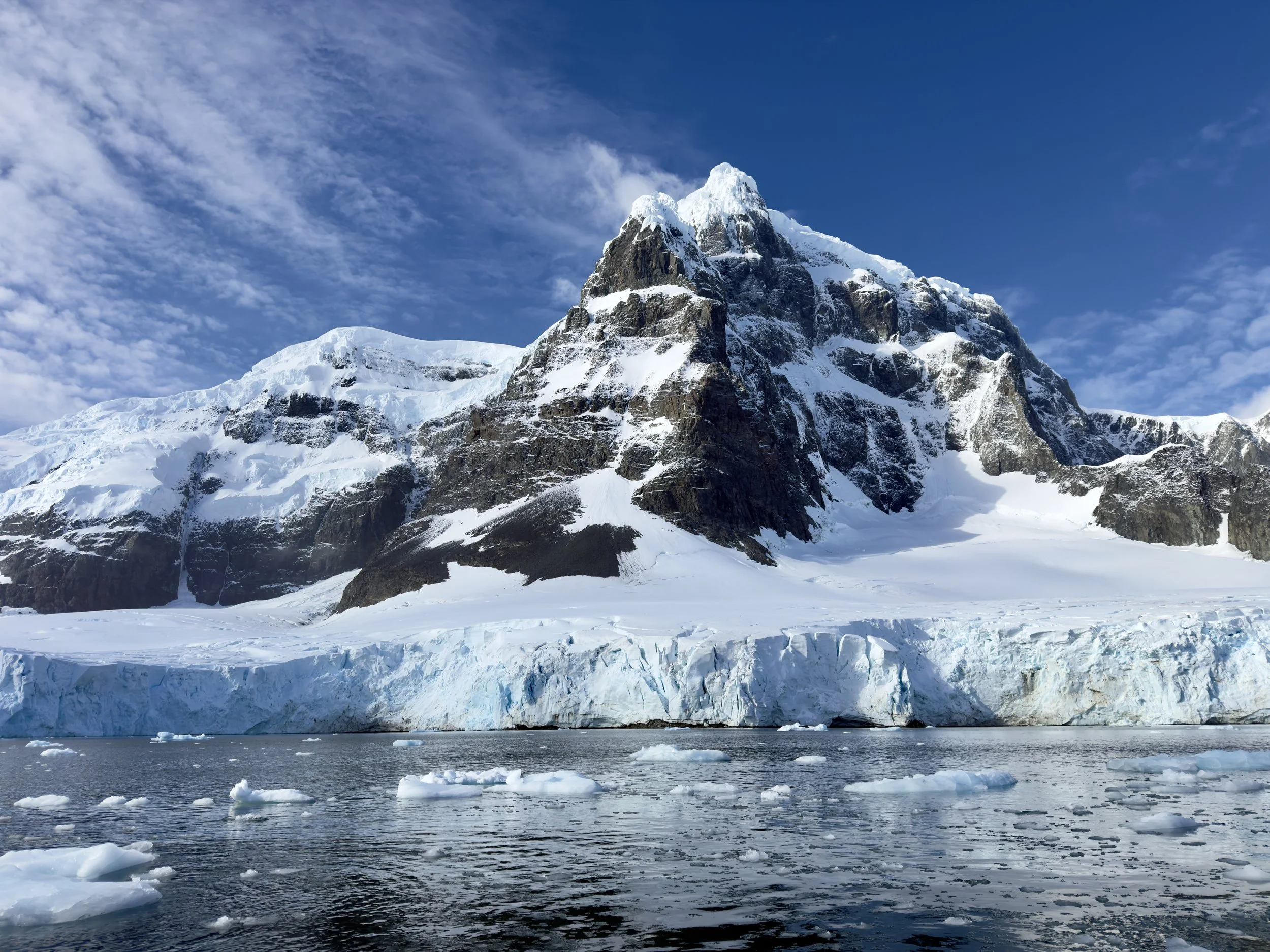
For years, I had admired photographs of towering icebergs, vast glaciers, and colonies of penguins standing against an endless backdrop of snow and sea. Yet no image, documentary, or travel article could have prepared me for the reality of seeing it with my own eyes.
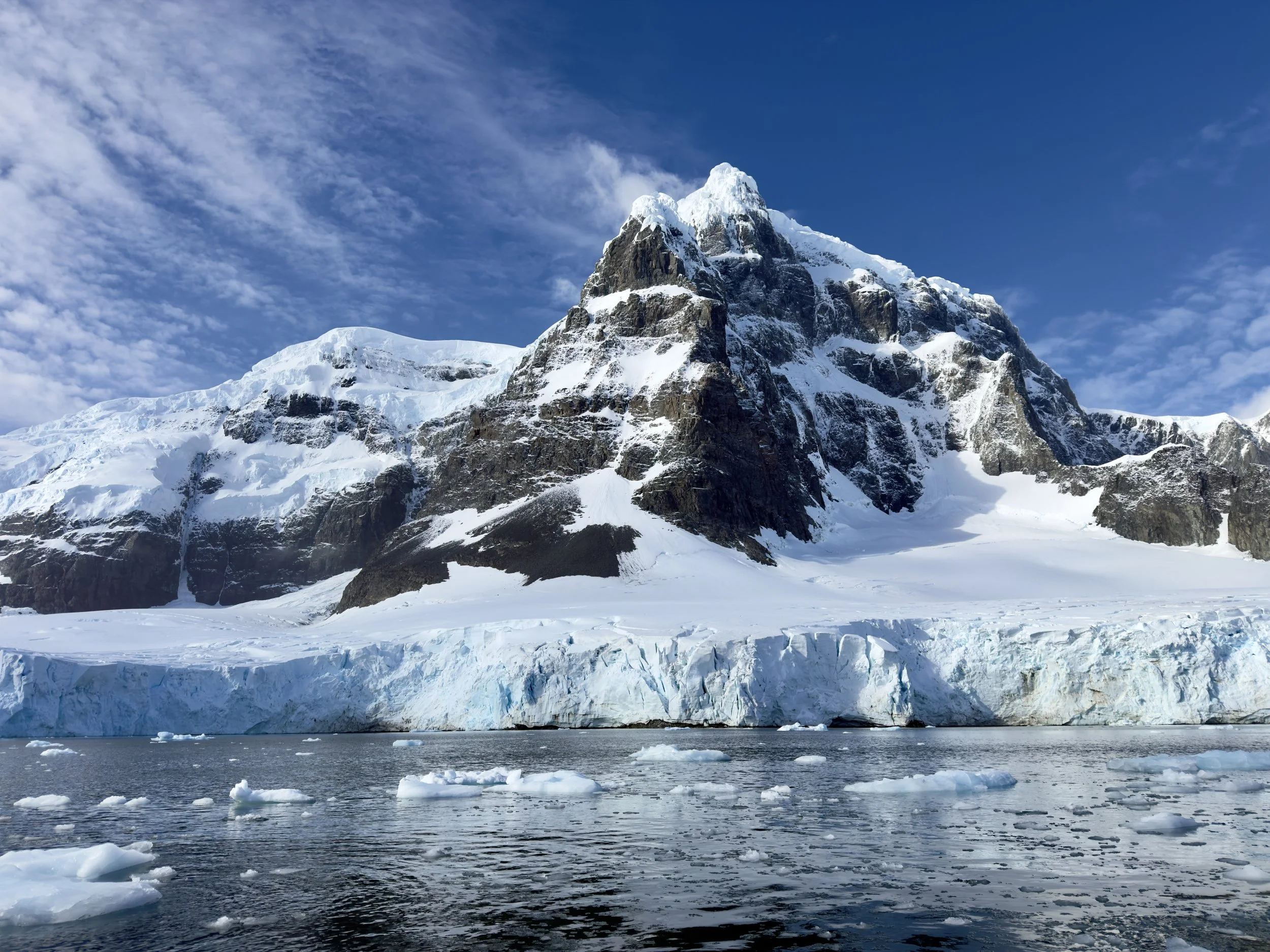
The moment Antarctica first appeared beyond the horizon, it seemed less like a destination and more like another world. Mountains of ice rose from the ocean in shades of blue and white that hardly seemed real. The silence was profound, interrupted only by the distant exhale of whales and the occasional crack of ancient ice shifting in the cold. It was beautiful, humbling, and almost impossible to describe.
Even now, as I reflect on the experience, I find myself searching for words that adequately capture what I saw. Antarctica is not simply a place you visit—it is a place you feel. It reminds you how vast our planet truly is and how small we are within it.
What follows is a look back at my journey to the Great White Continent aboard HX Expeditions' MS Fridtjof Nansen, from the vibrant streets of Buenos Aires to one of the most remote and pristine regions on Earth.
Beginning the Journey
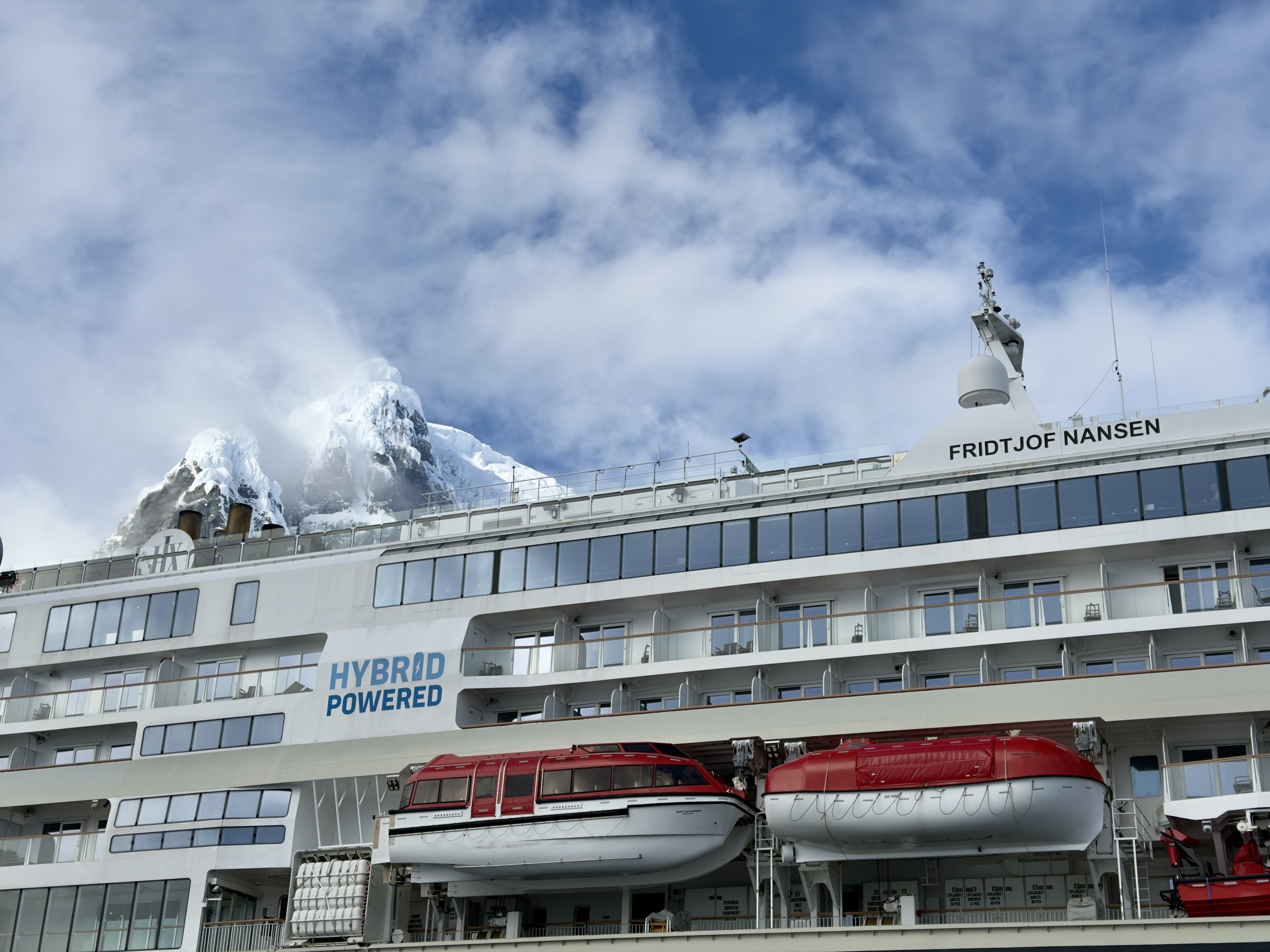
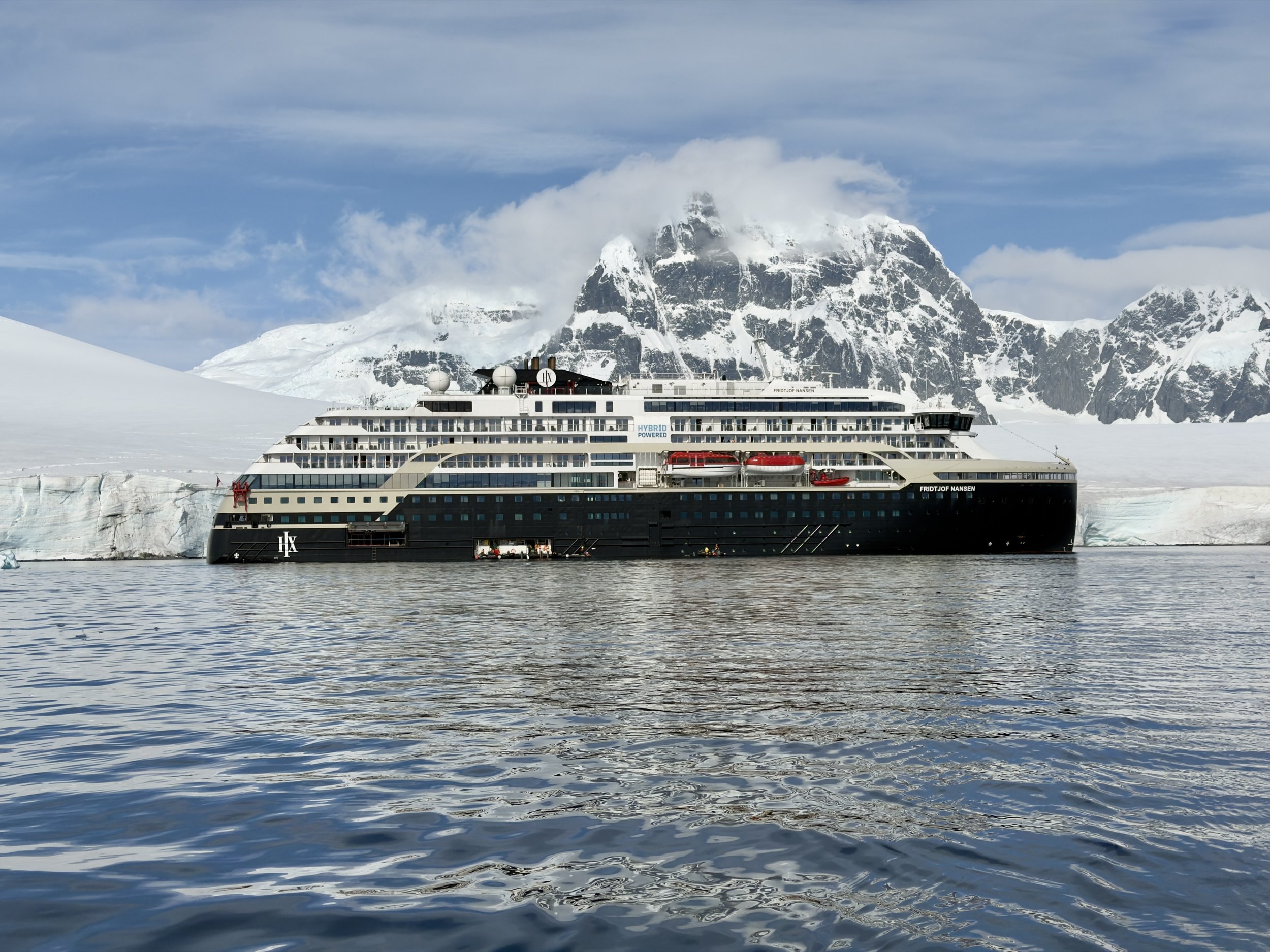
After considerable research, I chose to travel with HX Expeditions, a Norwegian company whose roots in polar exploration stretch back more than 150 years. Their 11-night Highlights of Antarctica voyage aboard the hybrid-powered MS Fridtjof Nansen offered the perfect balance of exploration, comfort, and environmental stewardship.
Like many Antarctic expeditions, our journey began in Buenos Aires, Argentina. While the voyage included a pre-cruise hotel stay, we decided to arrive several days early. When traveling this far for an experience of this magnitude, I prefer building in extra time rather than risking delays or missed connections.
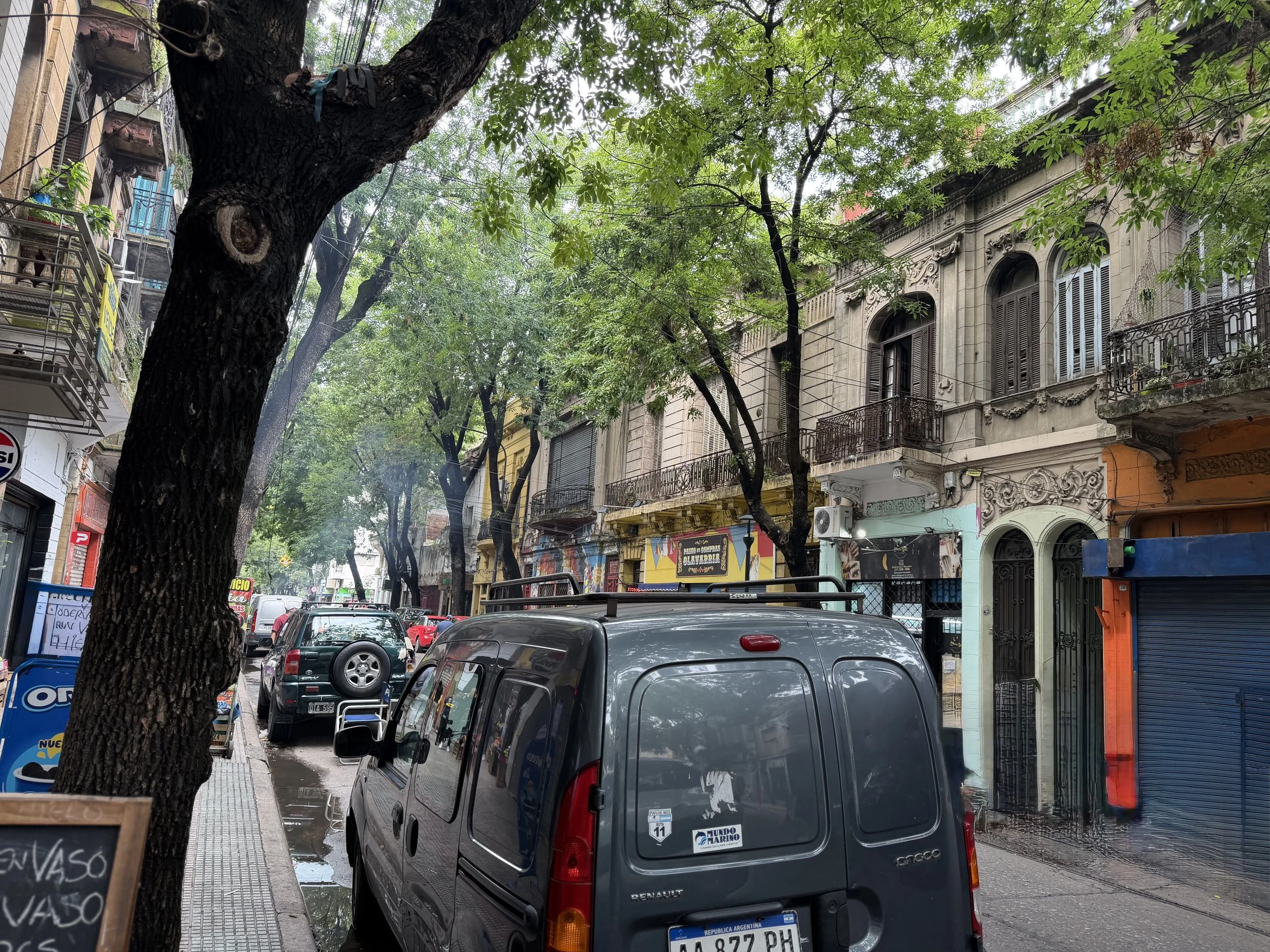
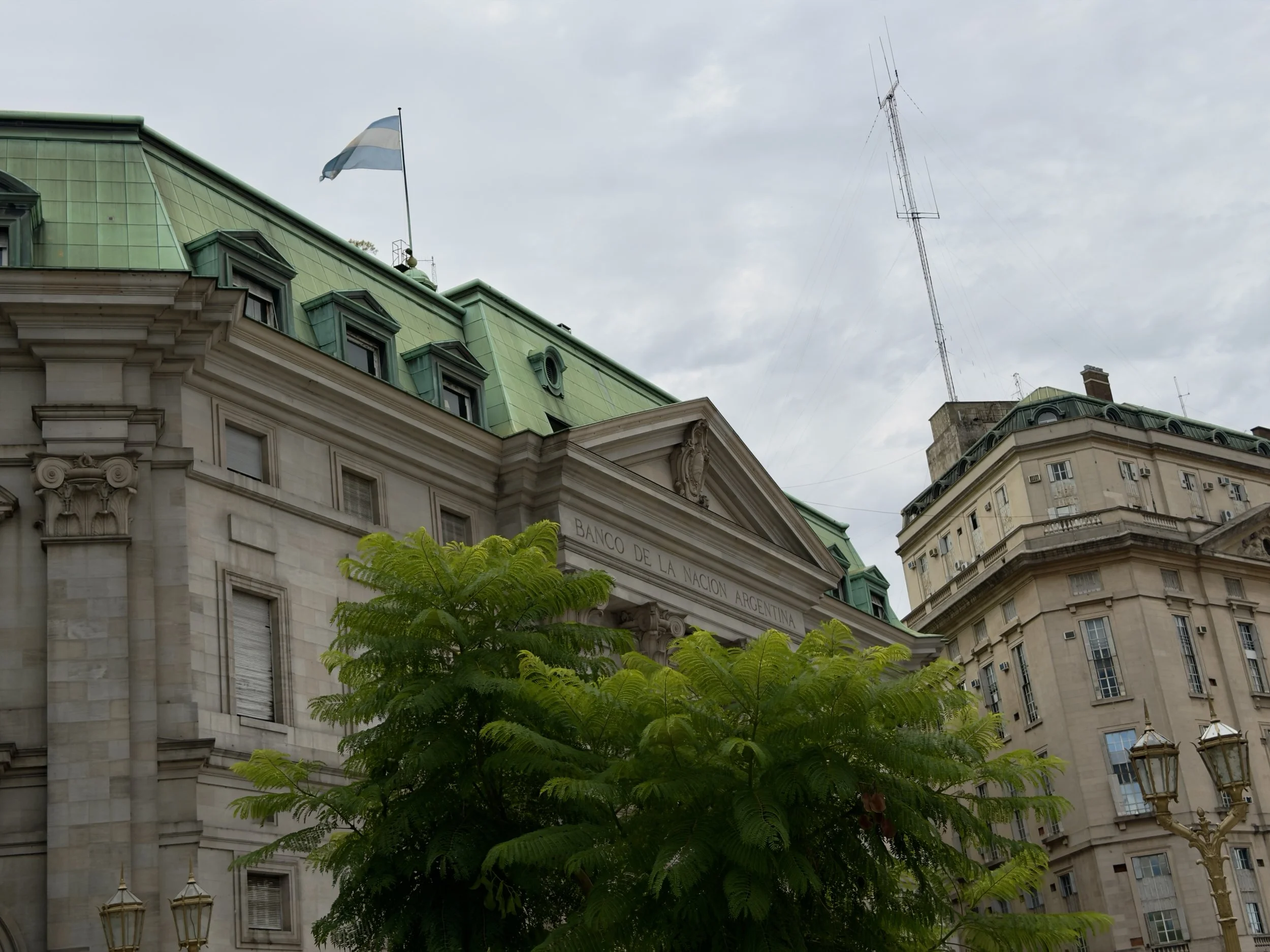
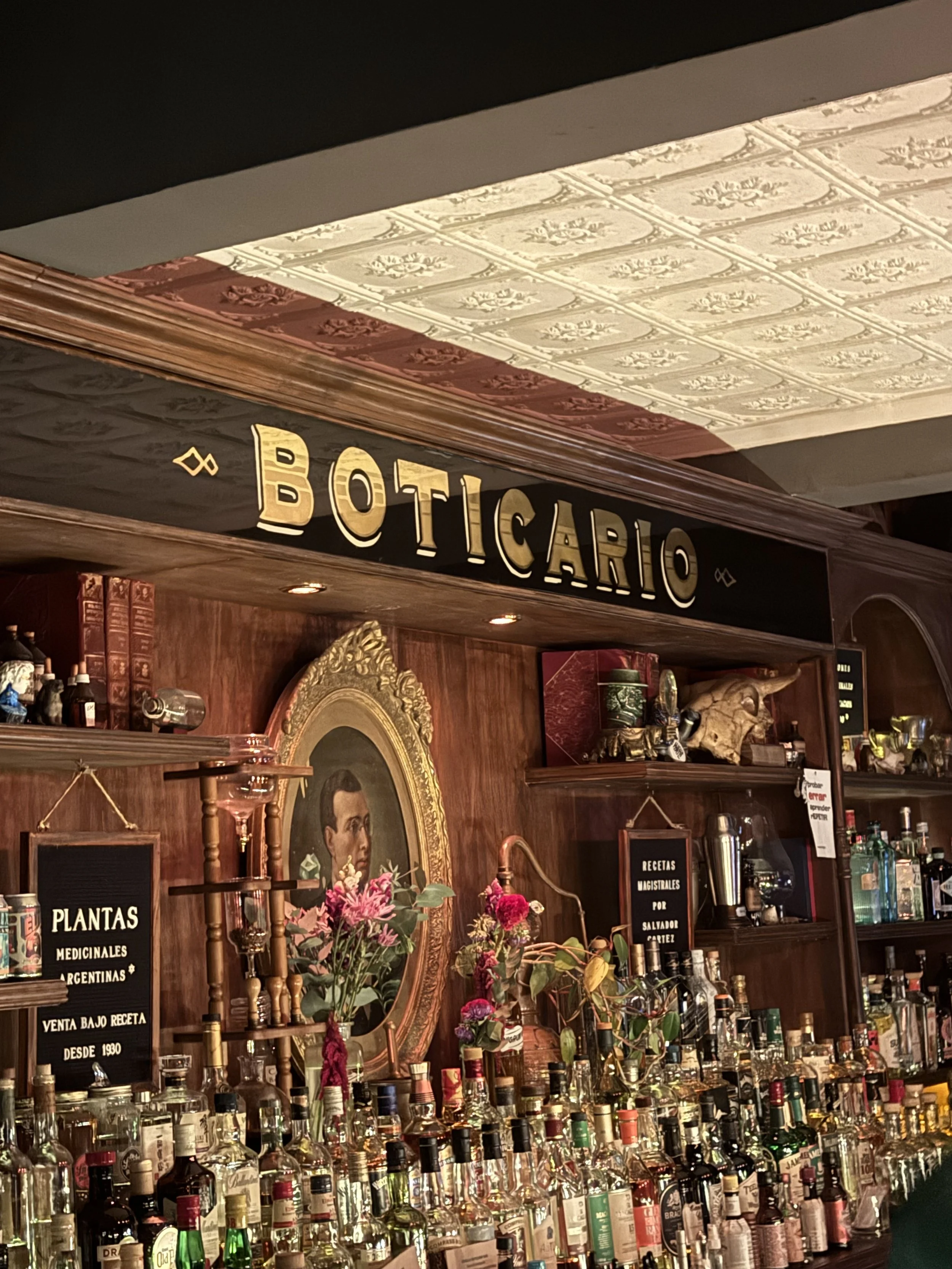
Our first two nights were spent at the Palladio Hotel Buenos Aires in the elegant Recoleta neighborhood. It proved to be an excellent base for exploring the city, with many attractions within walking distance and convenient access to public transportation.
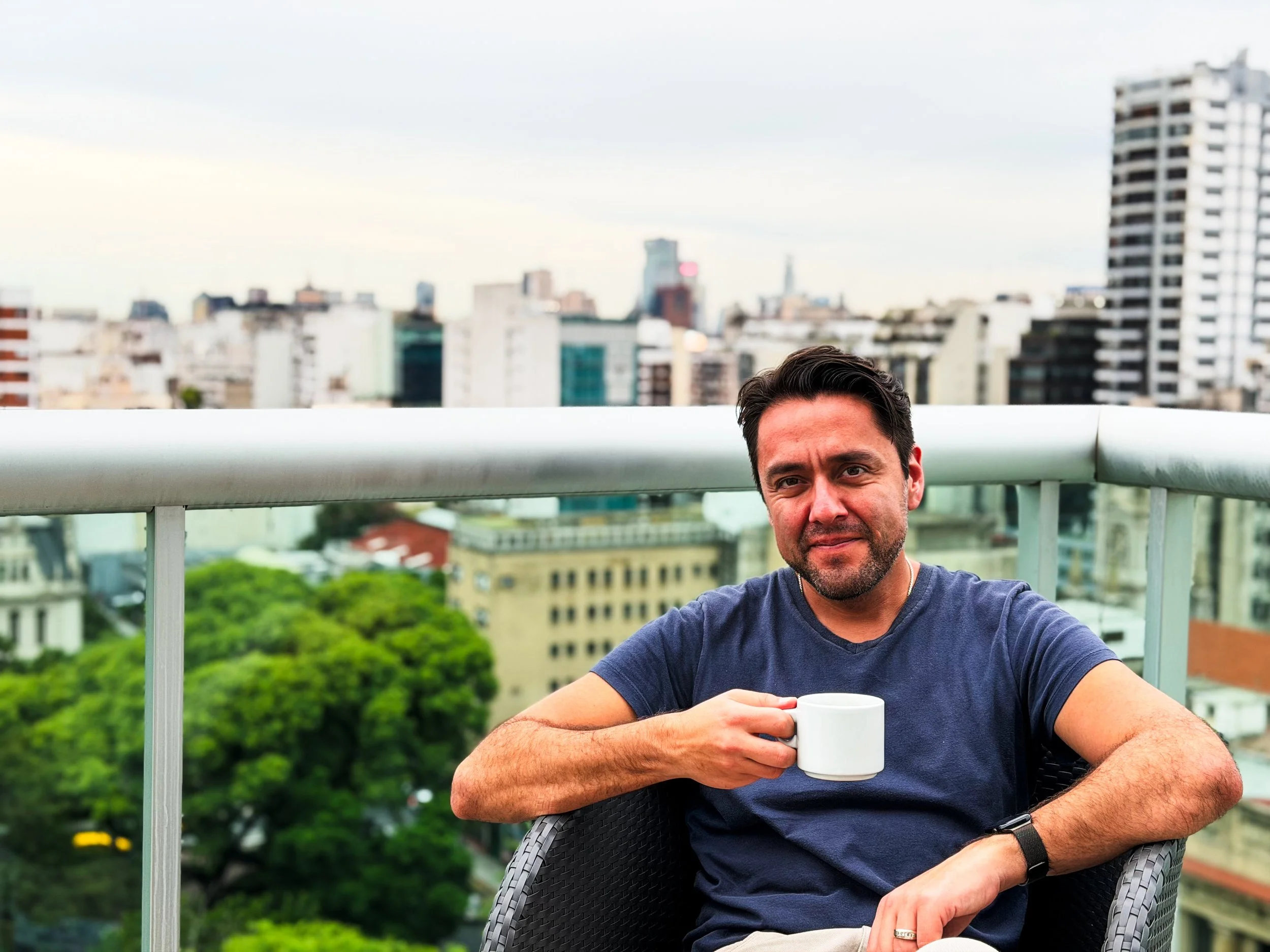
One piece of advice I often share with clients arriving on overnight international flights is to book the hotel beginning the night before your scheduled arrival. While it requires an additional night's expense, the ability to immediately access your room, shower, and rest after a long-haul flight can dramatically improve the start of your trip.
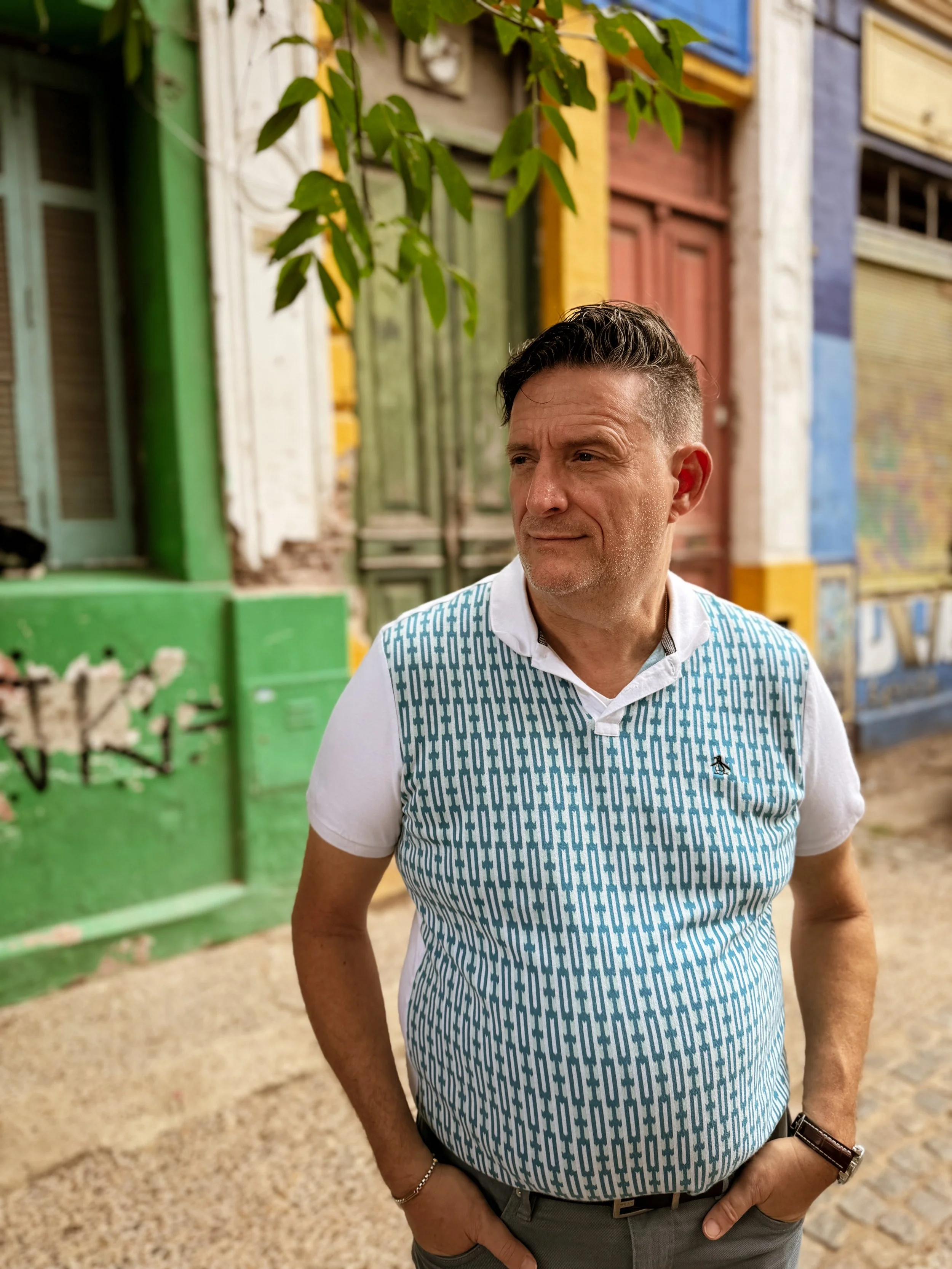
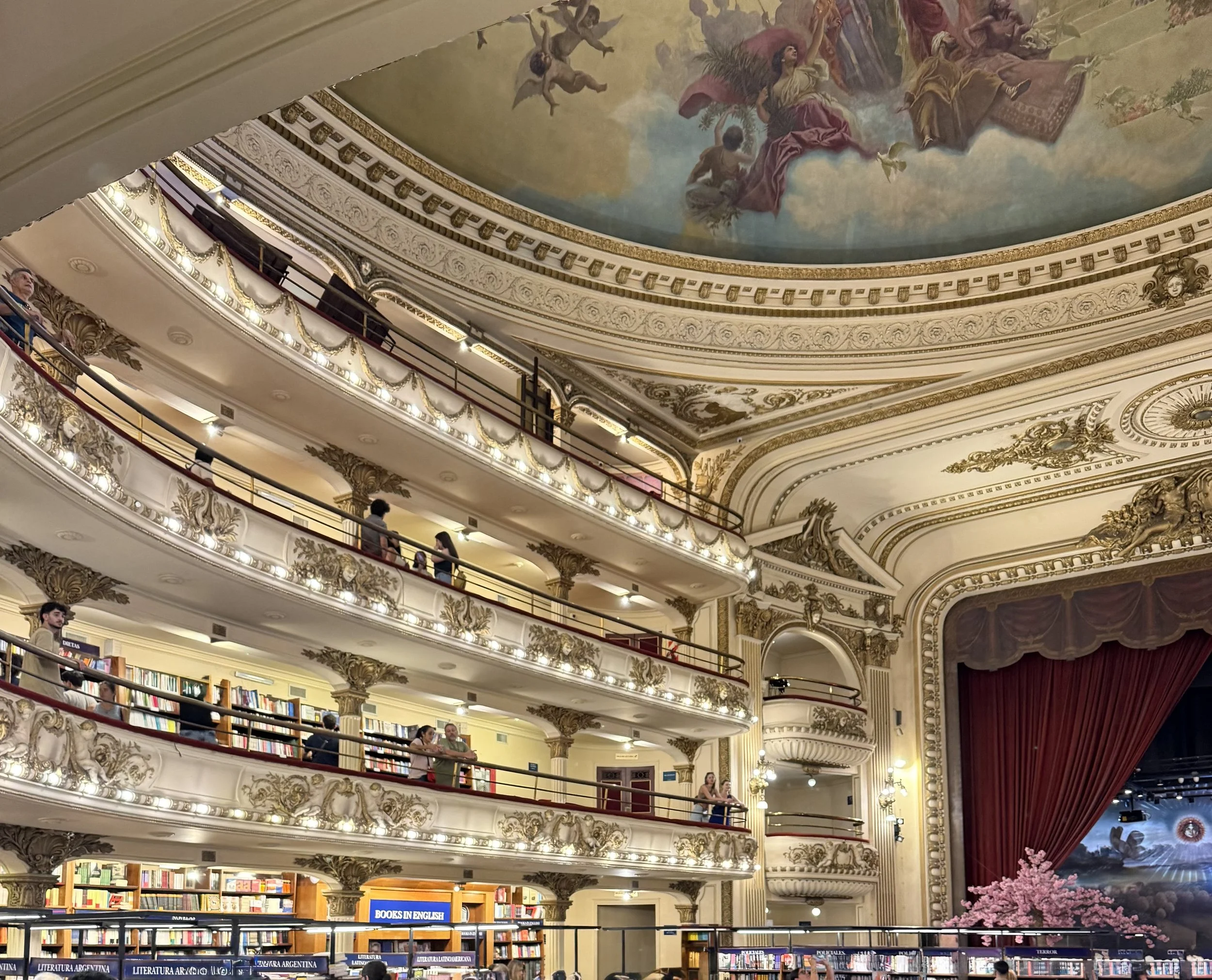
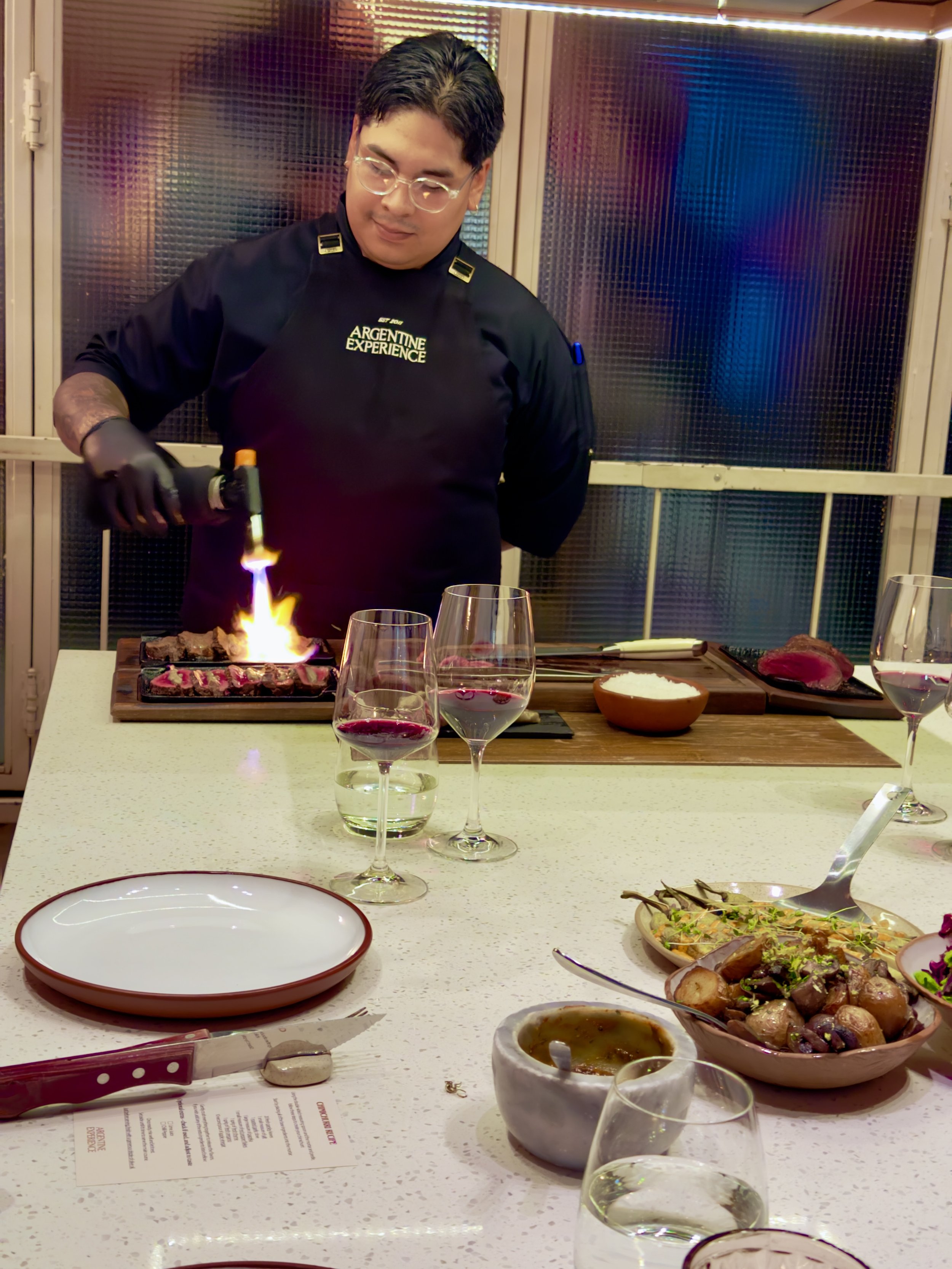
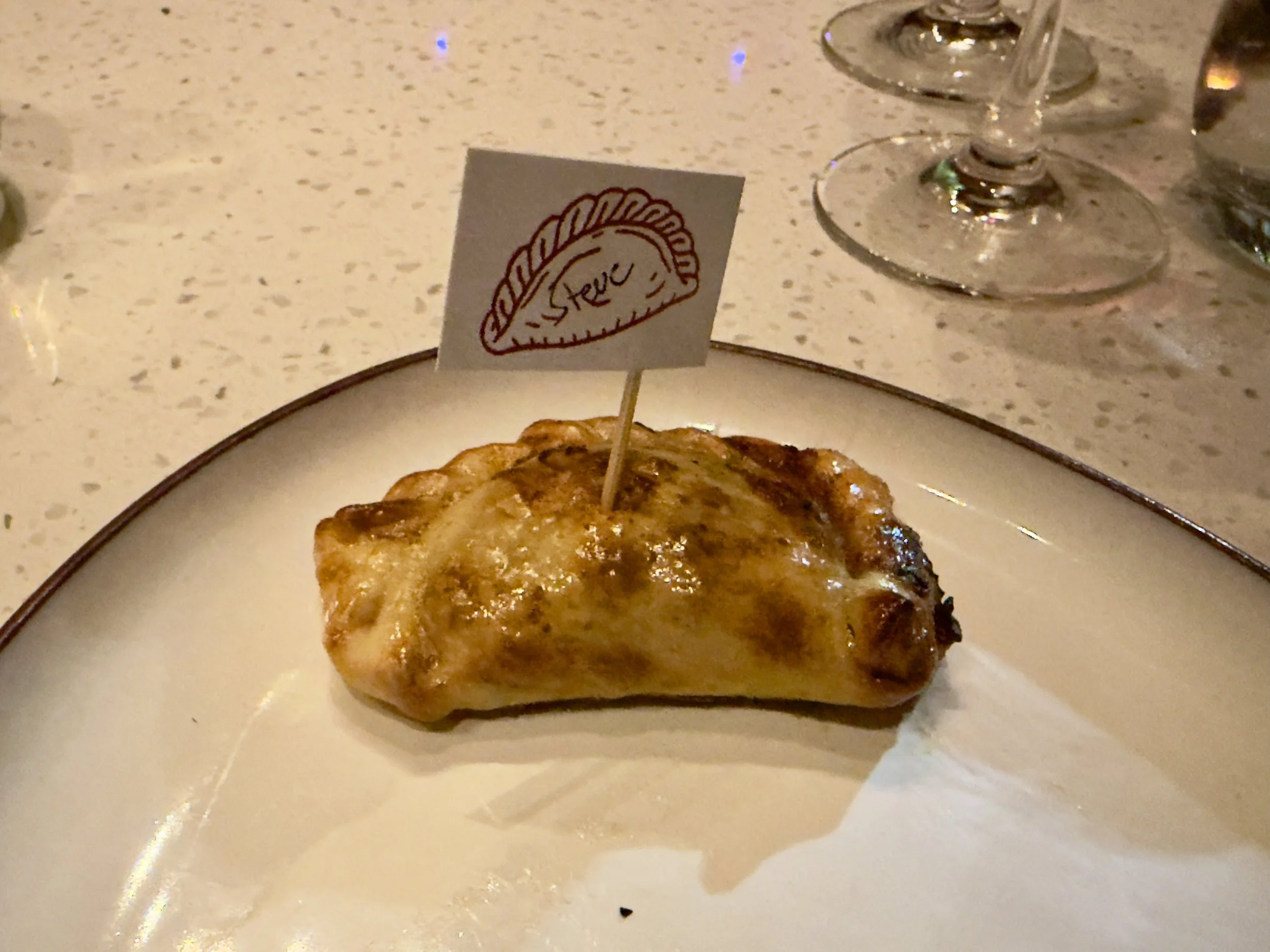
Over the next two days, we explored Buenos Aires' grand avenues, historic architecture, and vibrant neighborhoods. One highlight was participating in a cooking class in Palermo, a district known for its energetic atmosphere, exceptional restaurants, and thriving café culture. It was the perfect introduction to Argentine hospitality before heading south toward the end of the world.
Our final evening in Buenos Aires was spent at the Hilton Buenos Aires in Puerto Madero, where HX Expeditions coordinated embarkation logistics and provided guests with information about the charter flight to Ushuaia the following morning.
The excitement among passengers was unmistakable. Conversations revolved around potential wildlife sightings, weather forecasts, and anticipation for the adventure ahead. Later that evening, HX hosted a rooftop reception where future shipmates had an opportunity to meet one another before embarking on the journey.
Ushuaia: The Gateway to Antarctica
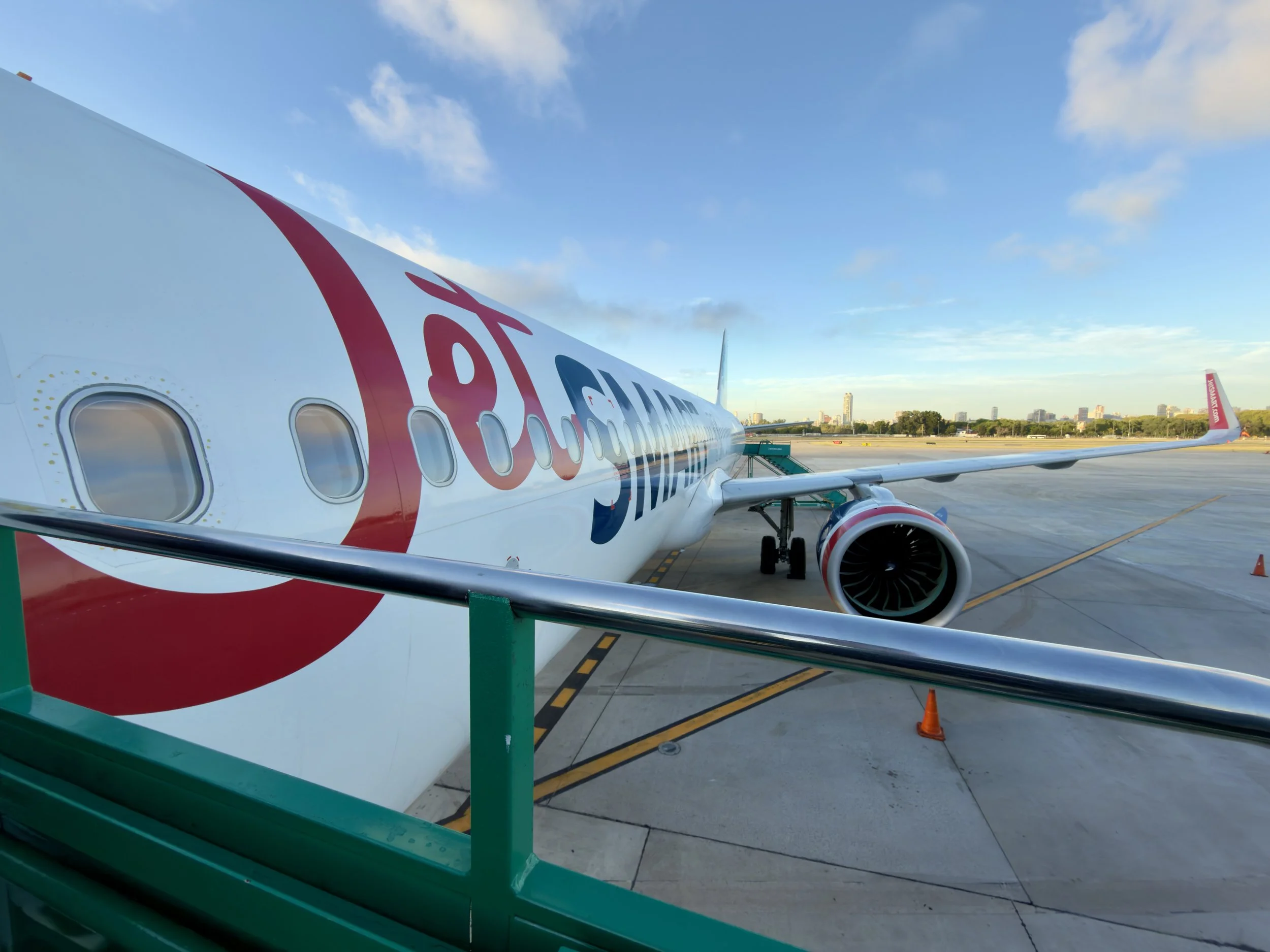
The following morning began well before sunrise. By 5:30 a.m., we were already en route to the airport for our charter flight south to Ushuaia, the southernmost city in the world.
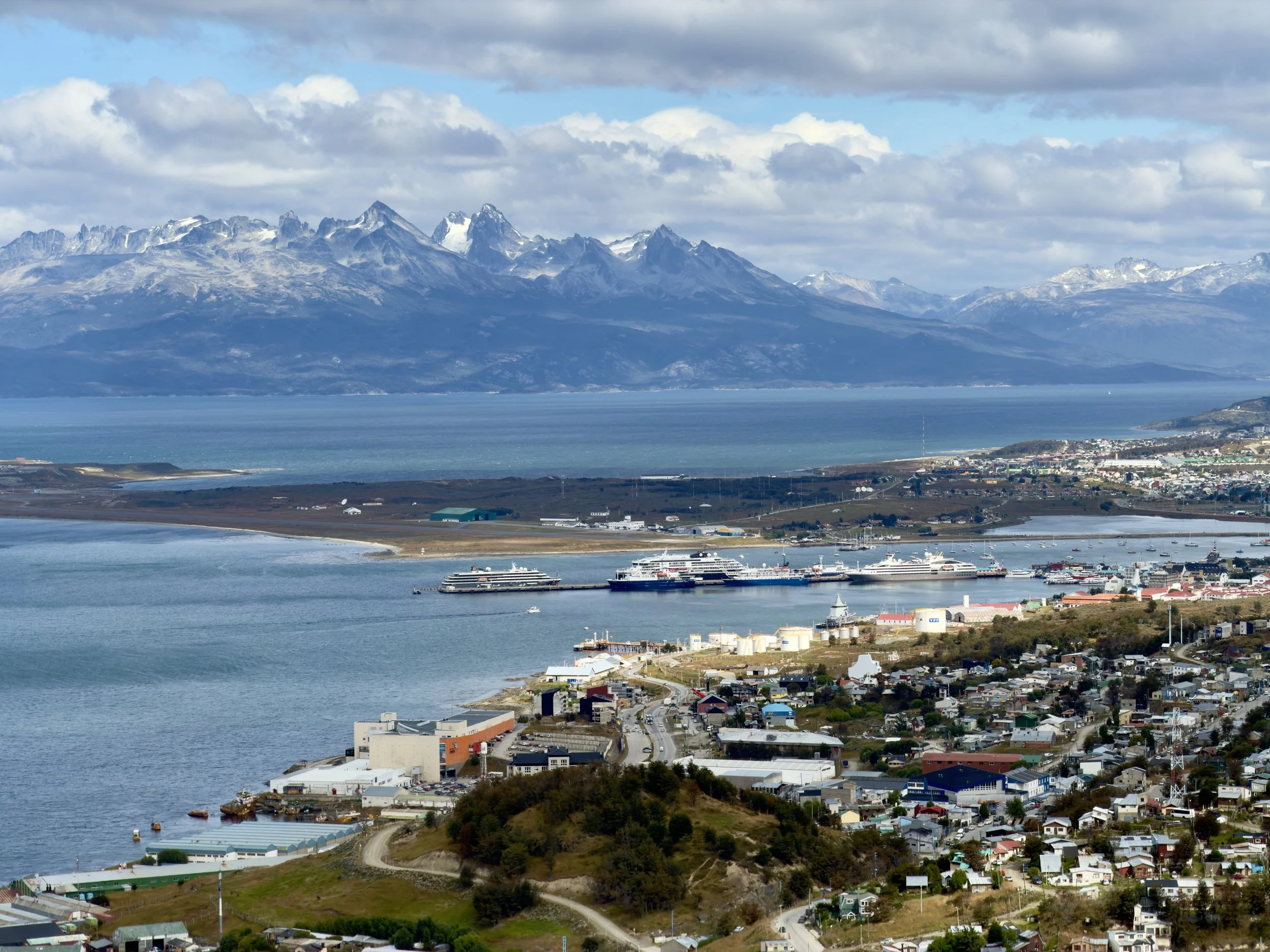
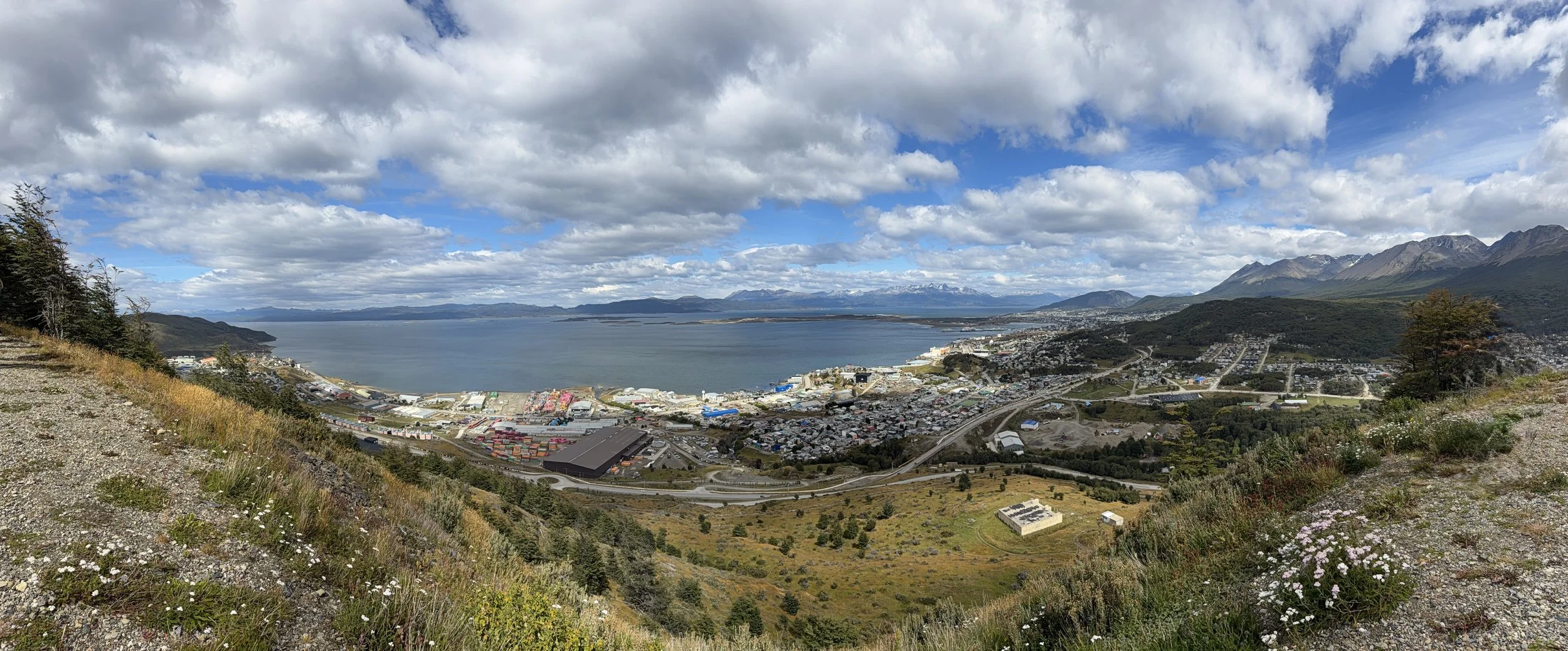
The approach into Ushuaia was spectacular. Snow-dusted peaks surrounded the city while the rugged landscapes of Tierra del Fuego stretched toward the horizon. Even before reaching Antarctica, it felt as though we had entered a different world.
Suite guests were transferred to the beautiful Arakur Resort & Spa while awaiting embarkation. Perched high above Ushuaia, the property offers breathtaking views of the surrounding mountains and Beagle Channel. A leisurely lunch and access to the spa proved to be a welcome way to spend the afternoon before boarding.
Then came the moment we had been waiting for.
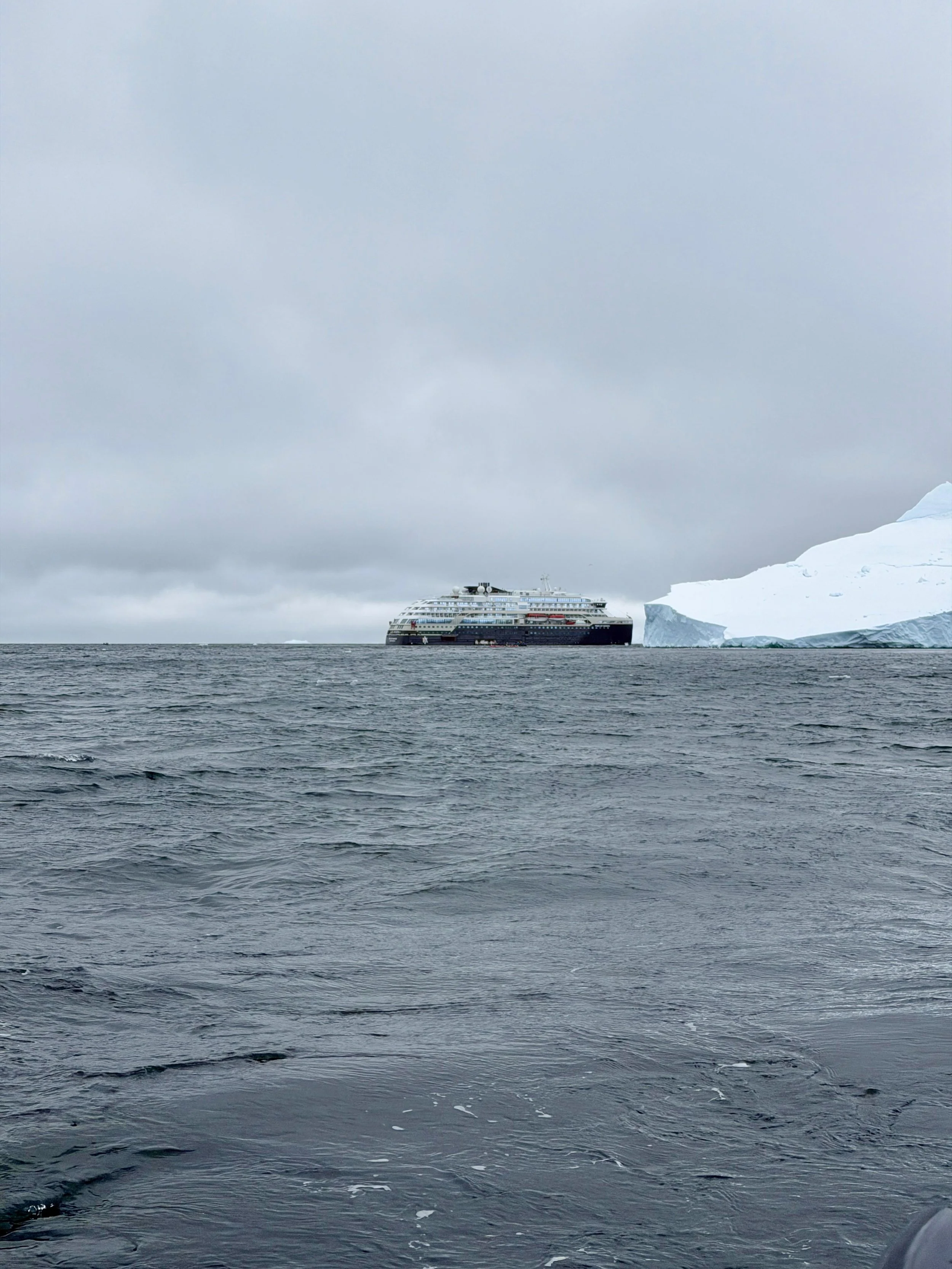
As we approached the pier, the MS Fridtjof Nansen came into view. Purpose-built for polar exploration and equipped with hybrid propulsion technology, she would serve as our home for the next ten days.
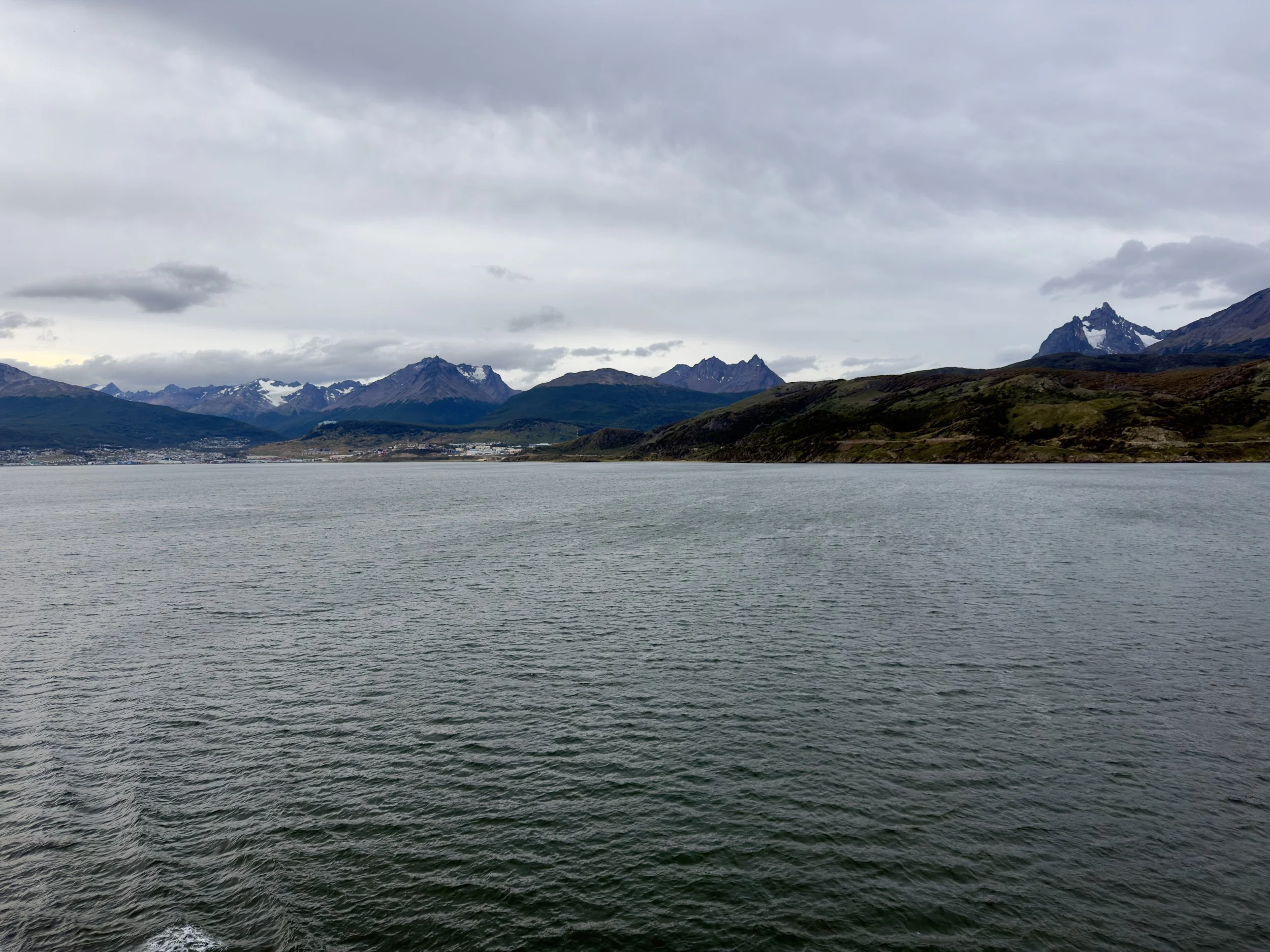
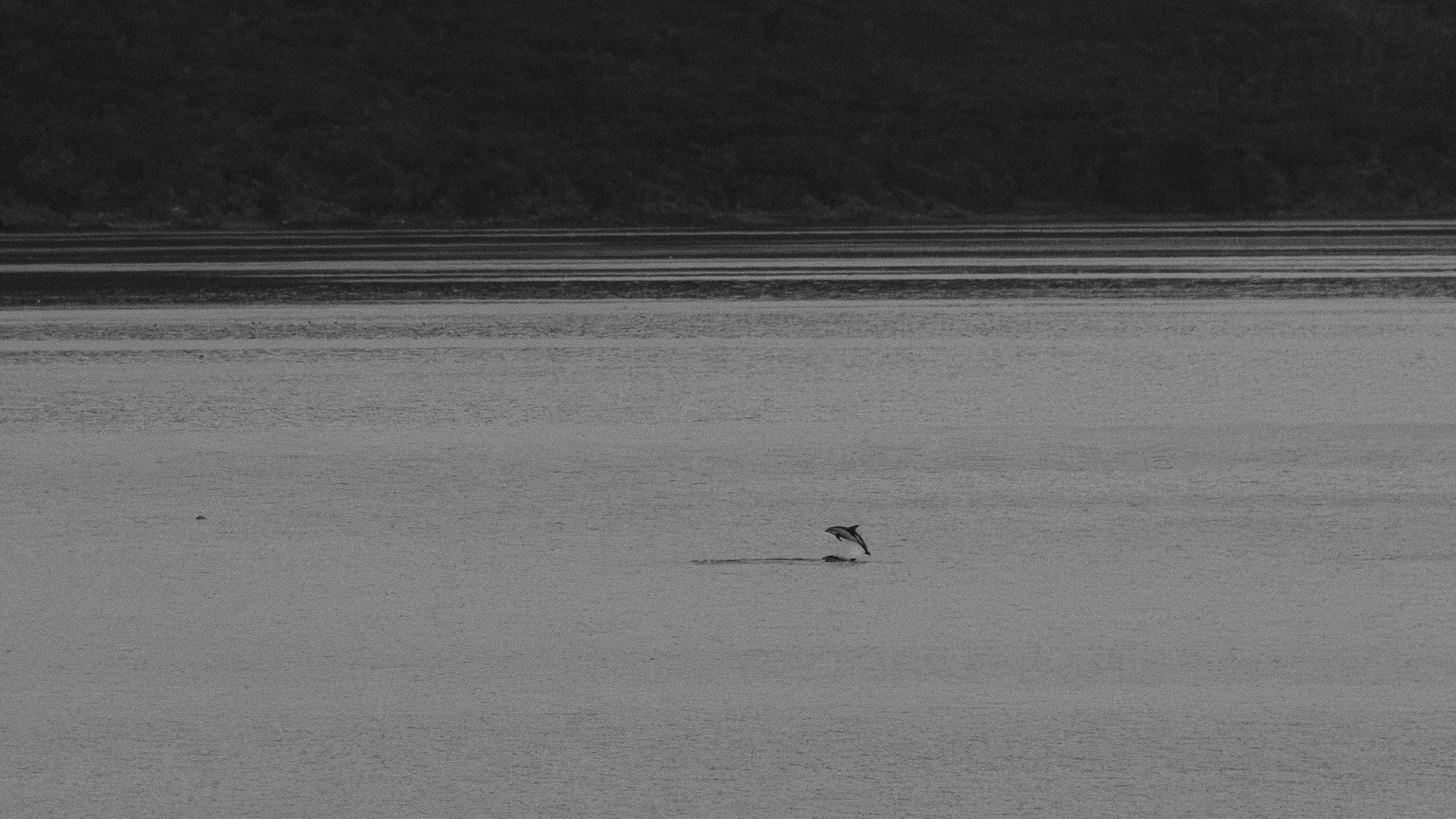
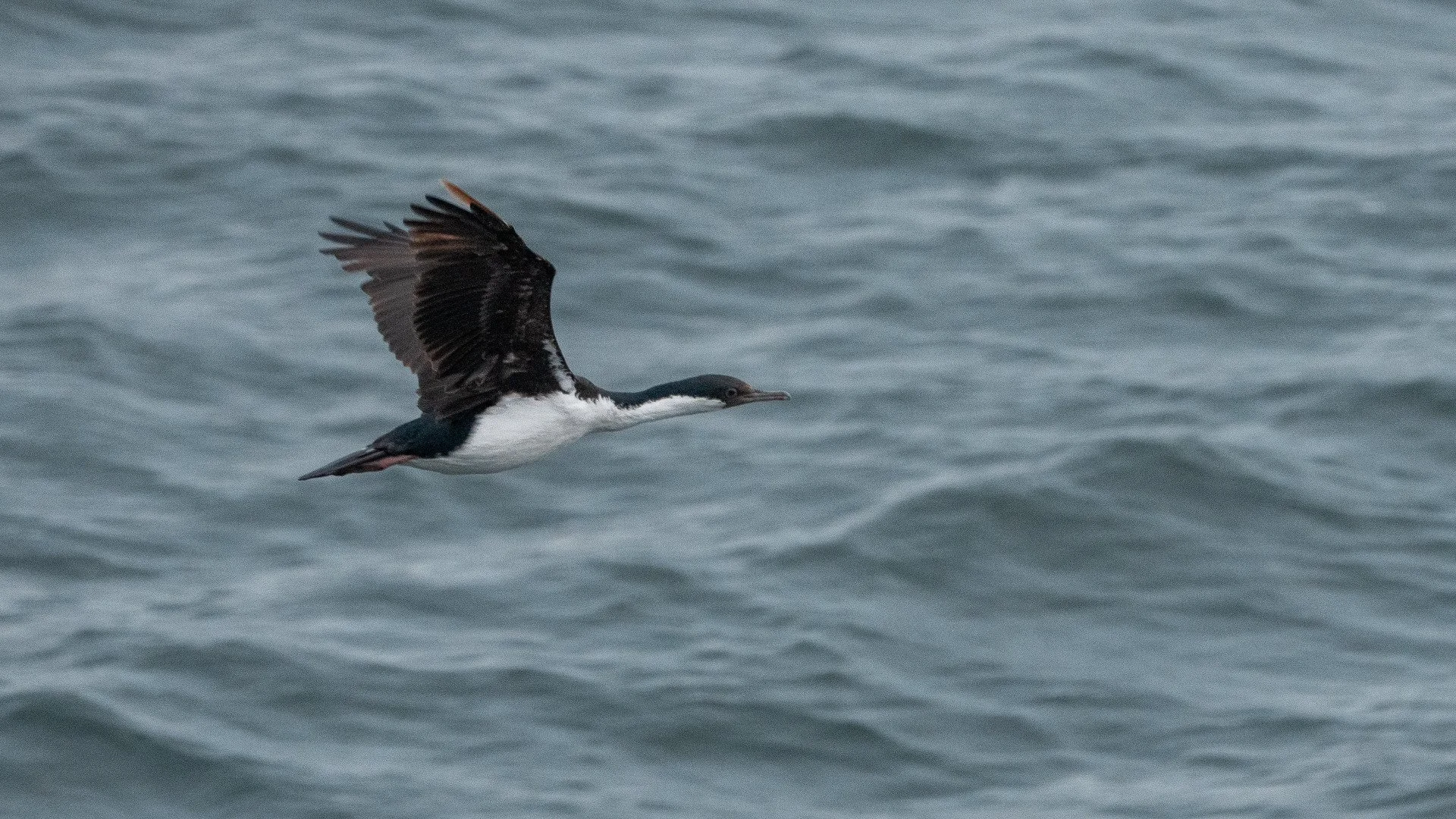
That evening, the ship departed Ushuaia and began navigating the scenic Beagle Channel. Snow-capped mountains lined the shoreline while seabirds followed in our wake. Ahead lay the infamous Drake Passage and, beyond it, Antarctica itself.
Crossing the Drake Passage
No voyage to Antarctica is complete without crossing the Drake Passage.
Named after the sixteenth-century explorer Sir Francis Drake, this stretch of water separating South America from Antarctica has earned a reputation as one of the most challenging maritime crossings in the world.
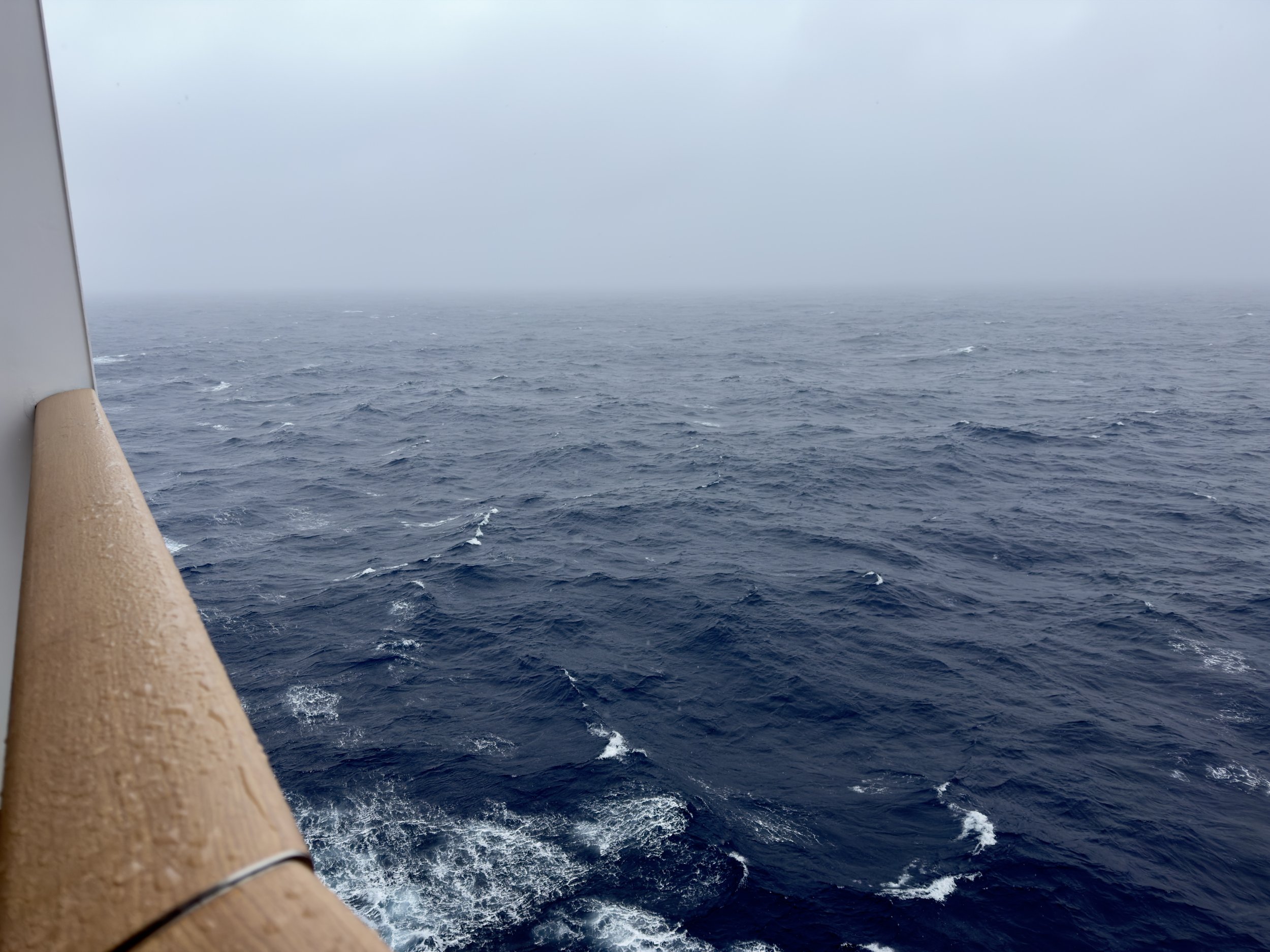
Fortunately, our southbound crossing proved relatively calm.
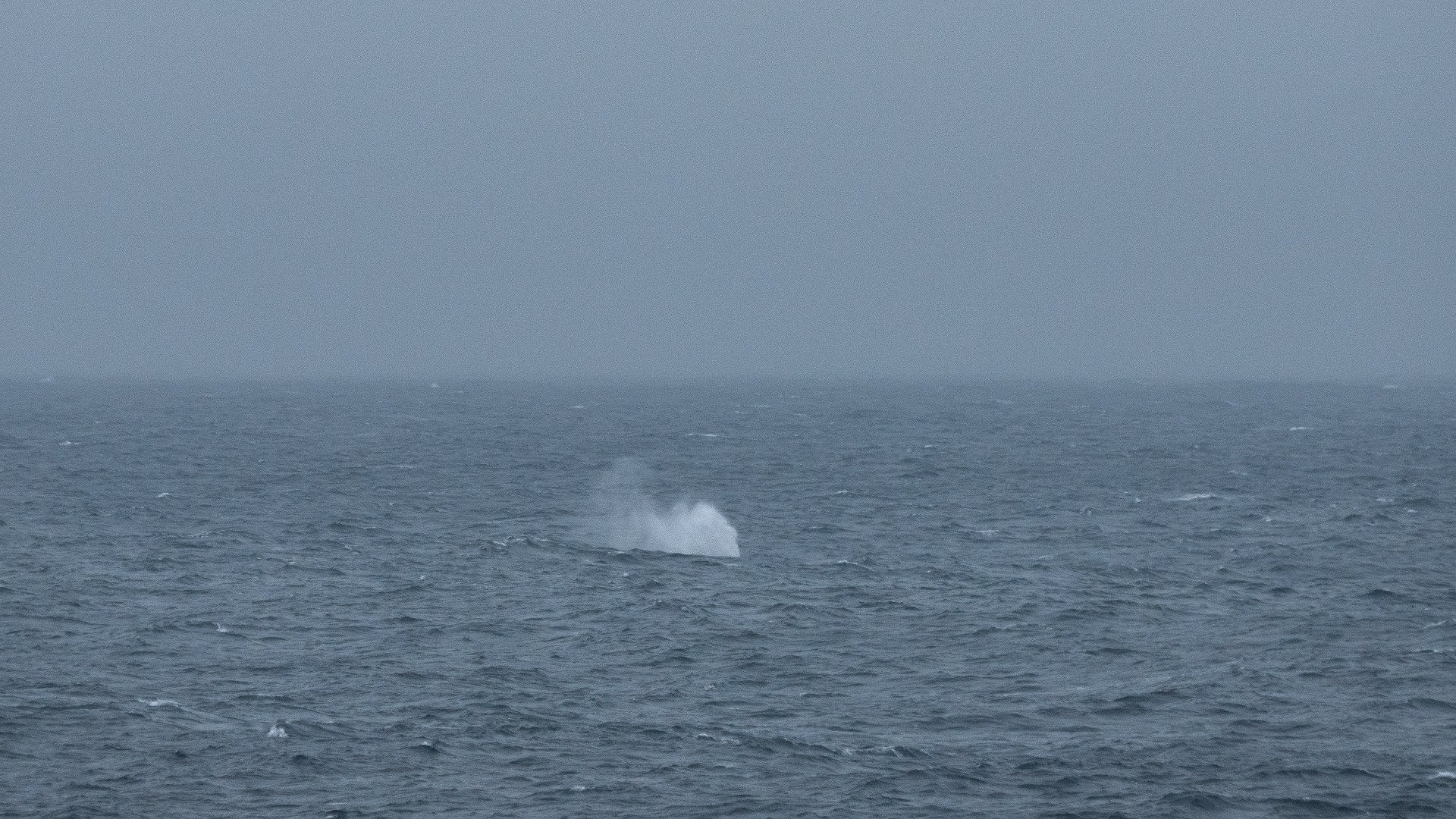
The two days at sea provided an opportunity to settle into shipboard life. Guests attended lectures presented by the expedition team, participated in wildlife-spotting sessions from the observation decks, and learned about the history, geology, and ecology of Antarctica.
One of the most important sessions focused on IAATO regulations. The International Association of Antarctica Tour Operators establishes strict guidelines designed to protect Antarctica's fragile ecosystem and ensure responsible tourism practices. These rules govern everything from wildlife interaction distances to biosecurity procedures, helping preserve the continent for future generations.
As the ship continued southward, anticipation steadily grew.
First Sight of Antarctica
Then, on the morning of the third day, Antarctica finally appeared.
Stepping onto our balcony that morning remains one of the most memorable moments of the entire journey.
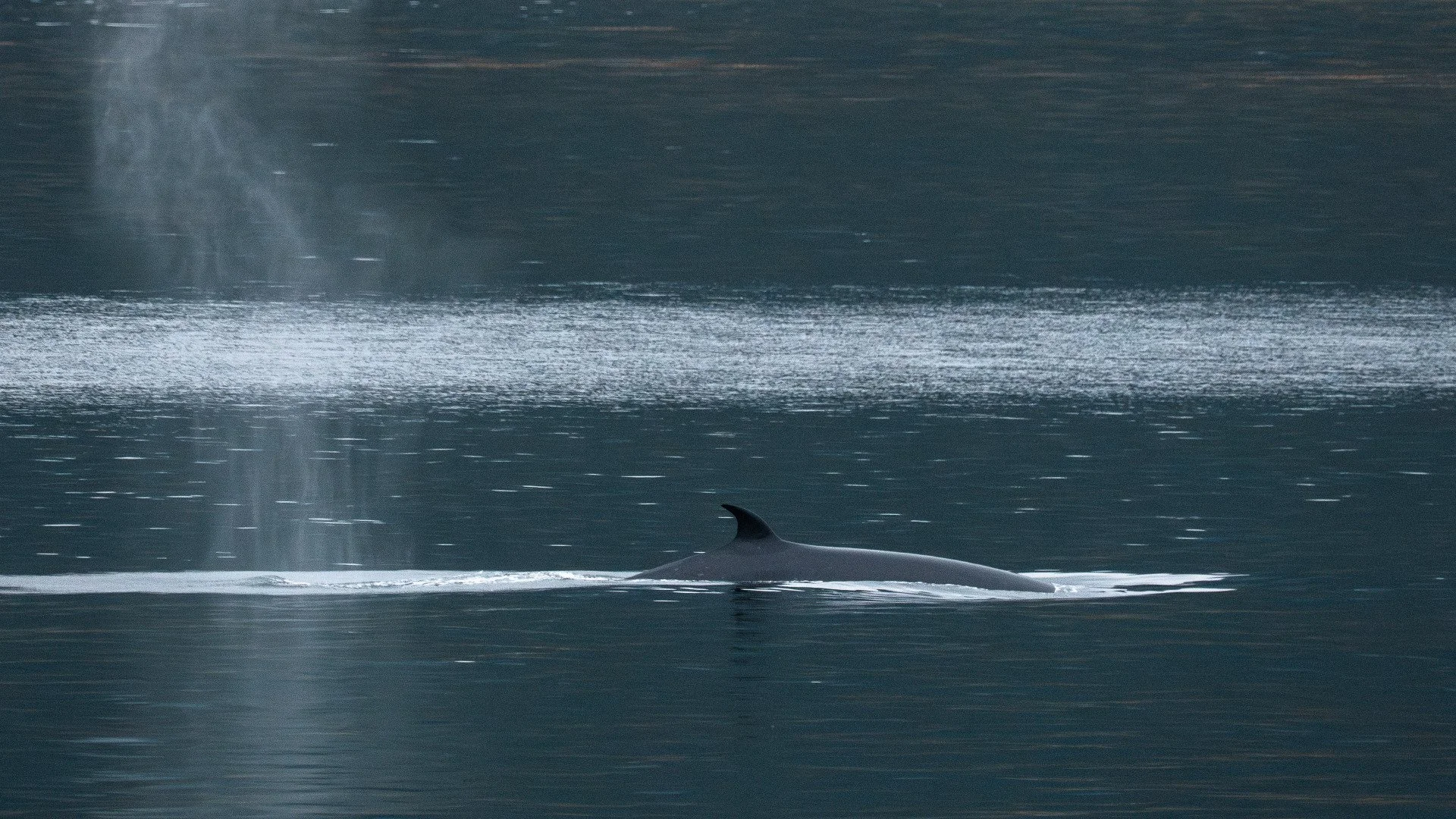
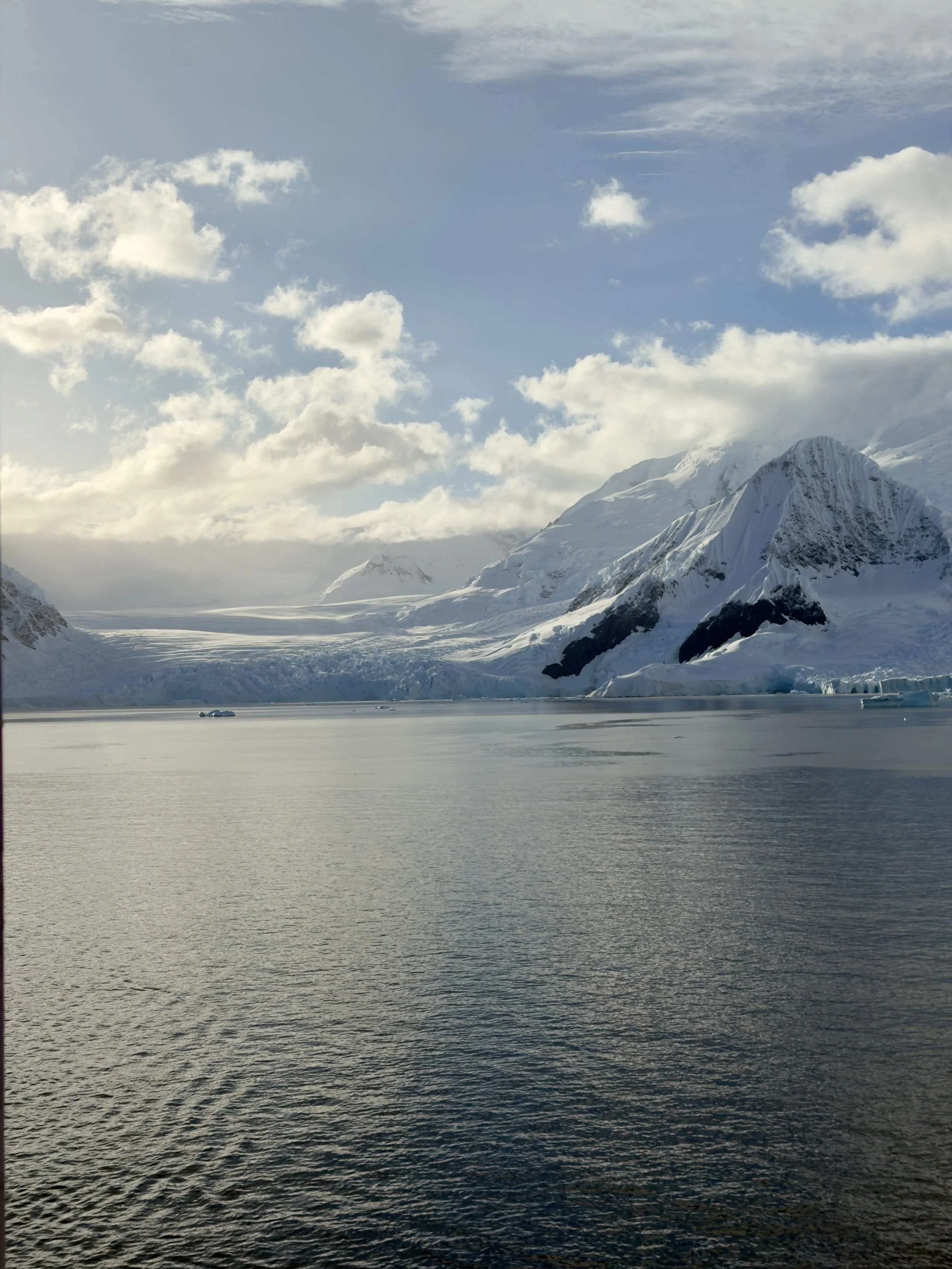
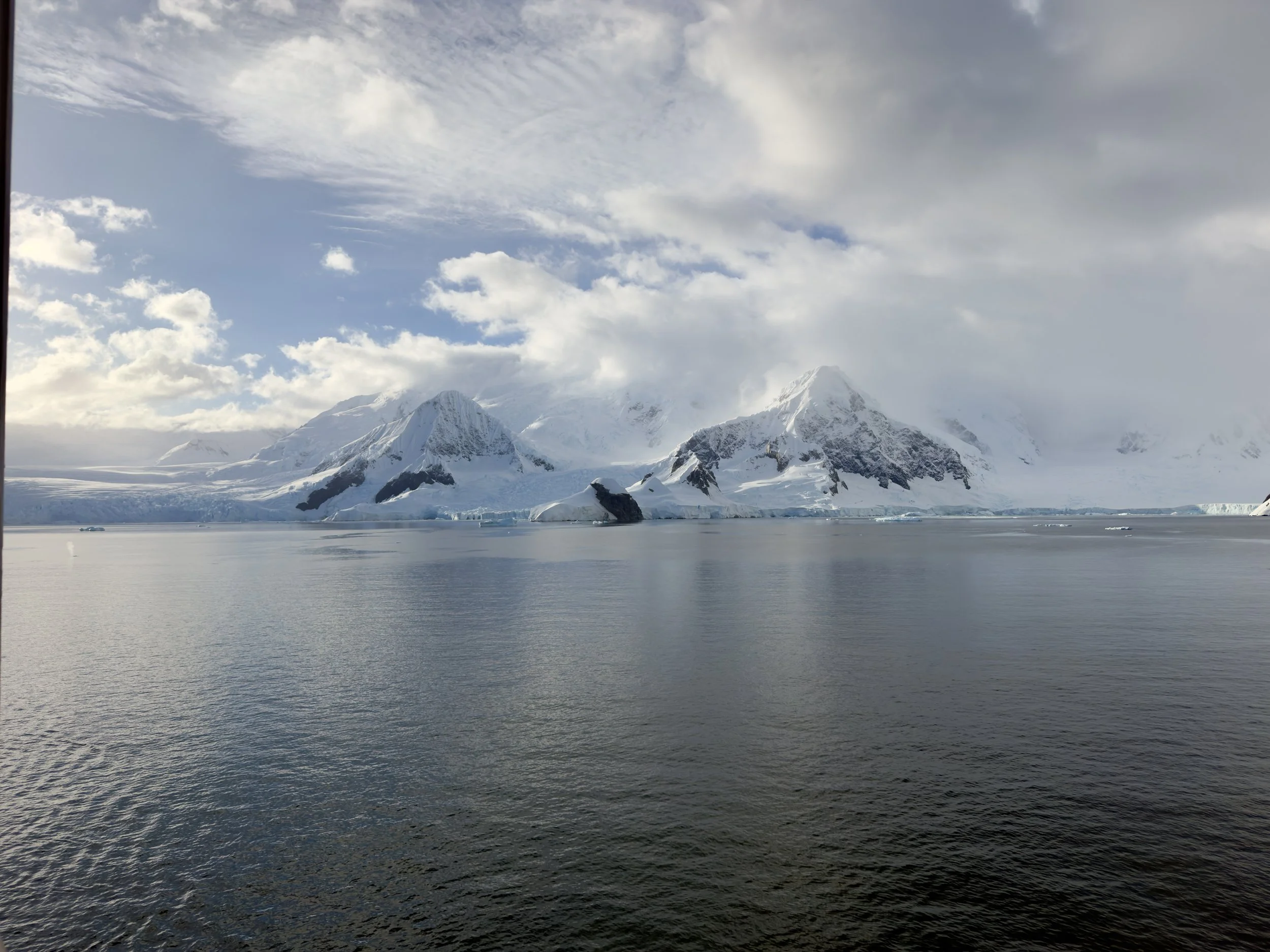
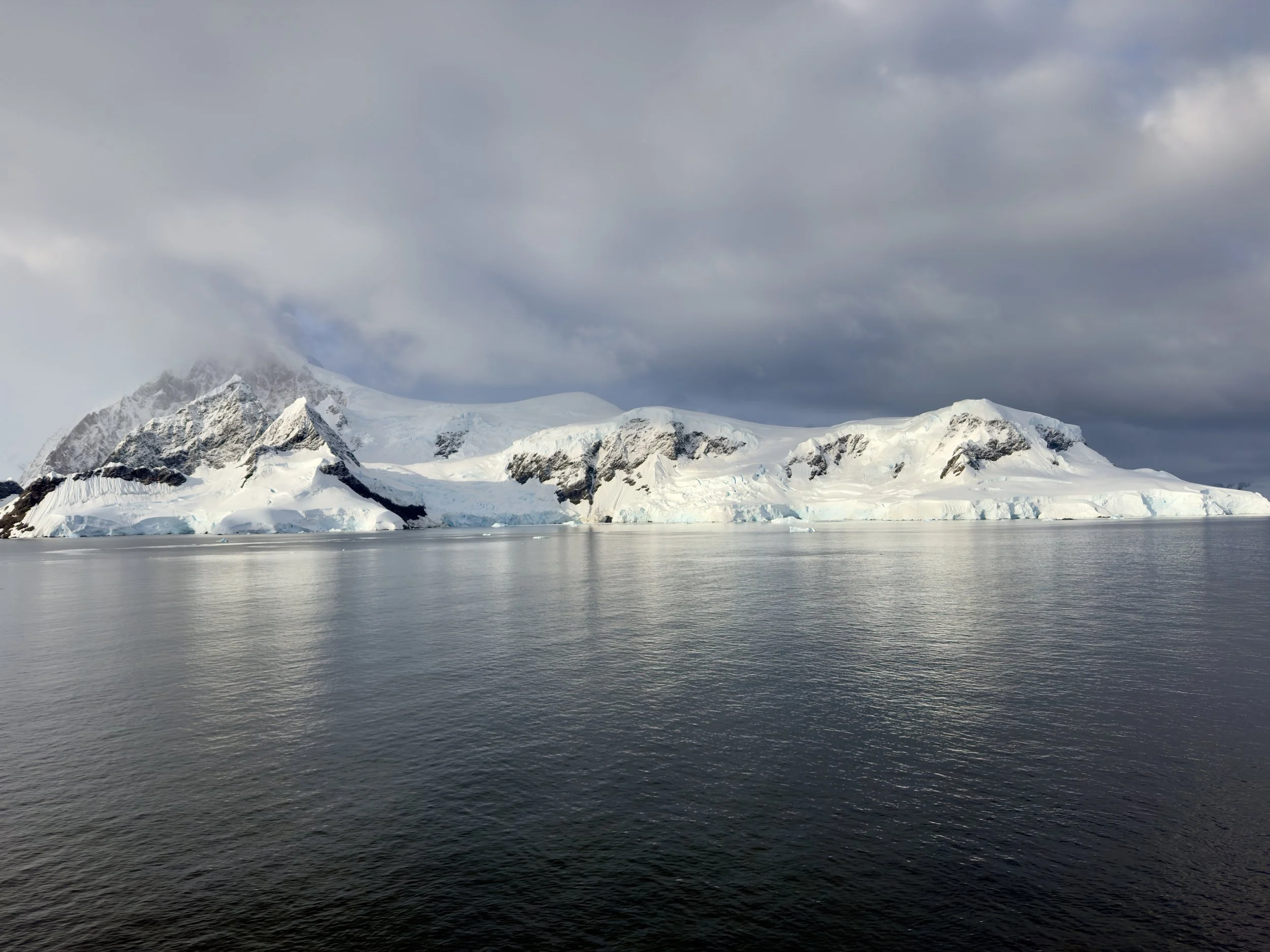
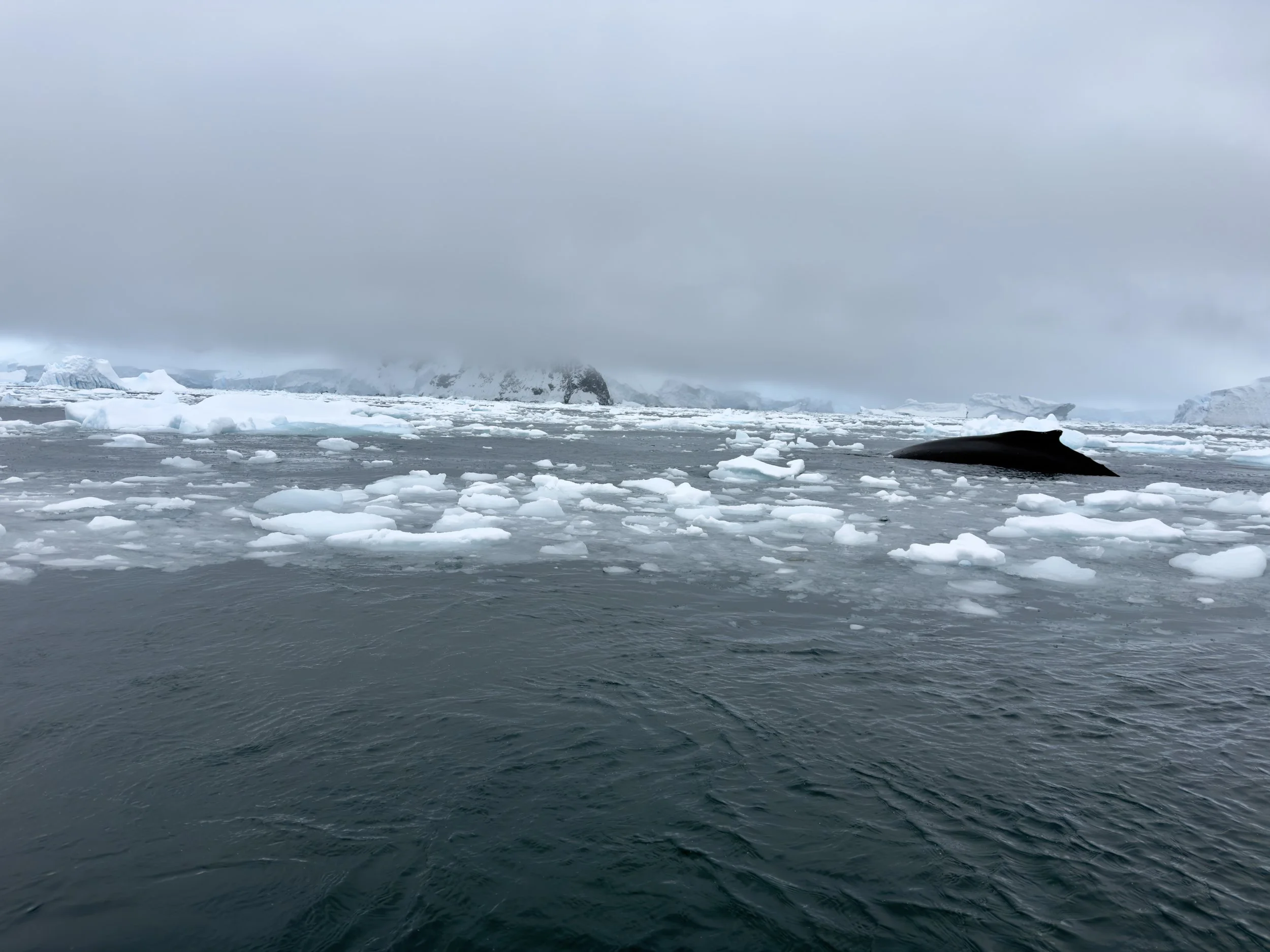
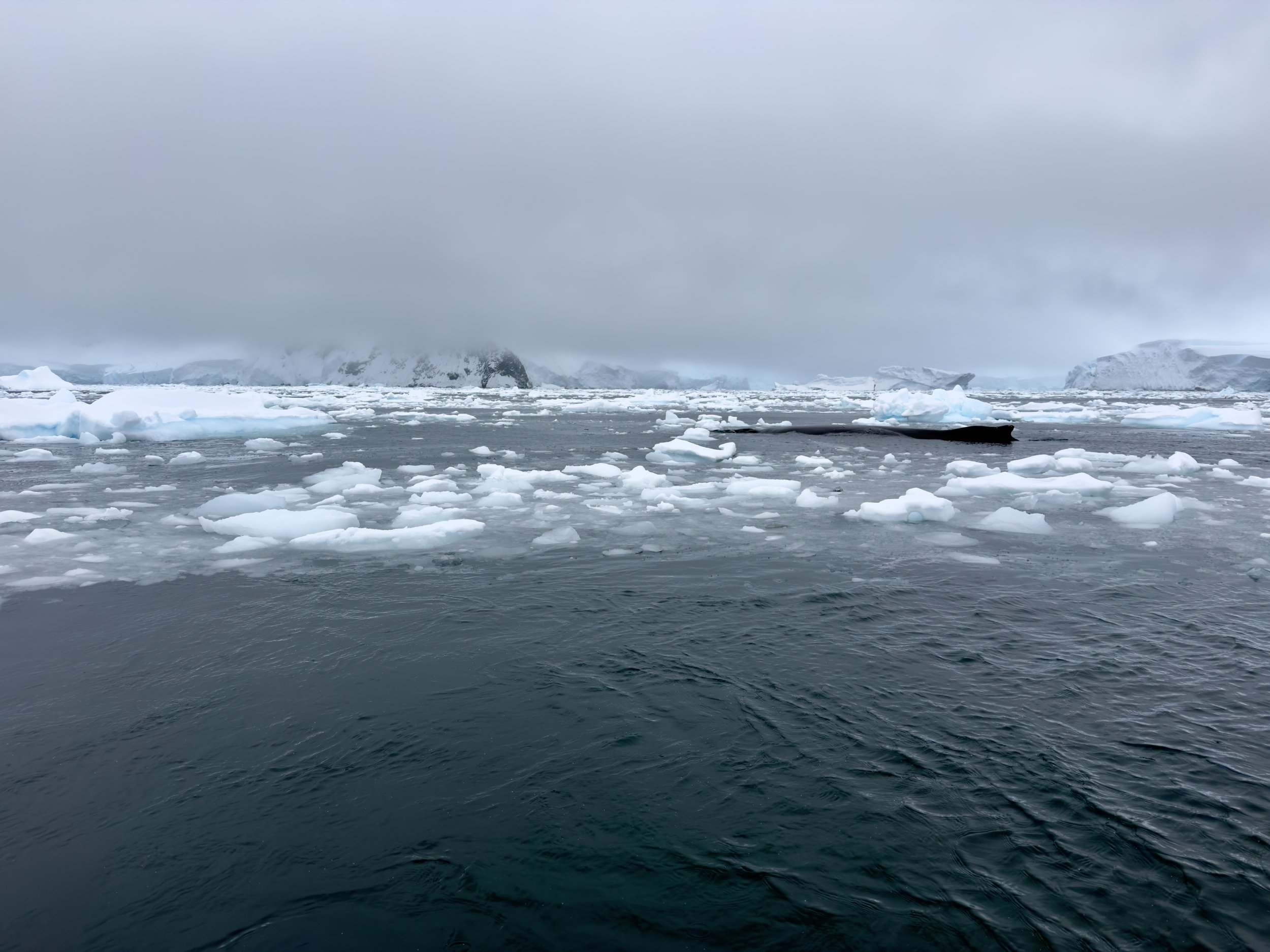
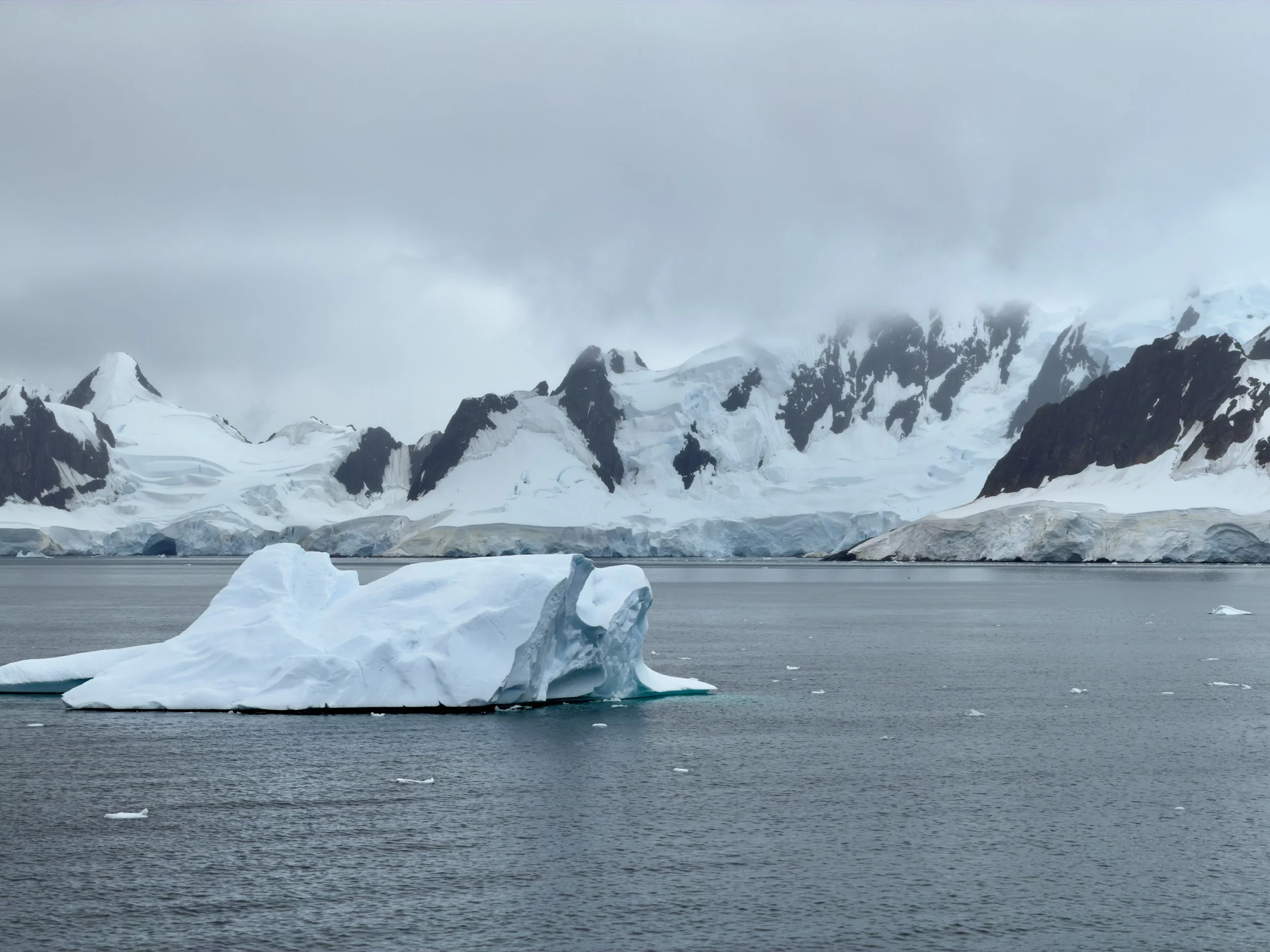
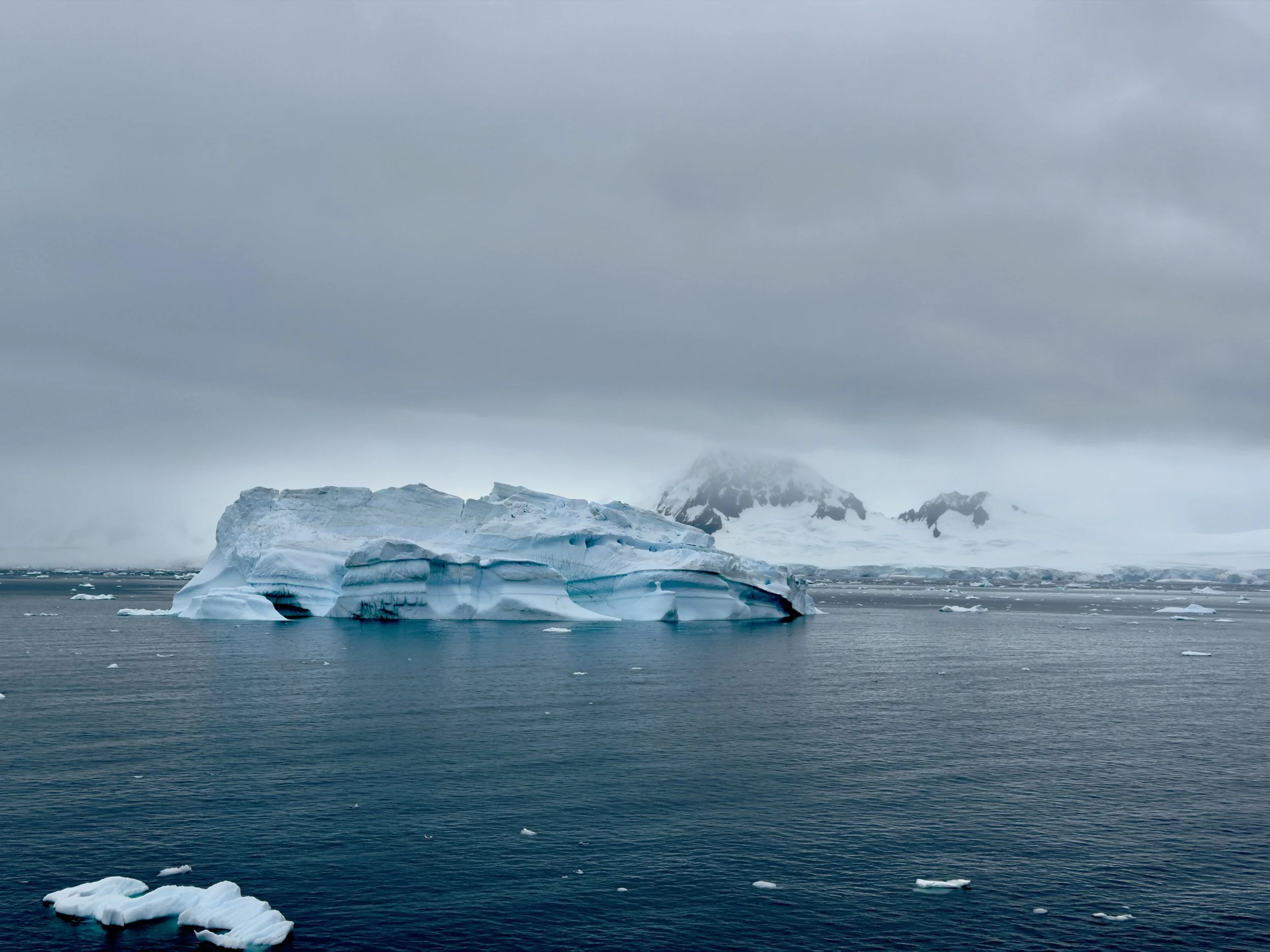
Towering snow-covered mountains stretched toward the sky. Massive icebergs floated silently through calm waters, their surfaces glowing in shades of blue and white. In the distance, humpback whales surfaced and disappeared among the ice.
What struck me most, however, was the silence.
Aside from the occasional crack of ice and the distant blow of a whale, there was almost no sound at all. In a world increasingly filled with noise, Antarctica felt wonderfully untouched.
Wilhelmina Bay
We had arrived in Wilhelmina Bay.
Soon after breakfast, the expedition team began preparing the fleet of zodiacs that would carry us into the Antarctic wilderness.
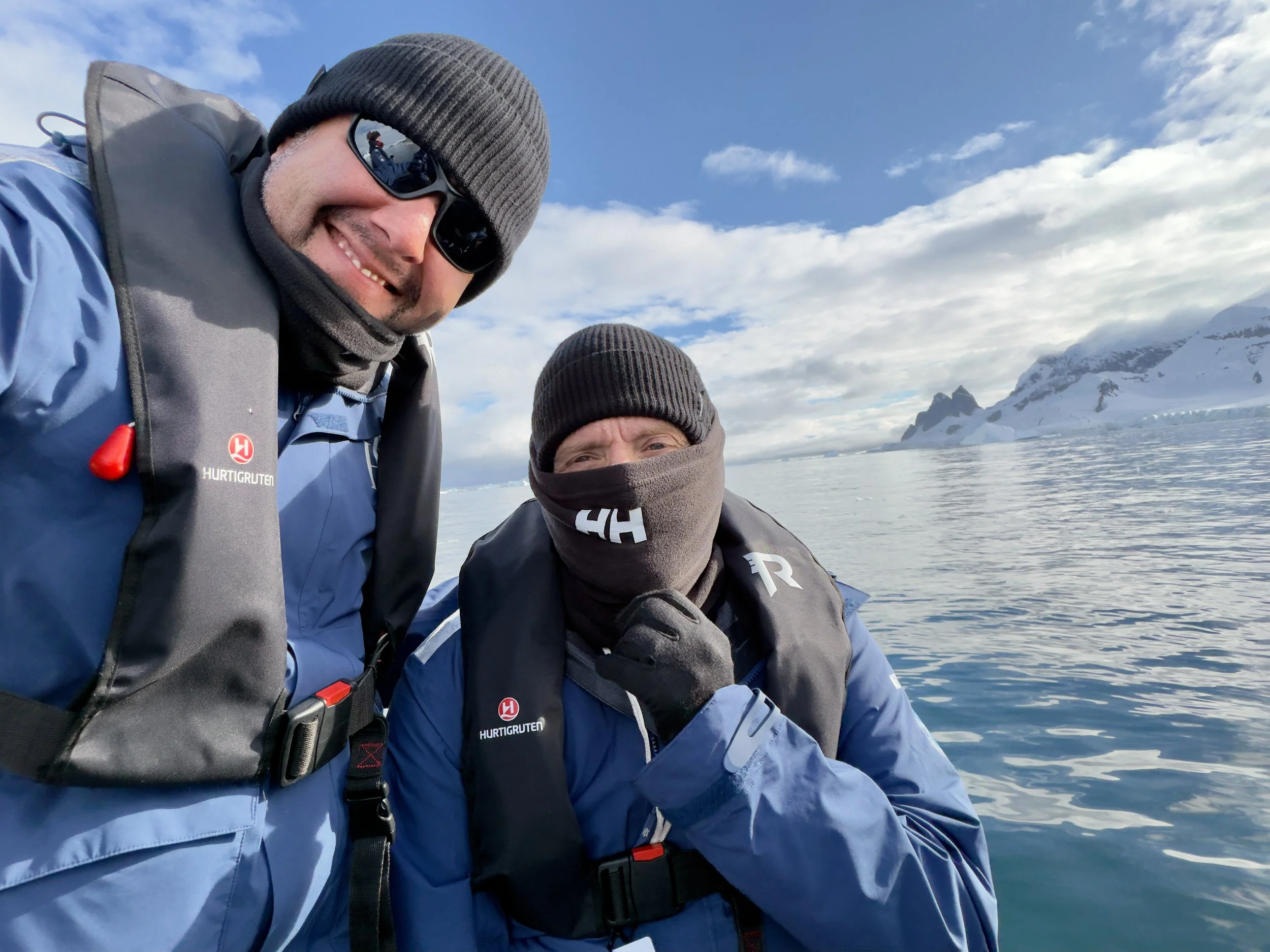
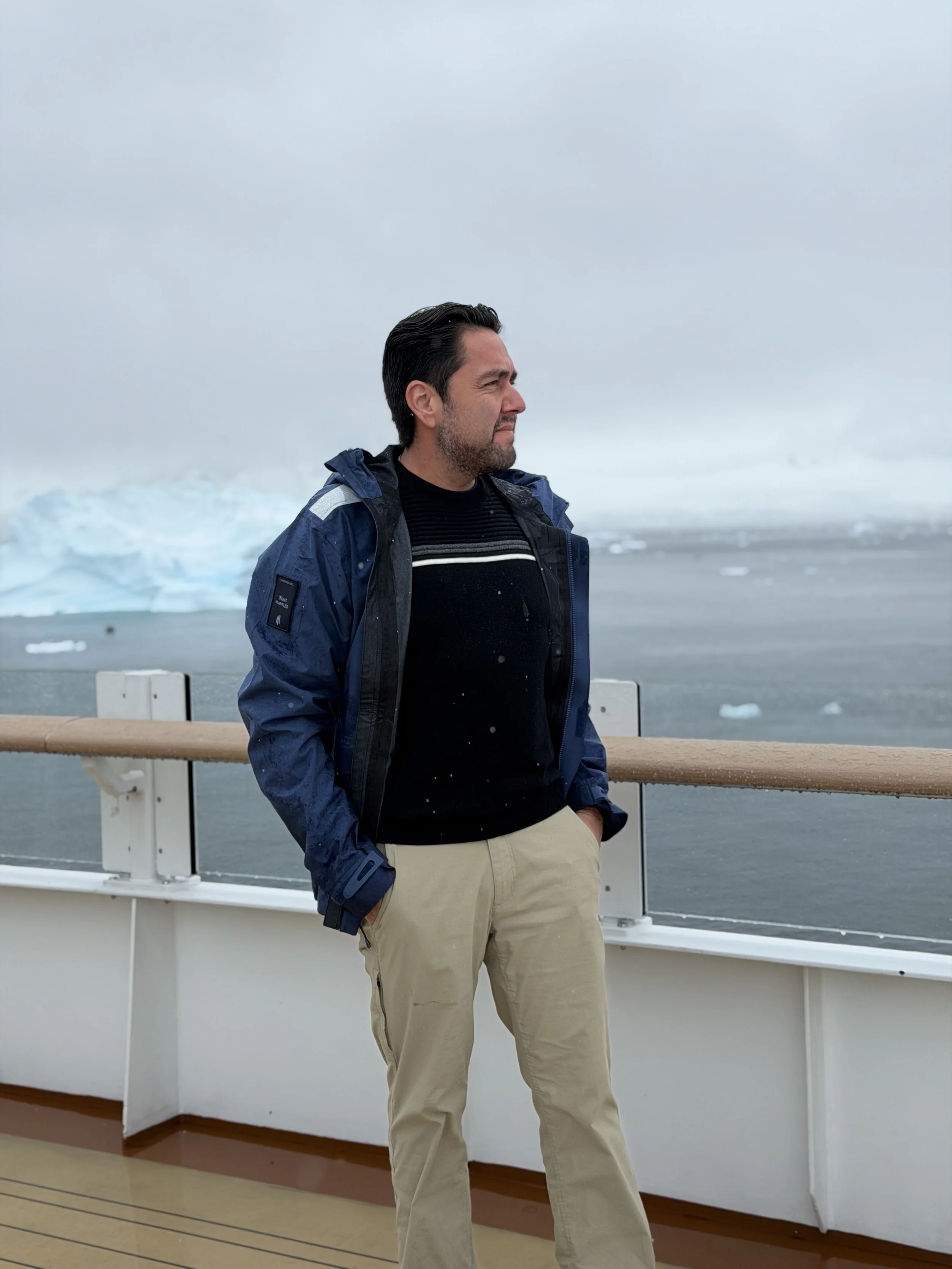
Layered in thermal clothing, waterproof outerwear, and muck boots, we boarded our zodiac for the first time.
Nothing can truly prepare you for that first Antarctic zodiac excursion.
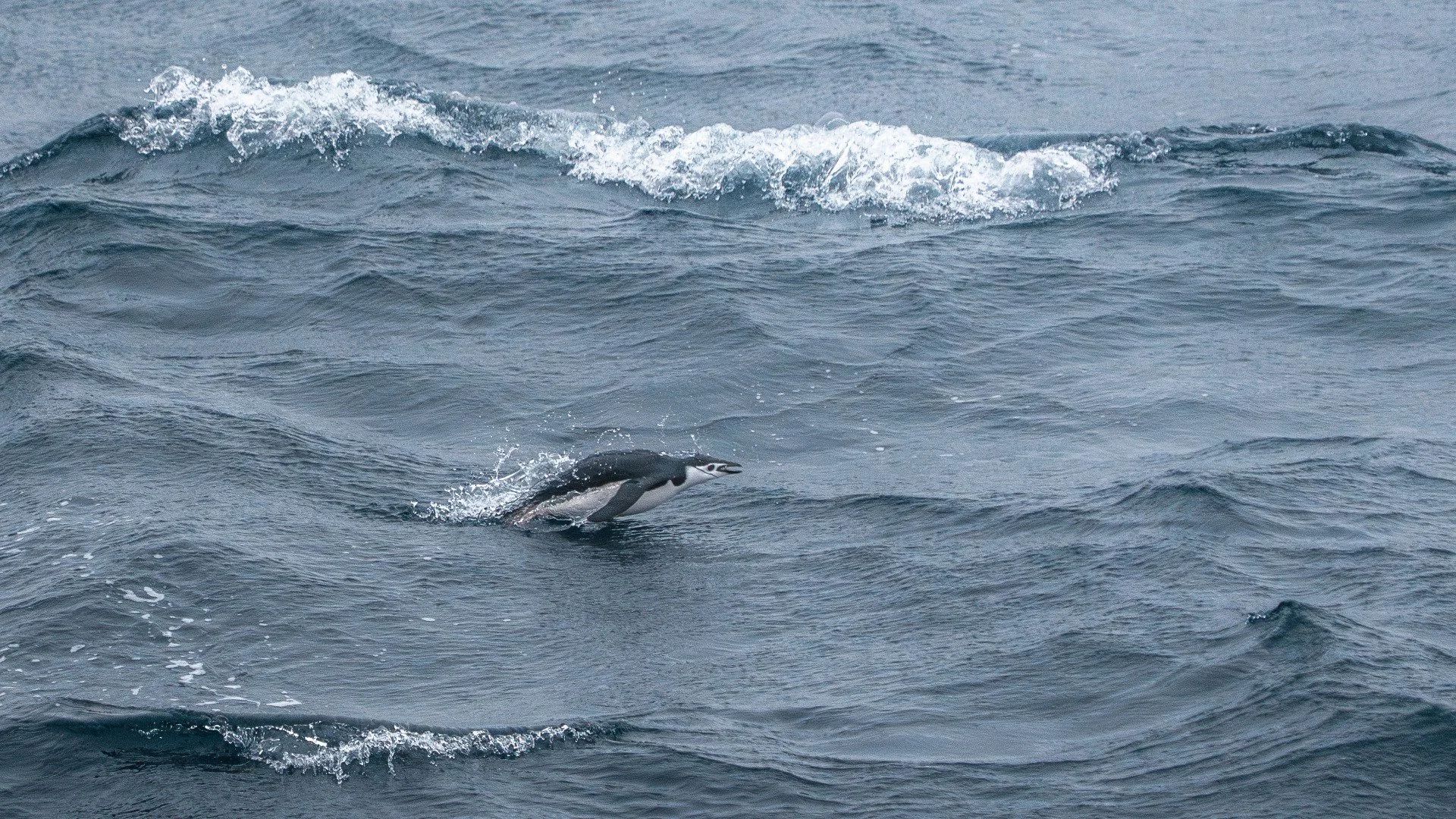
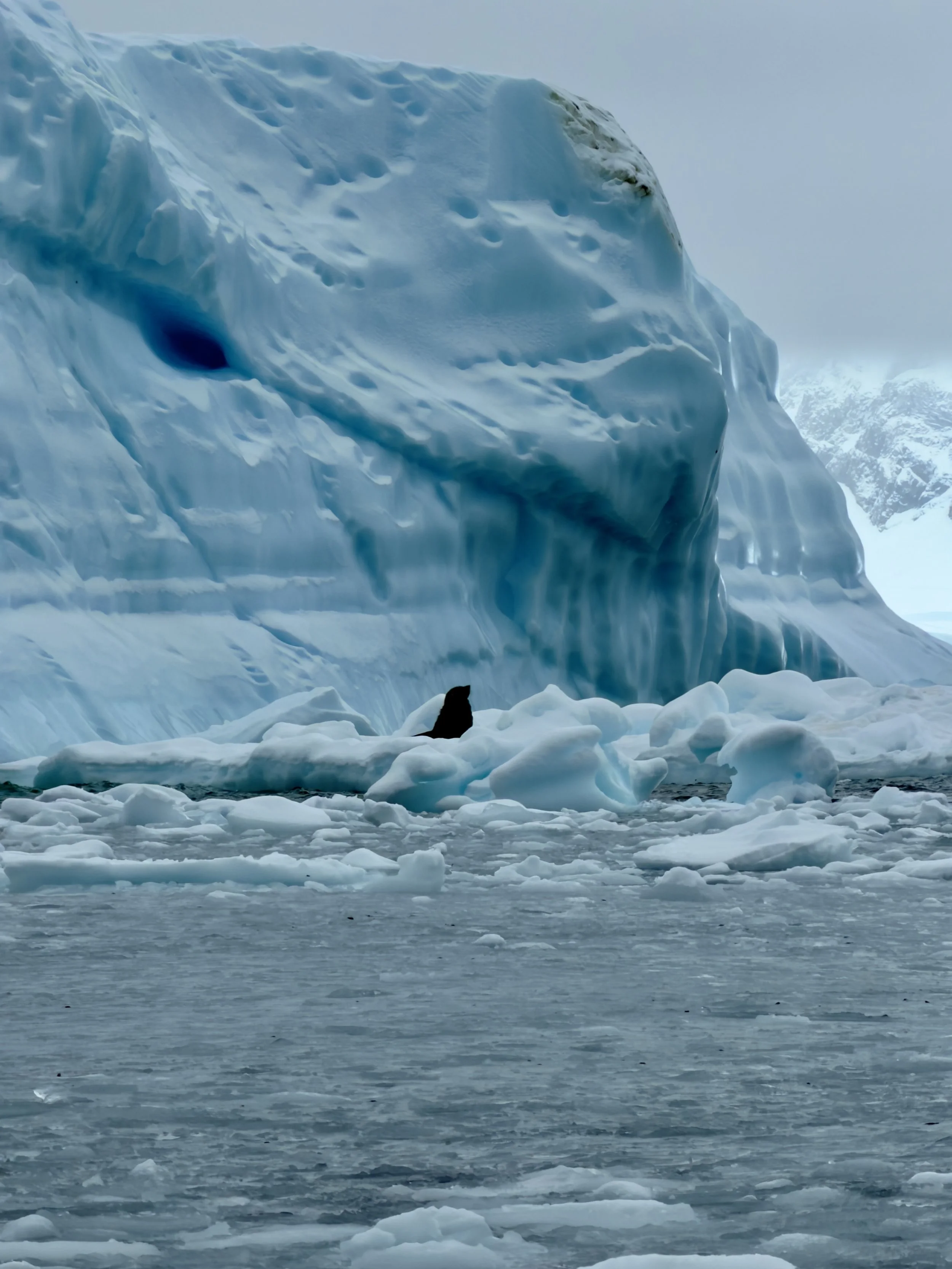
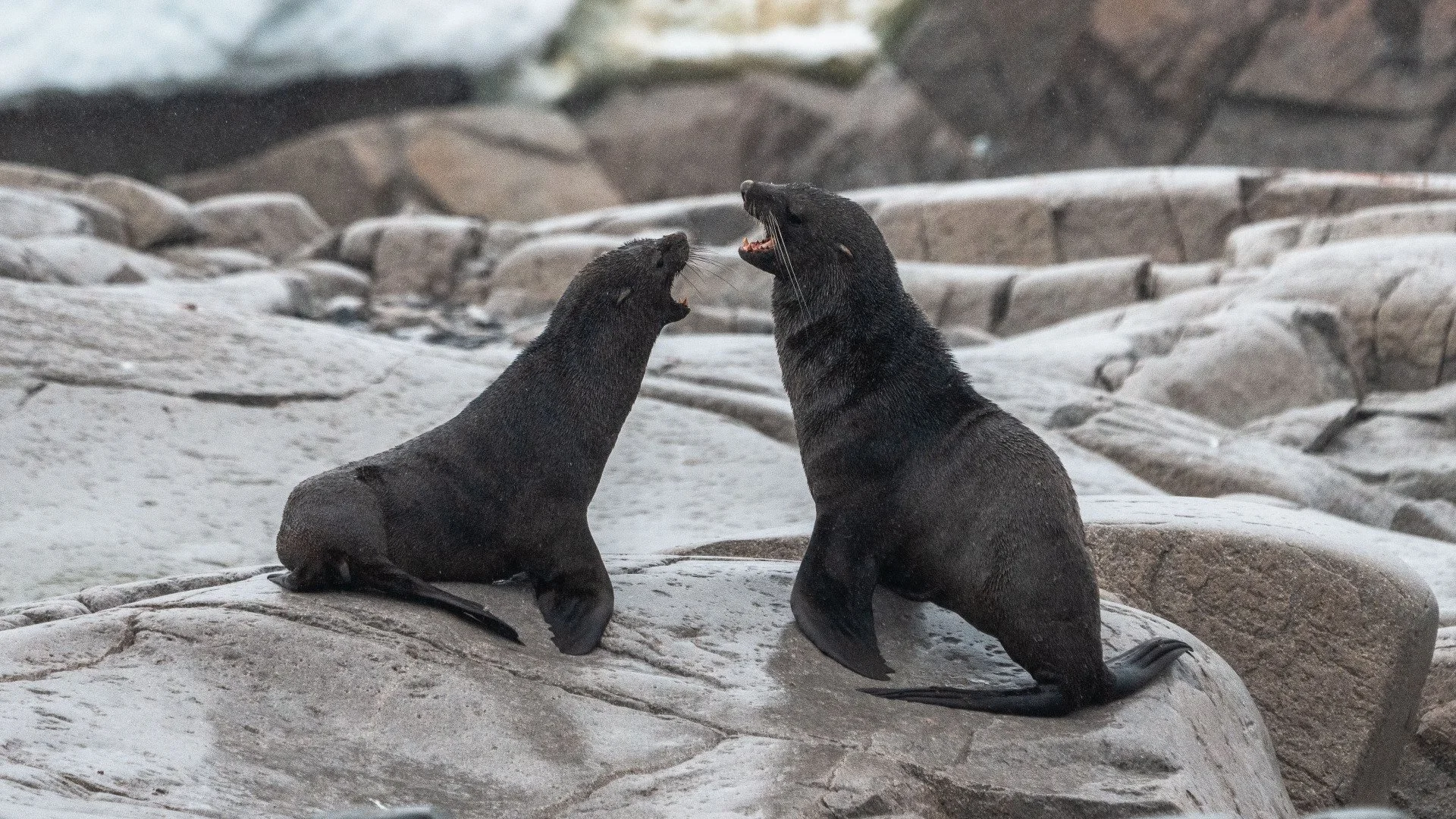
As we moved quietly across the water, the landscape seemed to come alive around us. Humpback whales surfaced nearby. Seals rested on floating ice. Penguins porpoised through the water with remarkable speed and agility.
Perhaps most remarkable was how unaffected the wildlife seemed by our presence. Life simply continued as it had for thousands of years in one of the most remote corners of the planet.
That afternoon, guests were invited to participate in one of Antarctica's most famous traditions: the Polar Plunge. Secured by safety lines and encouraged by enthusiastic spectators, brave participants leaped into Antarctic waters hovering just above freezing.
It's an experience I can confidently recommend—once.
Hovgaard Island, Pléneau Island, and the Lemaire Channel
The following morning brought another breathtaking landscape.
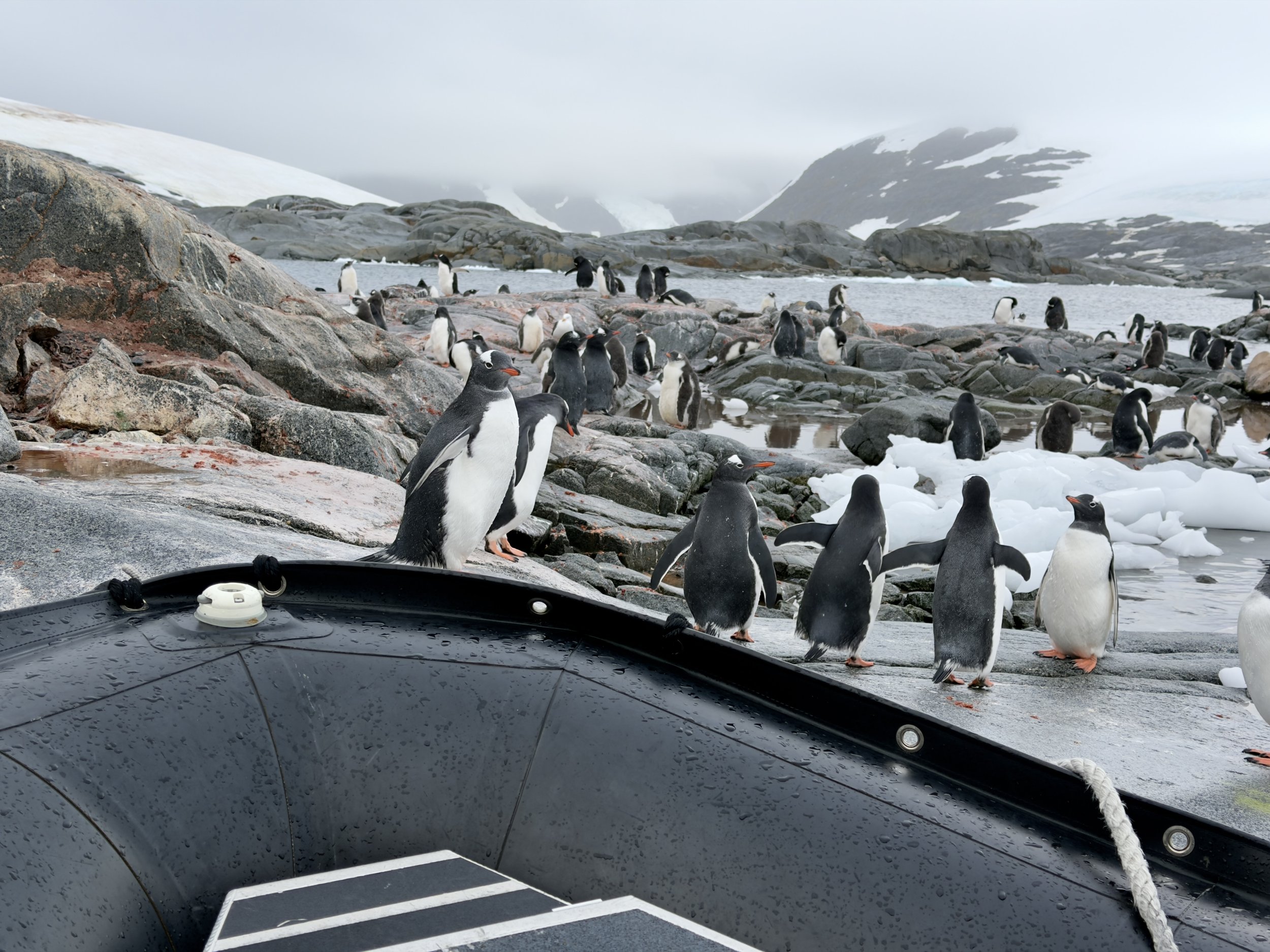
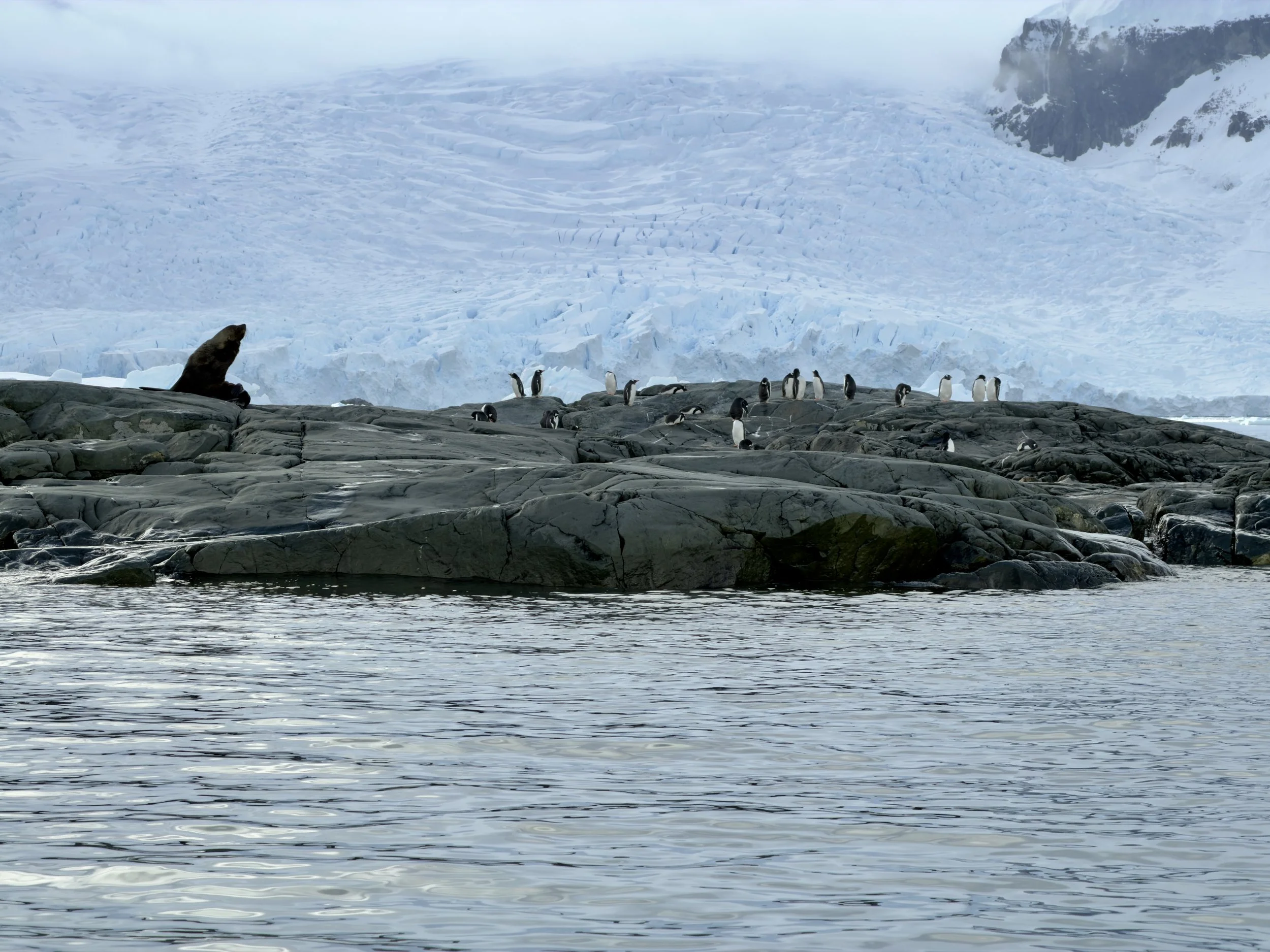
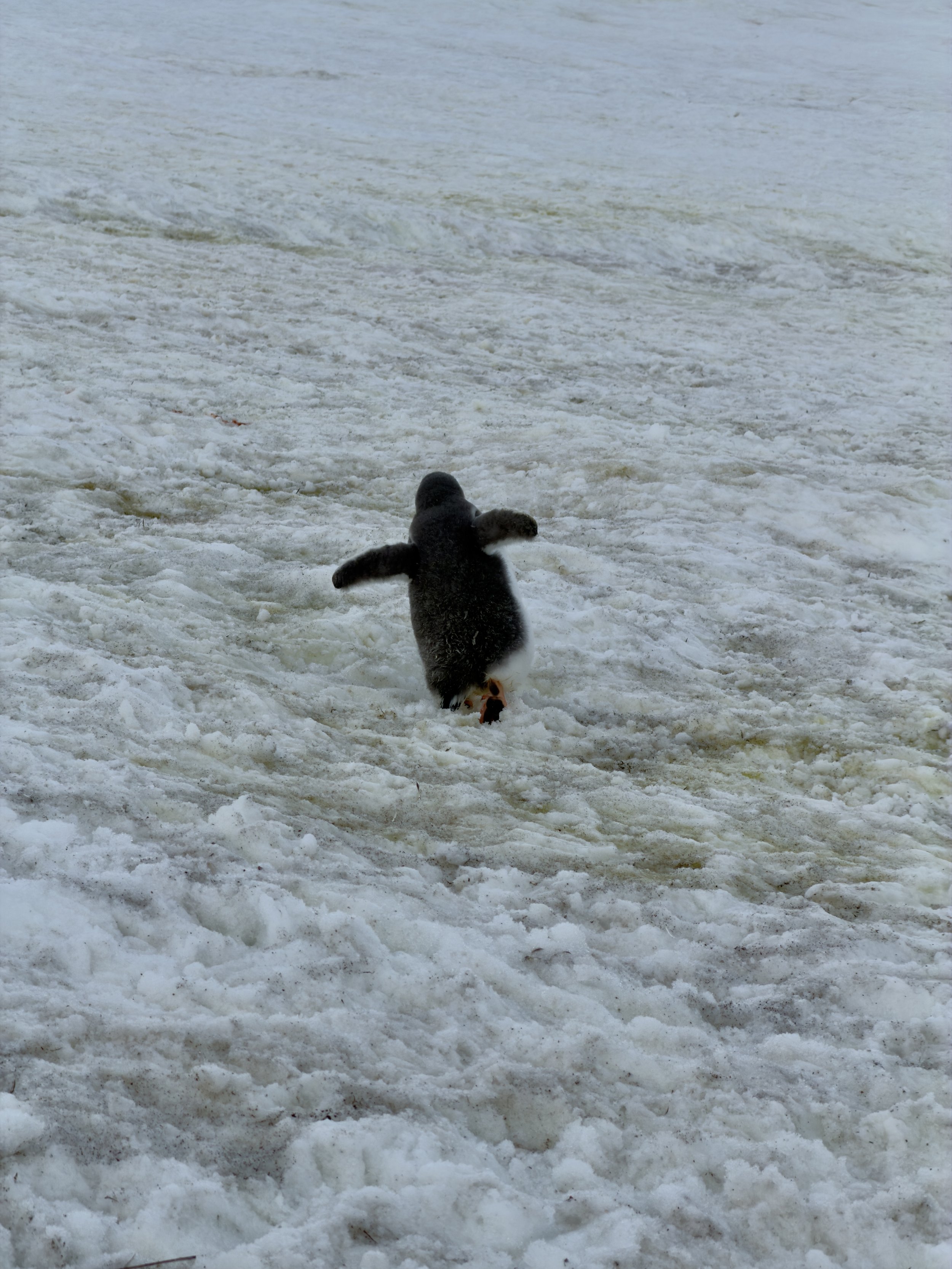
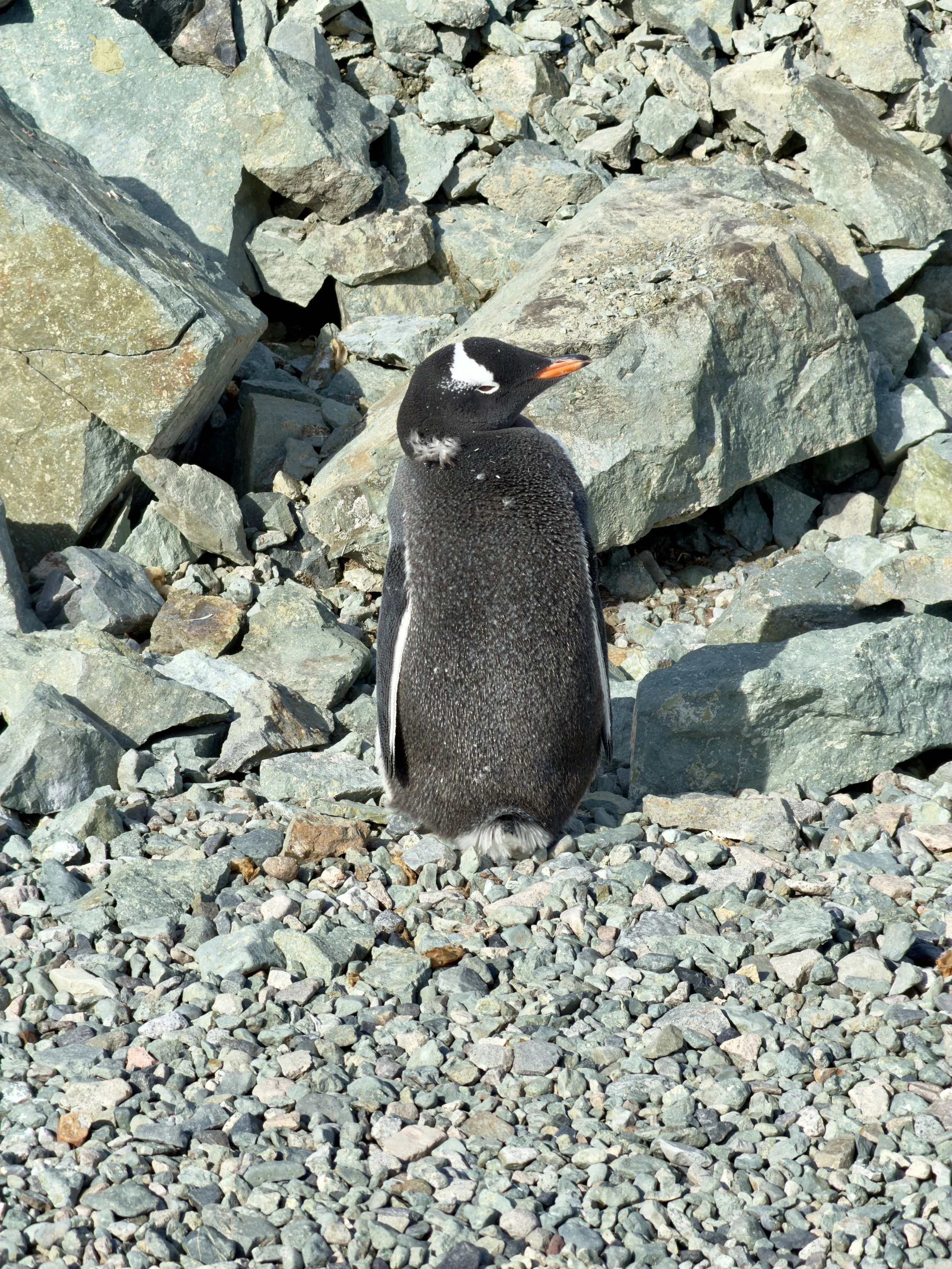
Our zodiac cruise around Hovgaard Island offered our first extended encounter with Gentoo penguins. Watching them waddle across the snow and launch themselves into the water was endlessly entertaining.
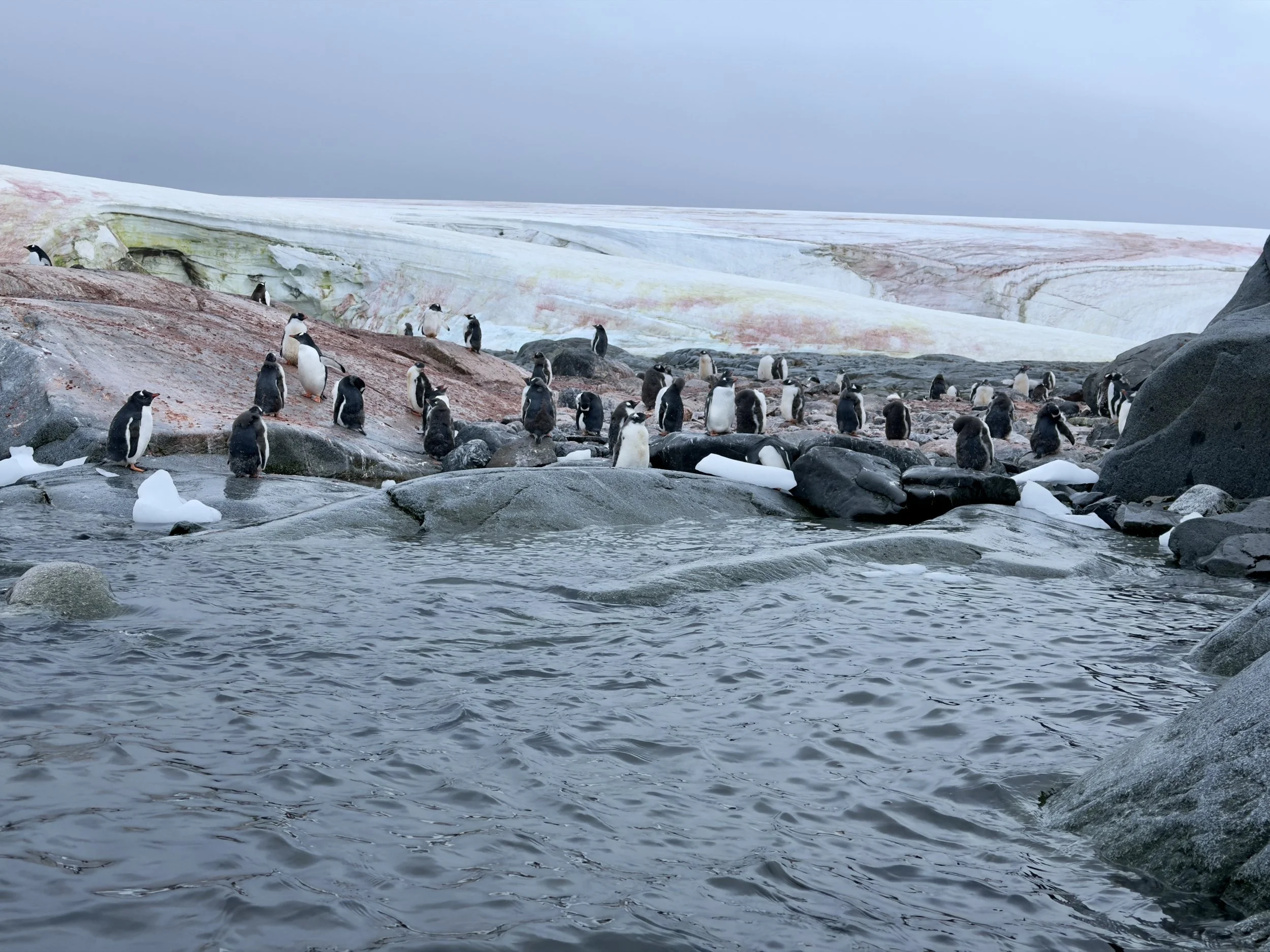
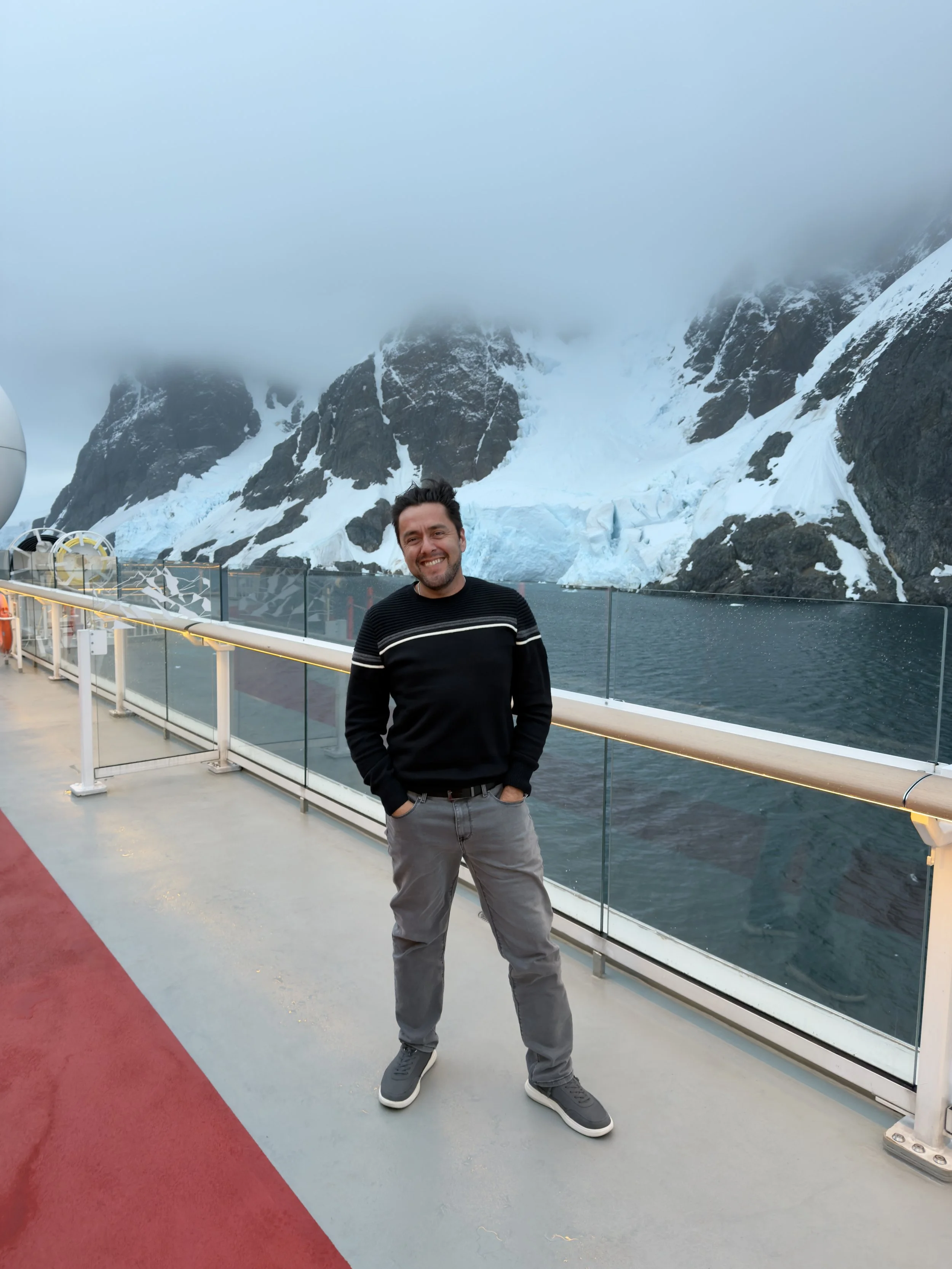
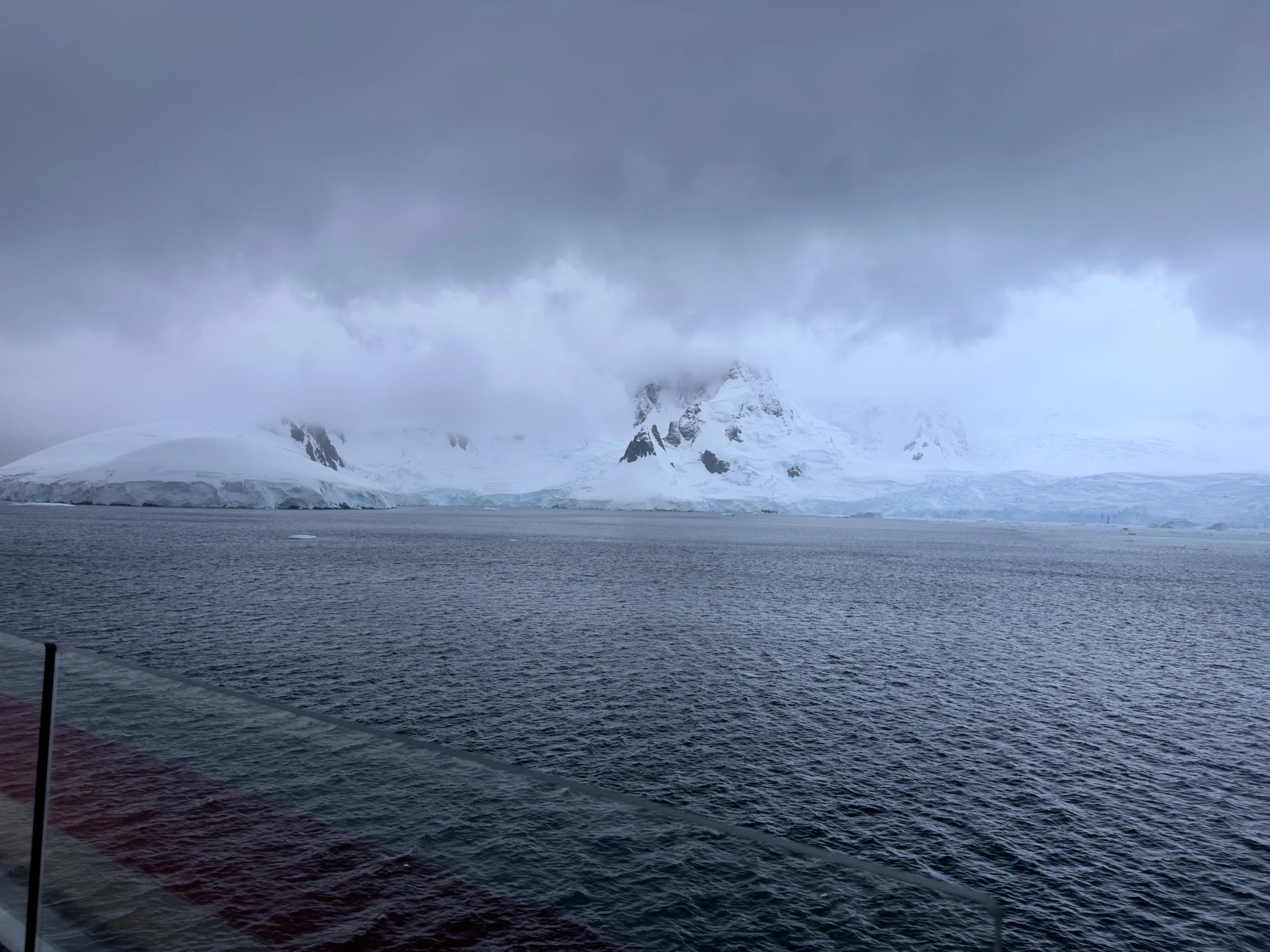
Later that afternoon came our first landing on the Antarctic continent at Pléneau Island.
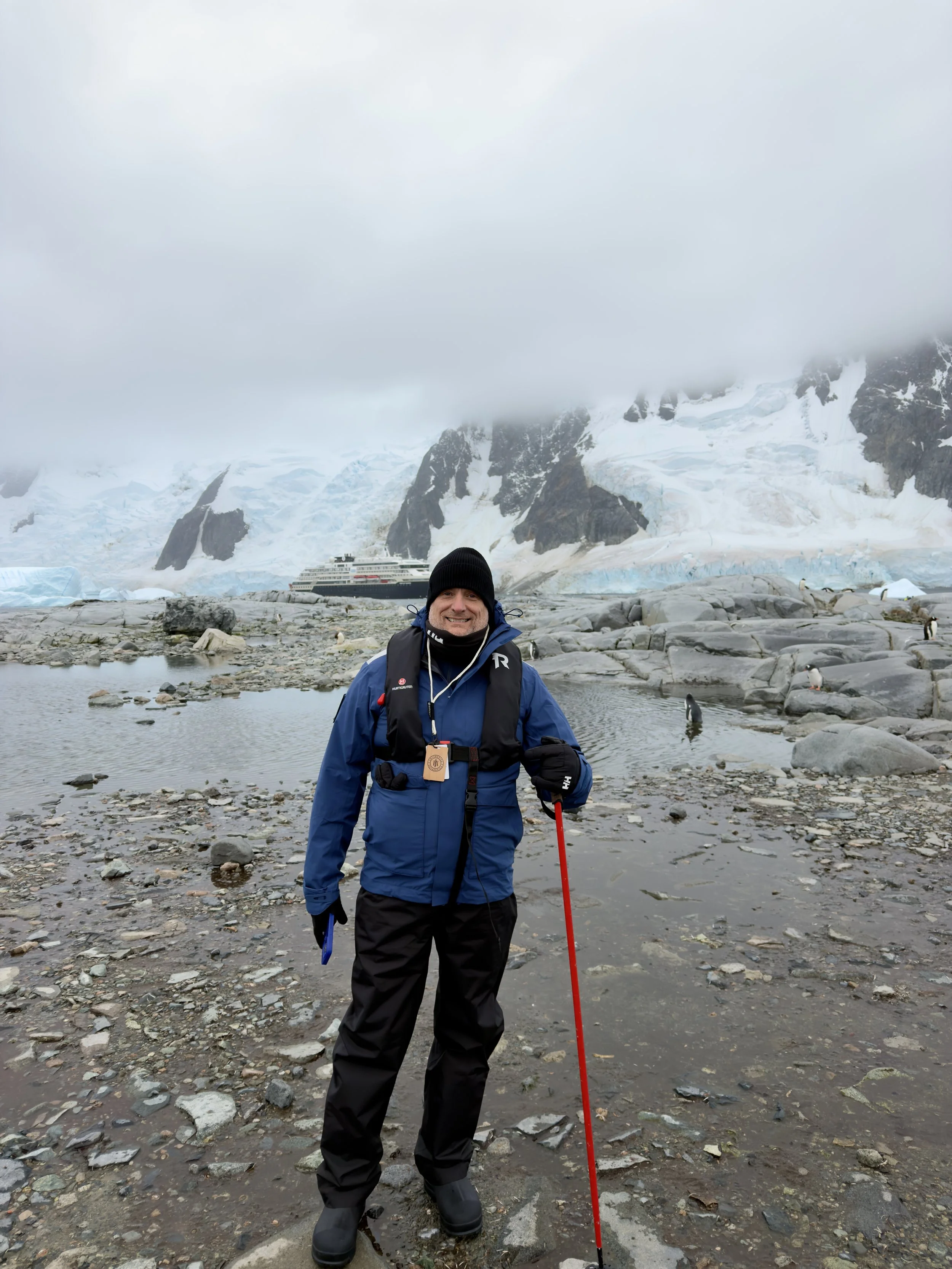
Standing ashore for the first time was surprisingly emotional. Antarctica had existed in my imagination for years, and now I was actually there.
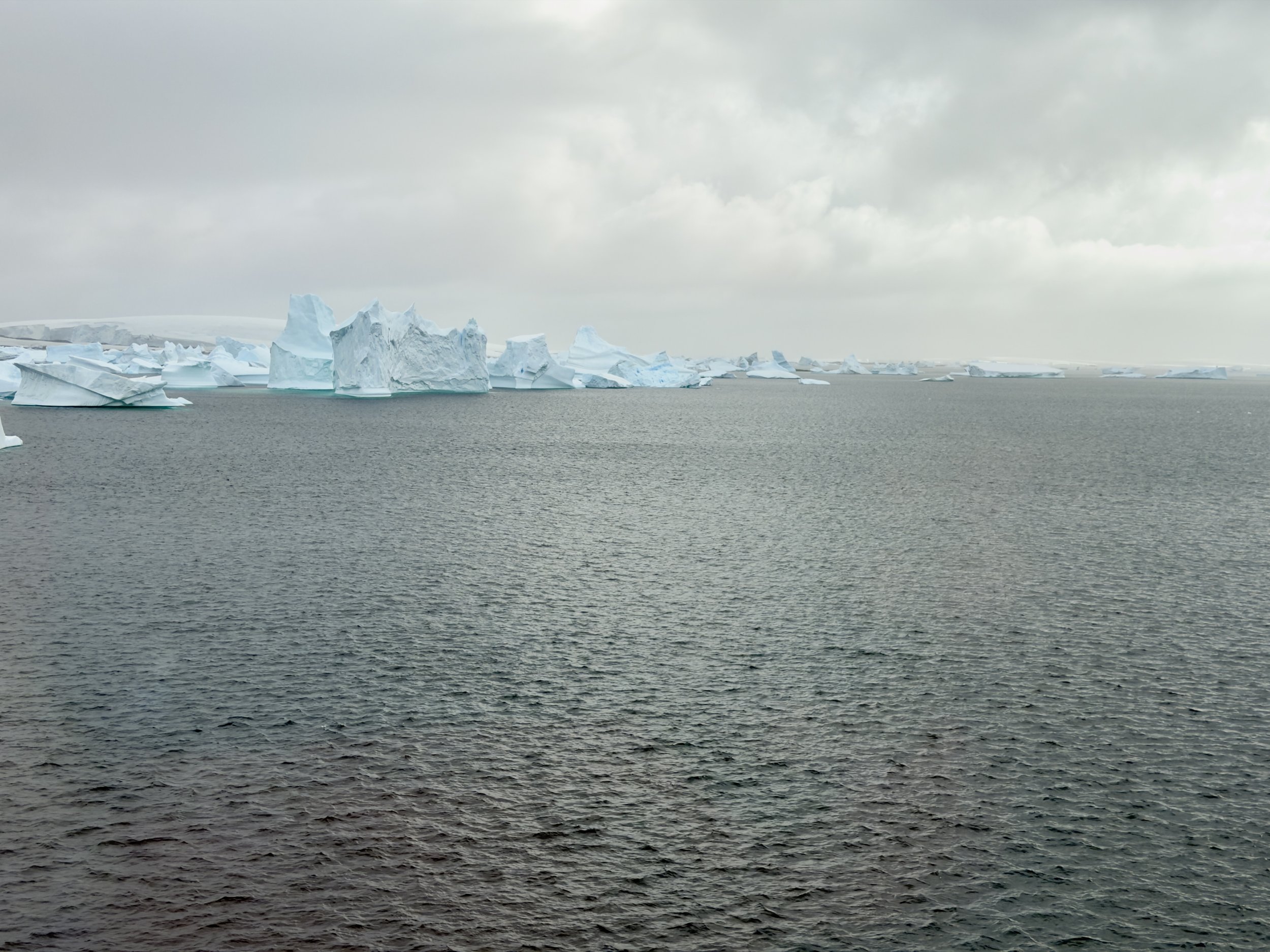
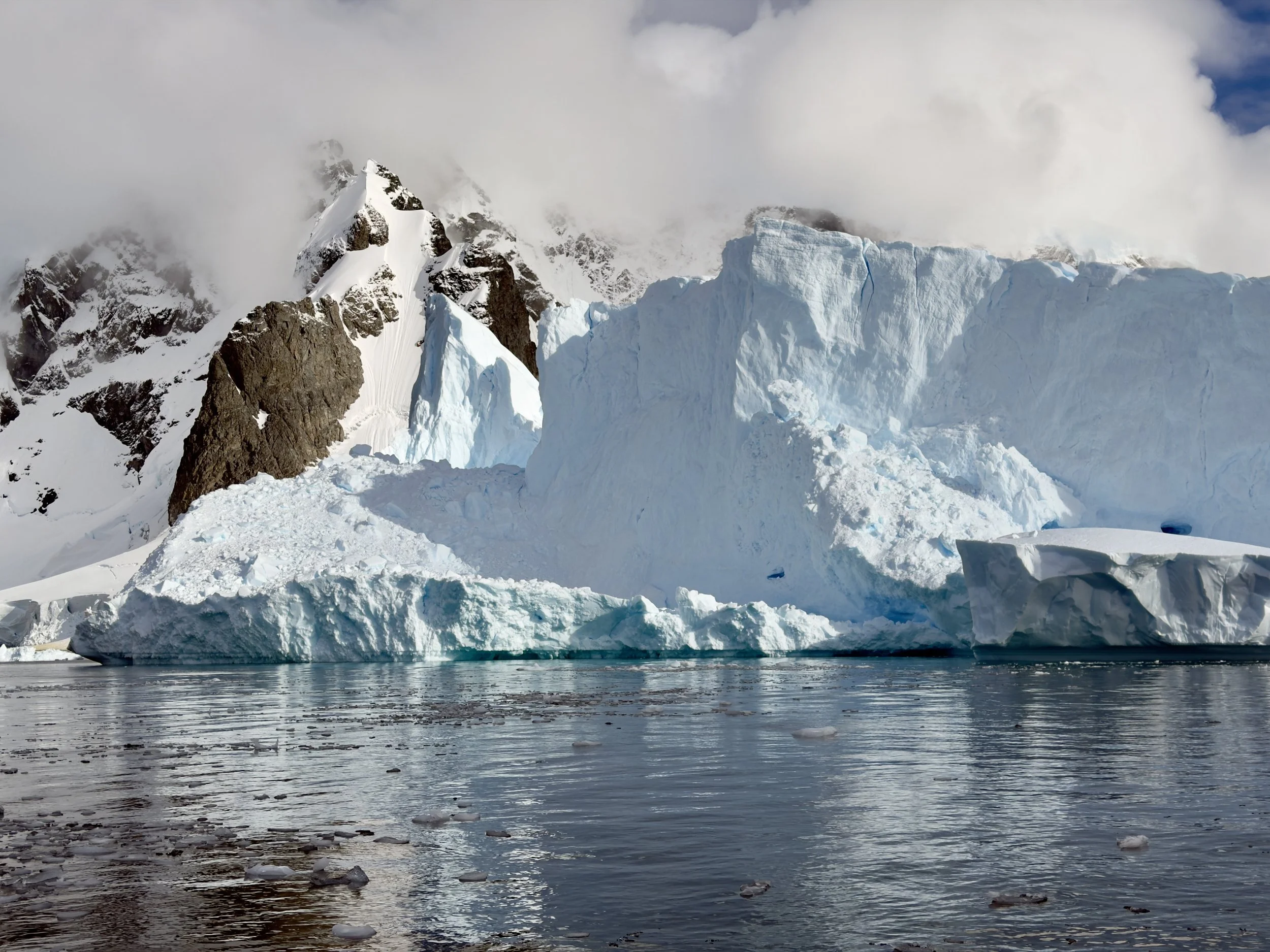
Icebergs of every imaginable shape drifted offshore, resembling sculptures created by nature itself. Some towered overhead like frozen skyscrapers while others displayed intricate patterns carved by wind, waves, and time.
Following our landing, the ship entered what many consider Antarctica's most scenic waterway: the Lemaire Channel.
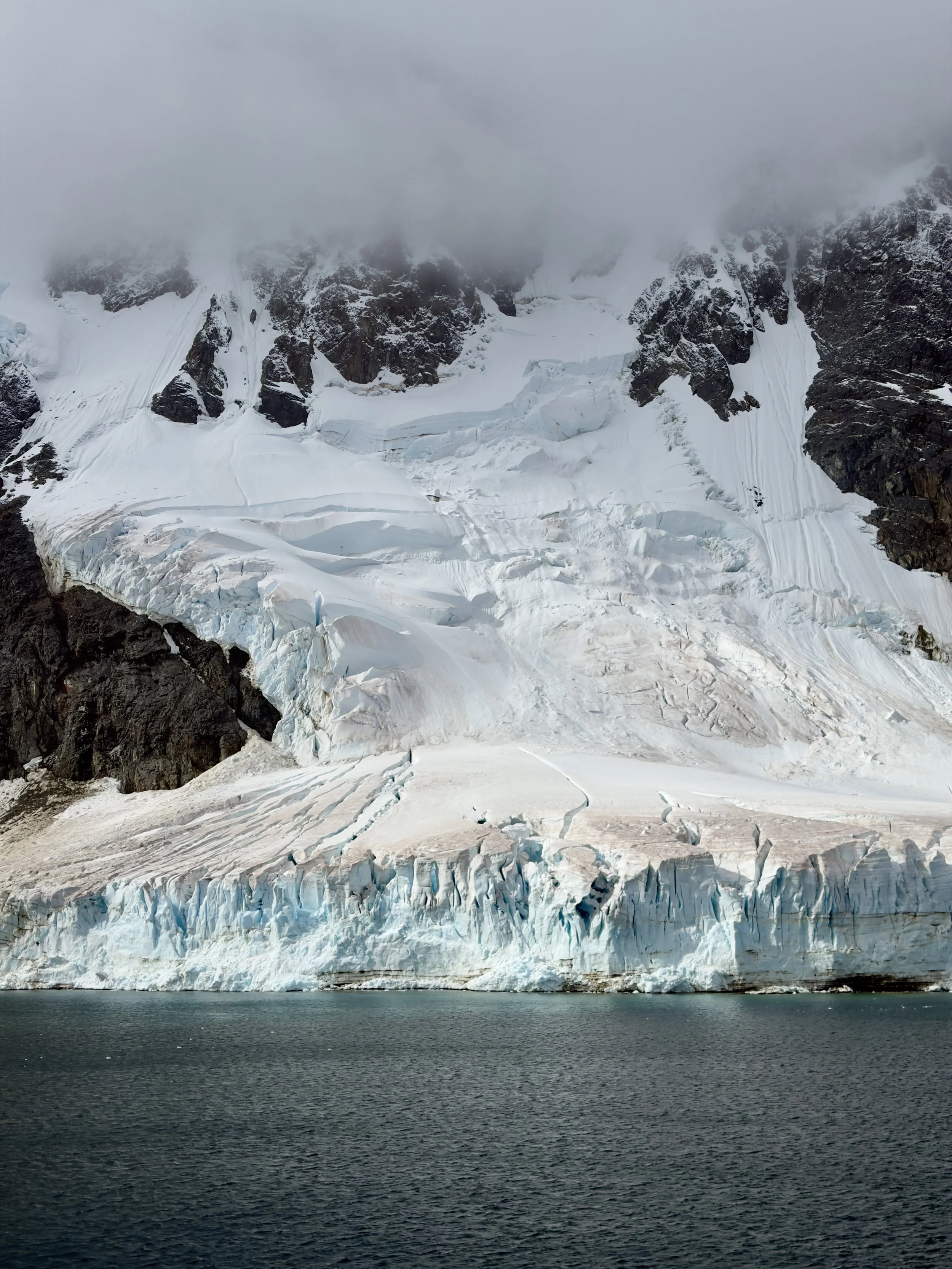
Nicknamed "Kodak Gap," the narrow channel is flanked by towering mountains and glaciers. It is one of those places where photographs struggle to convey scale. The landscape simply feels immense.
Kayaking Among Icebergs
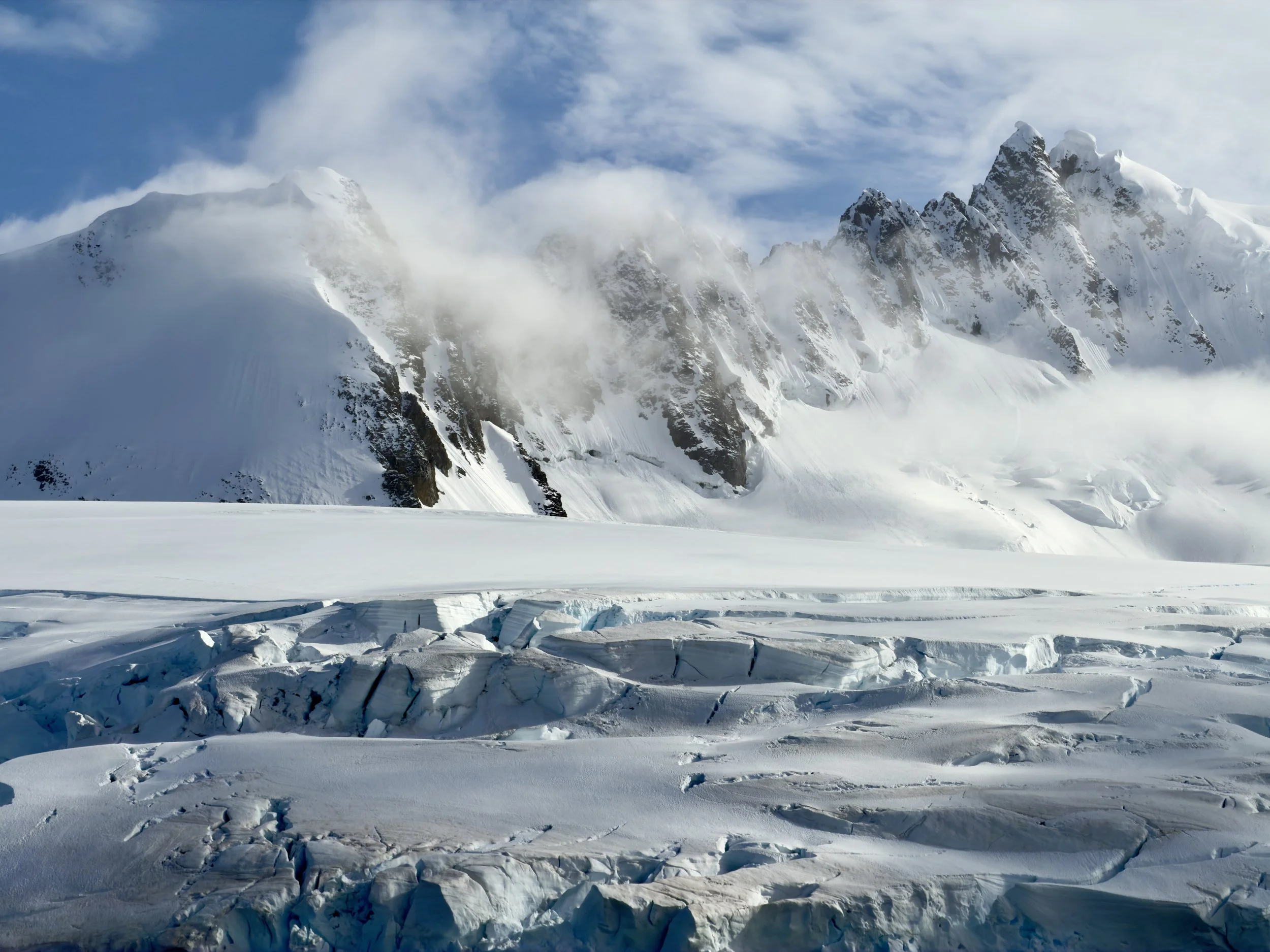
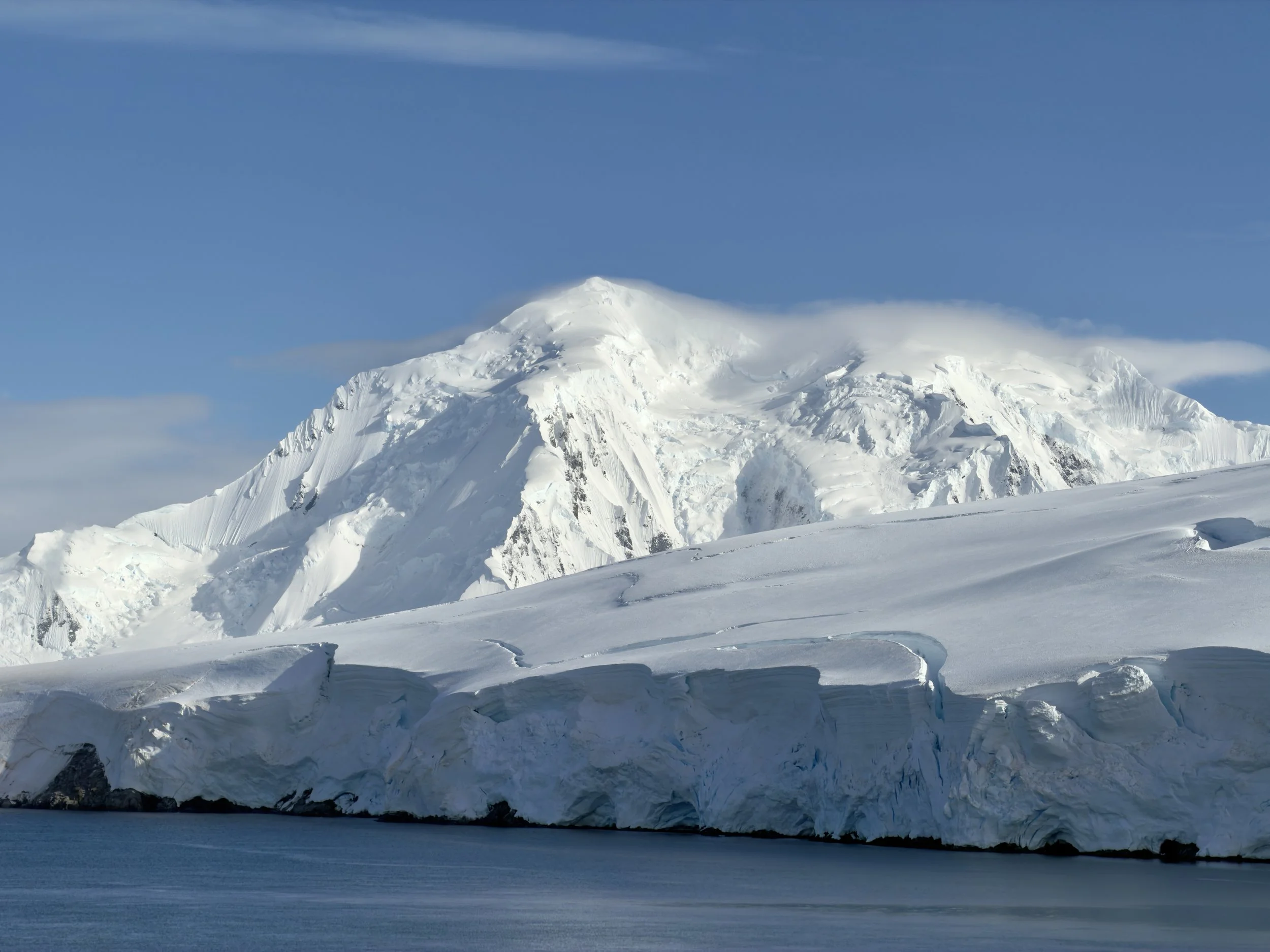
By the third day, Antarctica had blessed us with something expedition travelers always appreciate: sunshine.
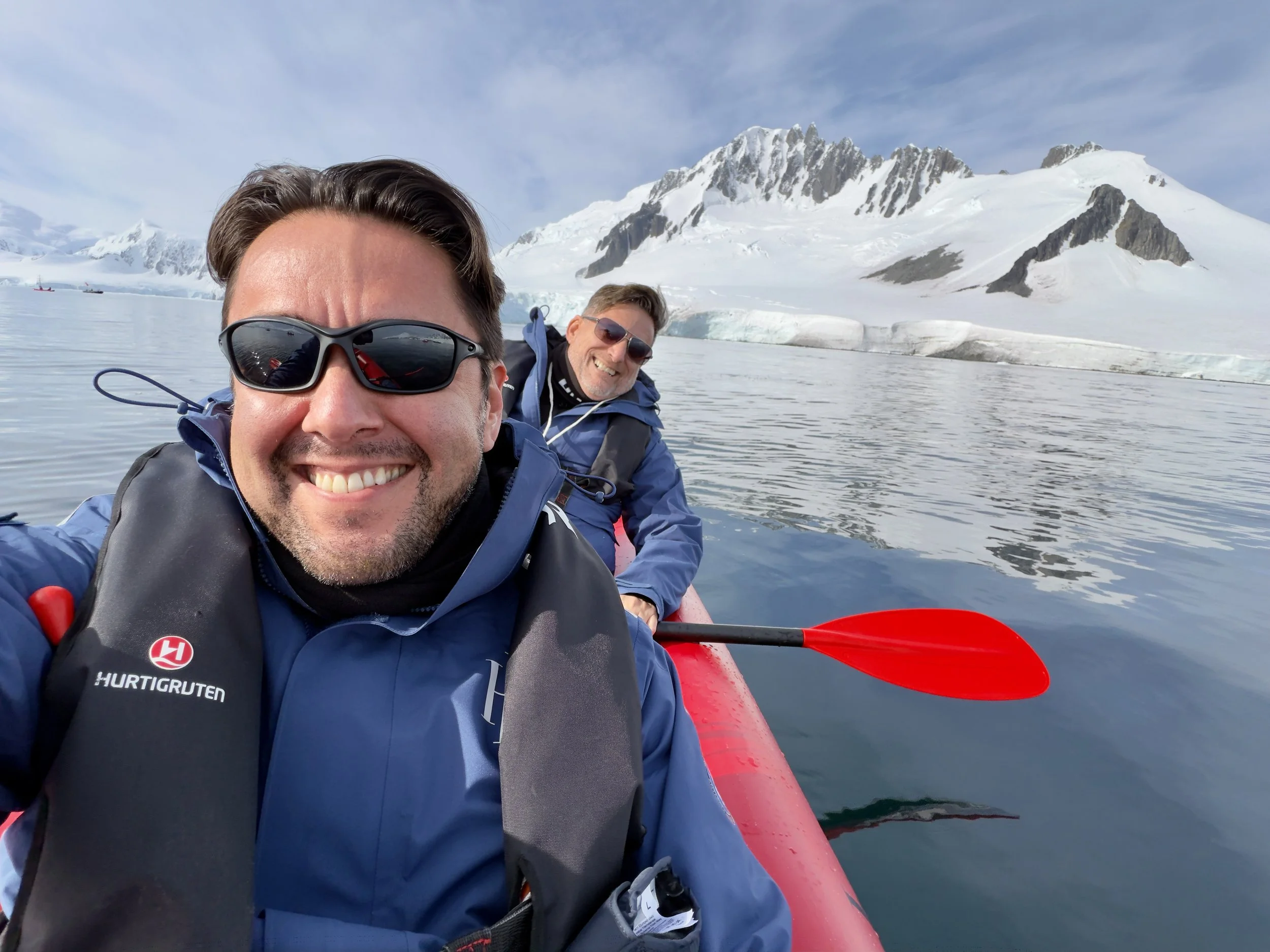
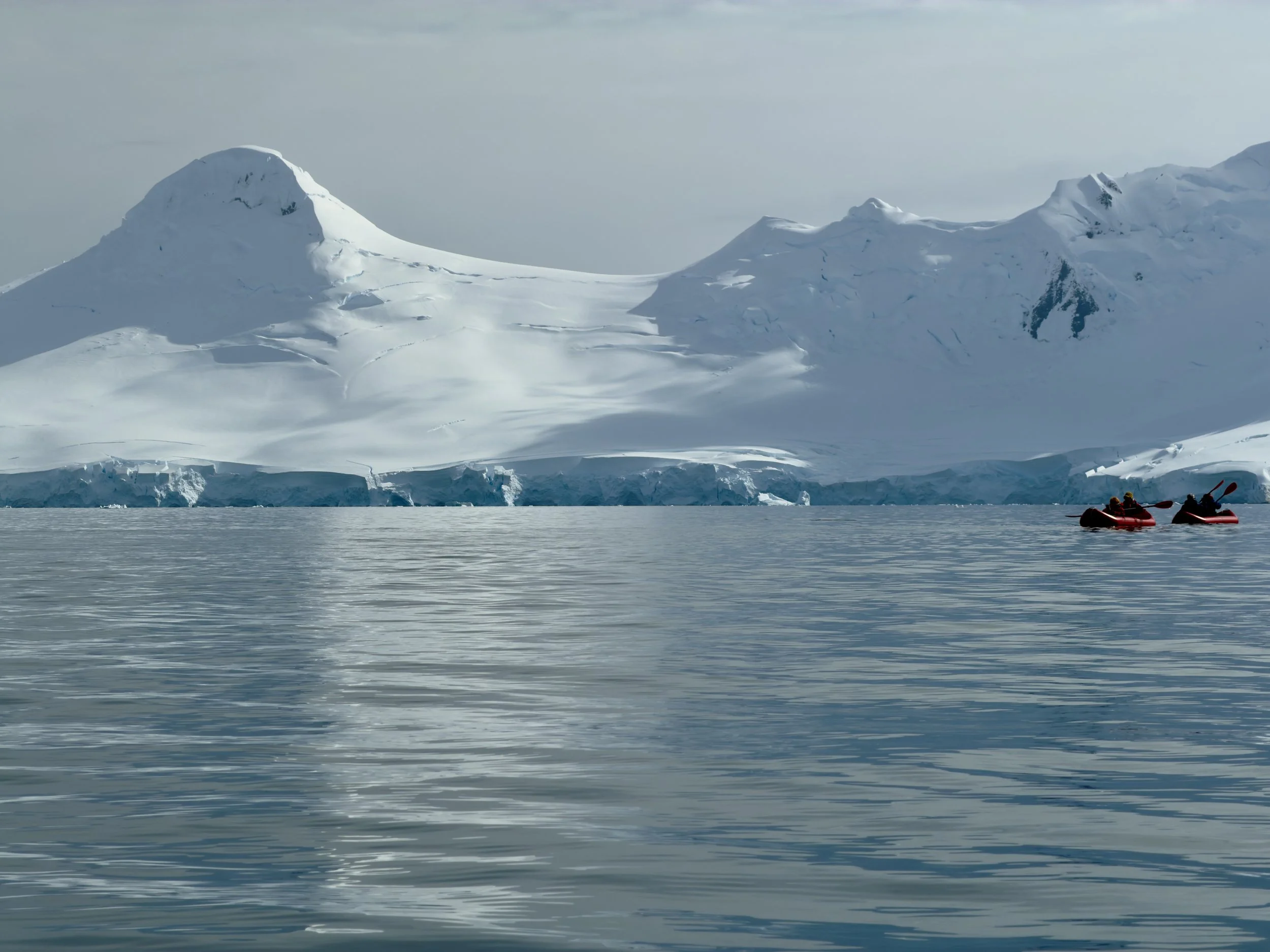
Later that morning, we participated in one of the experiences I had been anticipating most: kayaking in Antarctica.
Paddling quietly through polar waters offered a completely different perspective than viewing the scenery from a ship or zodiac. Every stroke carried us deeper into an environment defined by silence, solitude, and extraordinary beauty.
The only sounds were the gentle splash of paddles, distant wildlife, and the occasional crack of shifting ice.
For a brief moment, it felt as though we had the entire continent to ourselves.
Danco Island and Paradise Harbour
Each morning brought a new destination, new wildlife encounters, and new opportunities to explore.
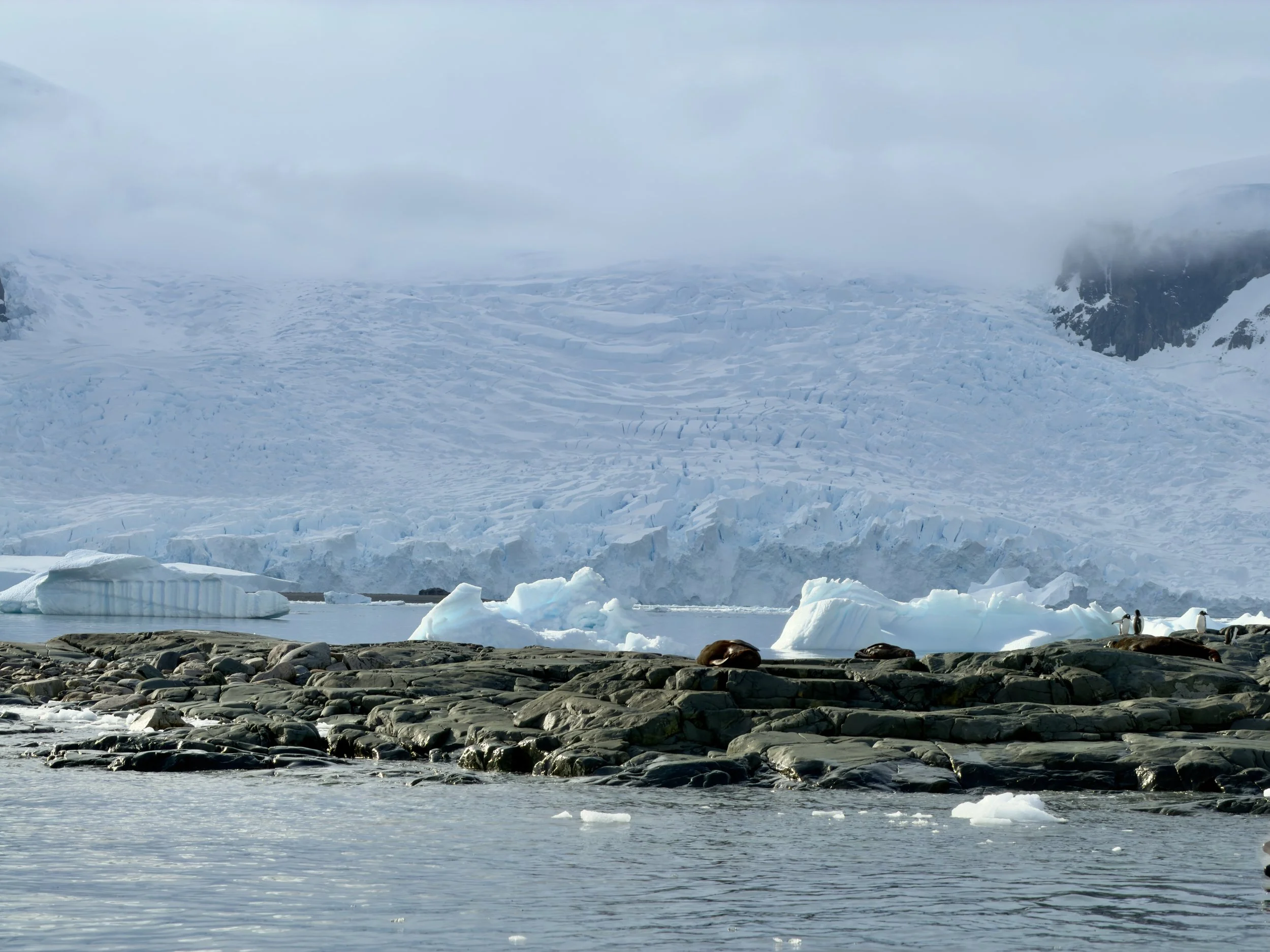
Our landing at Danco Island offered another unforgettable opportunity to observe Gentoo penguins in their natural environment. Conditions underfoot had become increasingly icy, making trekking poles particularly useful as we navigated the terrain.
Later that afternoon, the ship sailed toward Paradise Harbour.
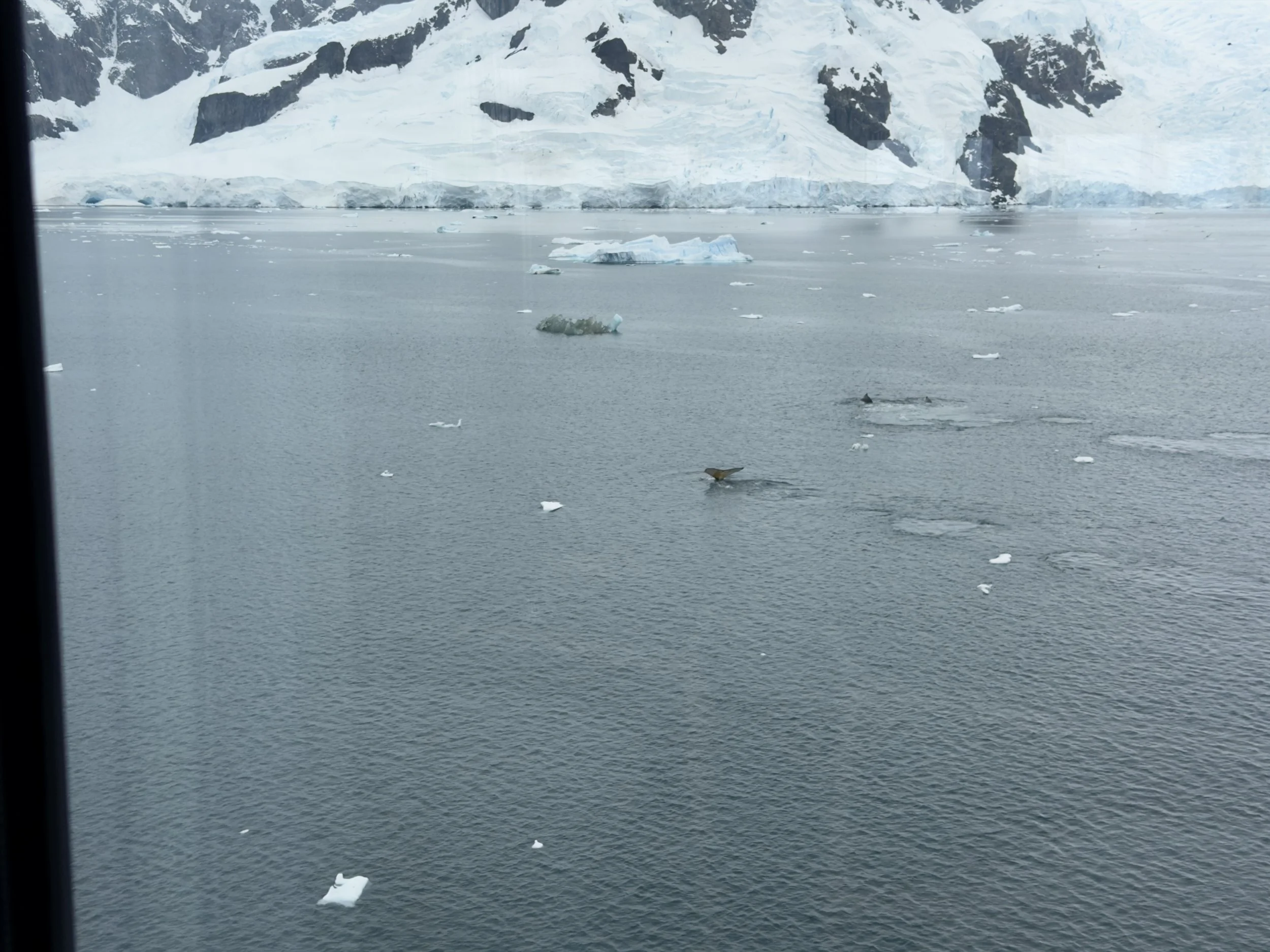
The name could not have been more appropriate.
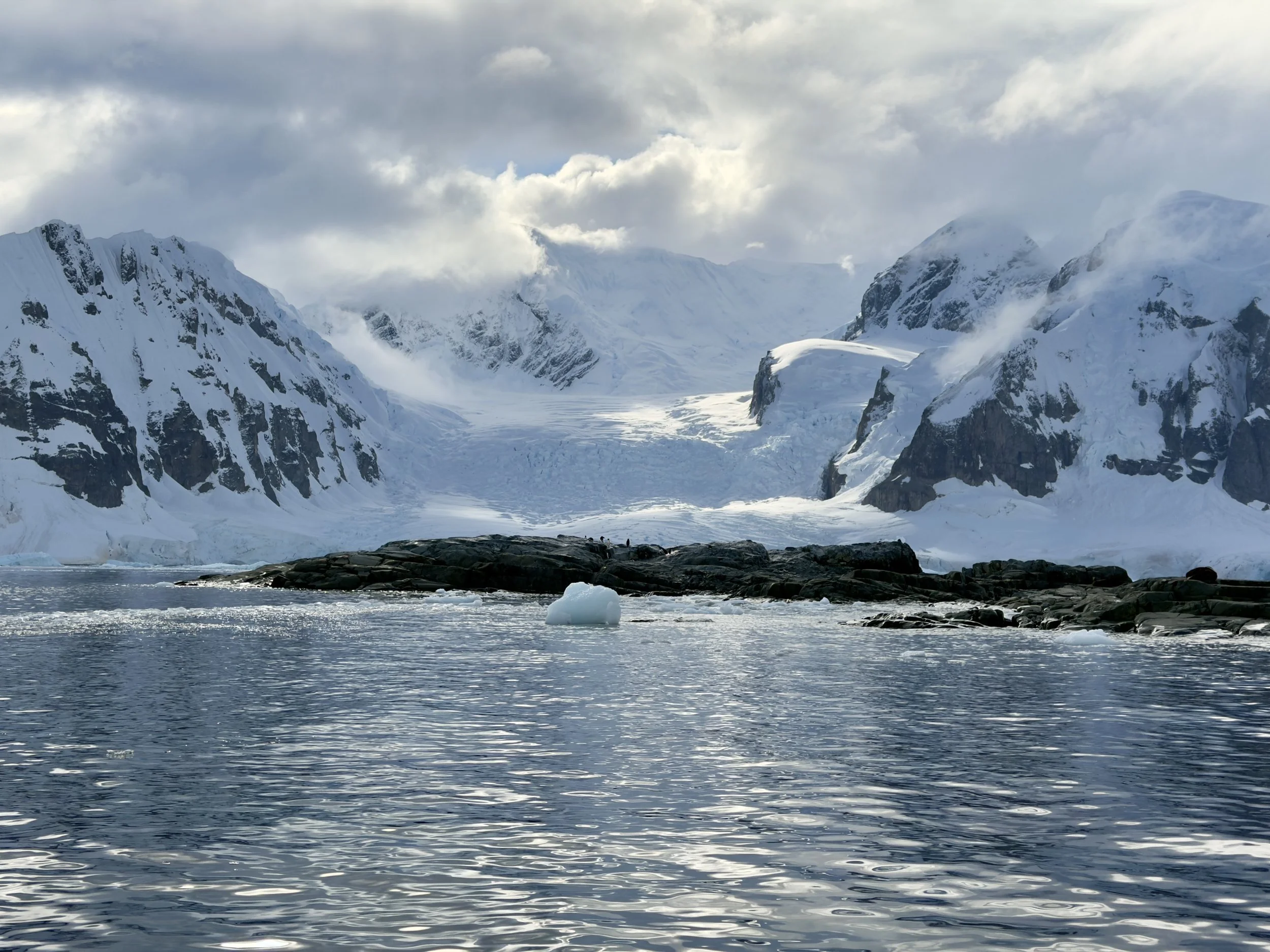
Towering cliffs and glaciers framed calm waters while low clouds drifted across the mountaintops. Then, as if the day needed one final highlight, a small pod of orcas appeared near the ship.
Watching whales glide through Antarctic waters felt almost unreal.
Portal Point: A Perfect Farewell
Our final day on the continent brought fresh snowfall and one last opportunity to experience Antarctica ashore.
Portal Point greeted us with pristine white landscapes that seemed untouched by human presence. Snowflakes drifted gently through the air while ice-covered peaks disappeared into low clouds.
It was Antarctica at its most atmospheric.
Our farewell zodiac cruise that afternoon provided the perfect ending. Whales surfaced throughout the bay, Chinstrap penguins moved across distant ice, and seals lounged peacefully nearby.
Standing there surrounded by wildlife, glaciers, mountains, and sea, I couldn't help but wonder if Antarctica was giving us a proper sendoff.
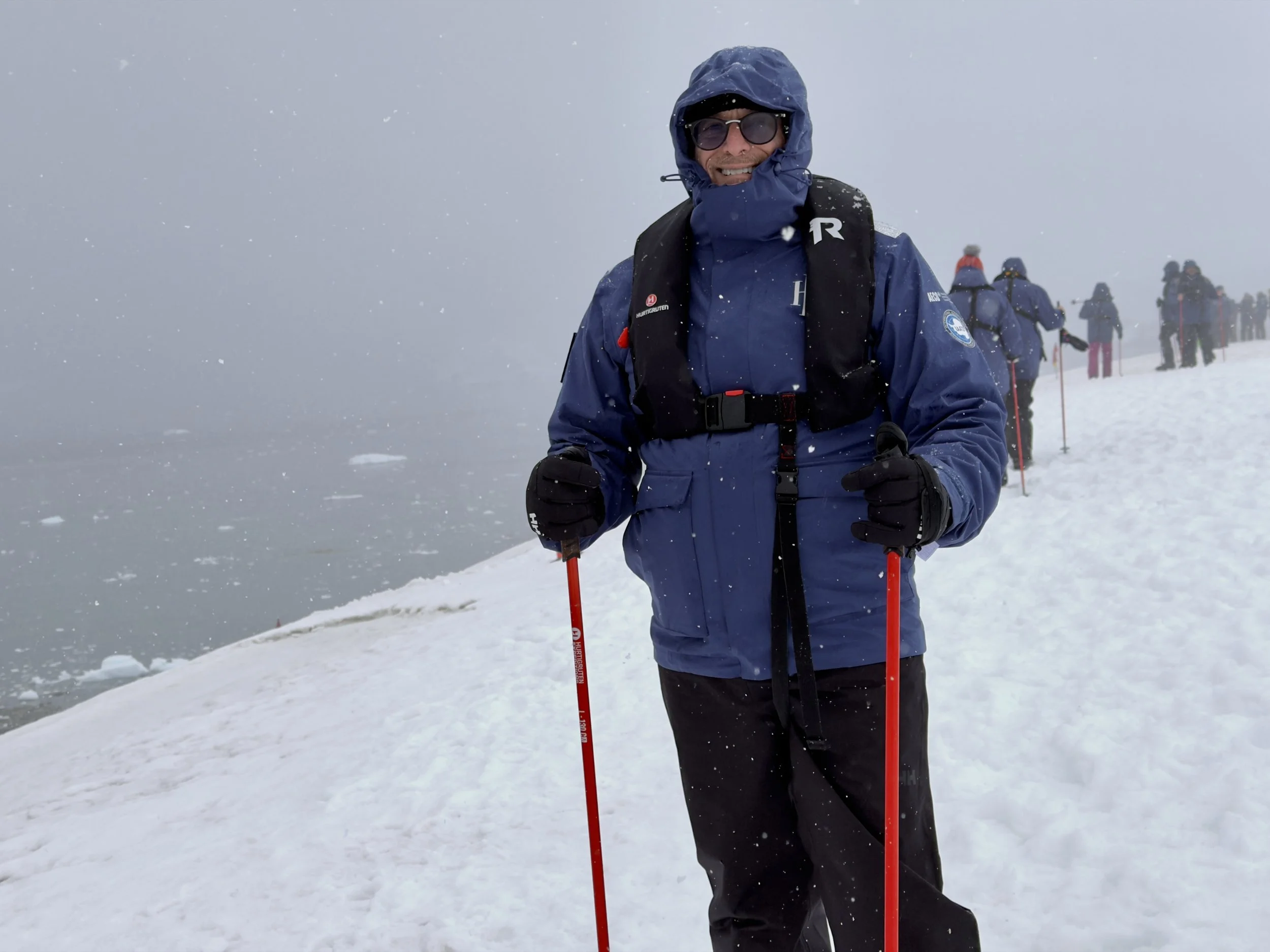
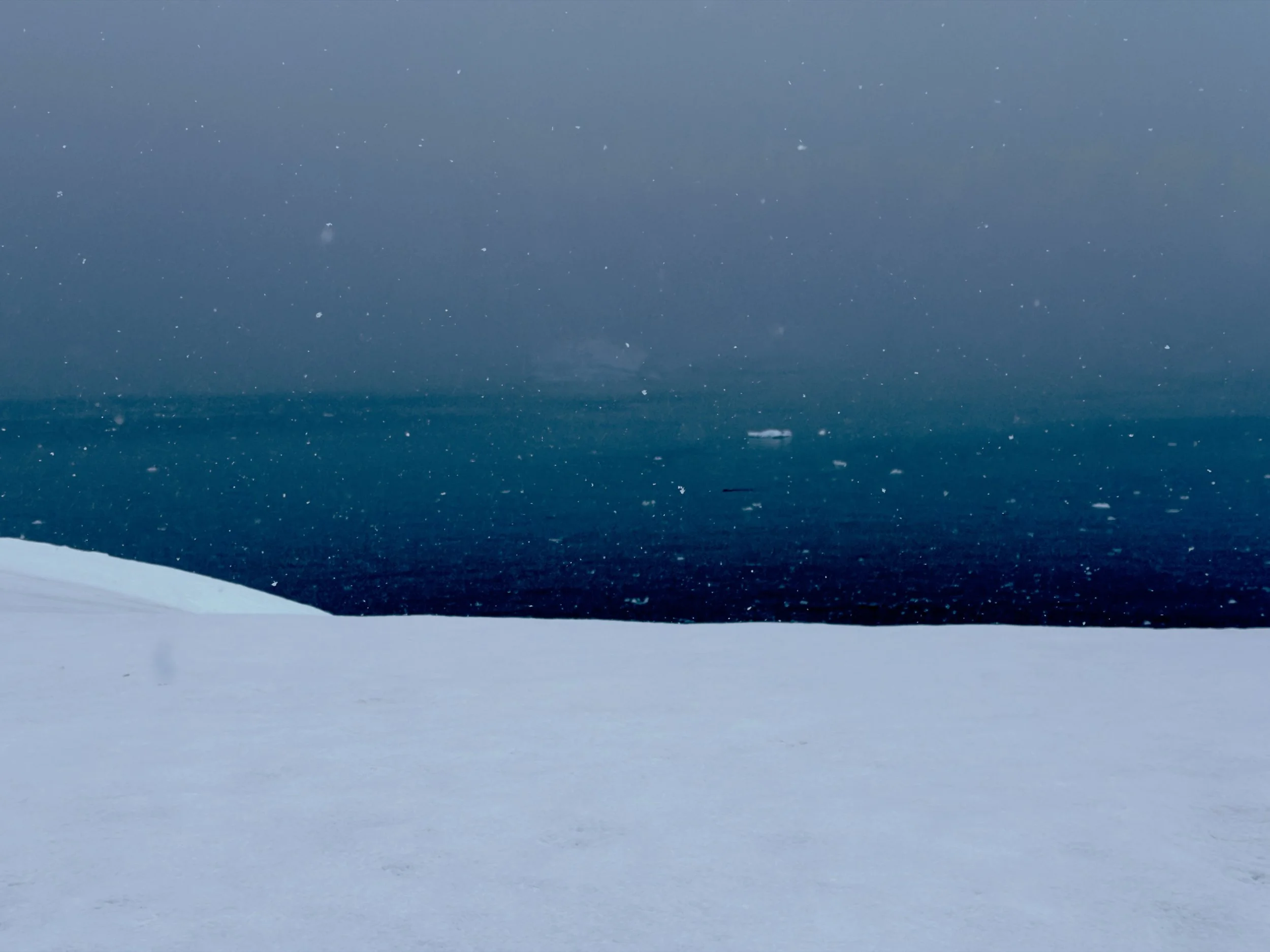
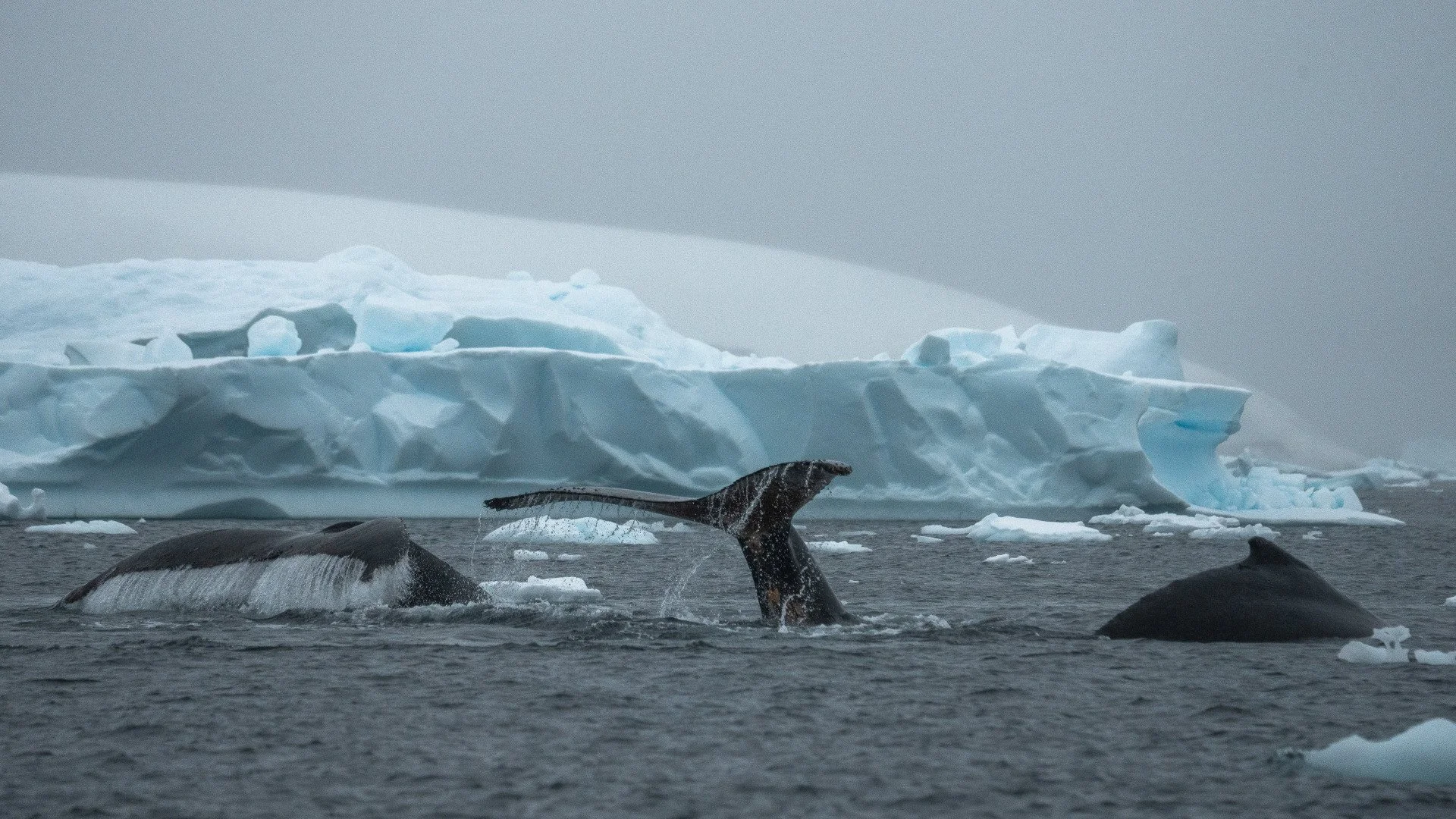
That evening, guests and crew gathered to celebrate the conclusion of our Antarctic adventure. People from dozens of countries came together to share stories, photographs, and memories from the previous week.
One of the things I loved most about expedition cruising was the sense of community it created. Regardless of nationality, language, or background, everyone onboard shared a common appreciation for exploration and the natural world.
Returning Across the Drake
As remarkable as Antarctica was, there eventually comes a moment when every expedition must begin the journey home.
The Drake Passage was a little less forgiving on our northbound crossing, reminding us why it has earned such a formidable reputation among sailors and explorers. Yet after several days of exploration, the time at sea provided an opportunity to rest, reflect, and process everything we had experienced.
On our second evening crossing the Drake, the clouds parted just long enough to reveal a spectacular sunset. As Tierra del Fuego slowly emerged on the horizon, I couldn't help but think about the explorers who had made this same crossing more than a century ago.
While our journey was undoubtedly far more comfortable, the sense of accomplishment felt very real.
Final Reflections
People often ask me what Antarctica was like.
The truth is, I still struggle to answer that question.
I can tell them about the whales that surfaced beside our zodiac, the penguins that waddled across the snow, or the towering icebergs that seemed to glow from within.
But none of those things fully capture what Antarctica feels like.
There is something profoundly humbling about standing in a place that remains largely unchanged by human hands. In a world where so much has been explored, developed, and documented, Antarctica still feels wild. It reminds us that there are places on Earth that are bigger than ourselves, places that inspire curiosity, wonder, and respect.
Before this journey, I imagined Antarctica as a destination I would visit once and then check off my bucket list.
Instead, it had the opposite effect.
The more I saw, the more I wanted to learn. The more I experienced, the more I realized how much remained unexplored. Rather than satisfying my curiosity, Antarctica deepened it.
Perhaps that's the true magic of the Great White Continent. It isn't simply a place you visit—it becomes a place that stays with you.
And while my expedition may have ended as we crossed back over the Drake Passage, a part of me is still there, somewhere among the glaciers, icebergs, and endless Antarctic summer.
I arrived believing this would be the trip of a lifetime.
I left hoping it wouldn't be my last.
Planning Your Own Antarctic Journey
Traveling to Antarctica is not easy, and that's part of what makes the experience so rewarding.
For most travelers, the journey begins in either Ushuaia, Argentina, or Puerto Williams, Chile, before crossing the legendary Drake Passage en route to the Antarctic Peninsula. While several fly-and-cruise options now exist, many travelers still choose to make the full sea voyage, experiencing Antarctica much as explorers did generations ago.
Whichever option you choose, the reward is the same: access to one of the most extraordinary destinations on Earth.
If Antarctica has found its way onto your travel wish list, my advice is simple—go.
The wildlife, the landscapes, and the adventure will exceed expectations. More importantly, Antarctica has a way of changing how you see the world long after you've returned home.
If considering an expedition of your own, I'd be happy to share my experiences and help you find the voyage that best matches your interests, travel style, and sense of adventure. Click below to submit a request for more information.